 Pocket Botanist
Plant guide
Saffron Crocus.
Crocus sativus
Pronounced KROH-kus sah-TEE-vus
Also known as Italian Crocus, Saffron Crocus, autumn crocus, saffron



Scan with your phone's camera to get the app
Or go to pocketbotanist.app/get on your phone
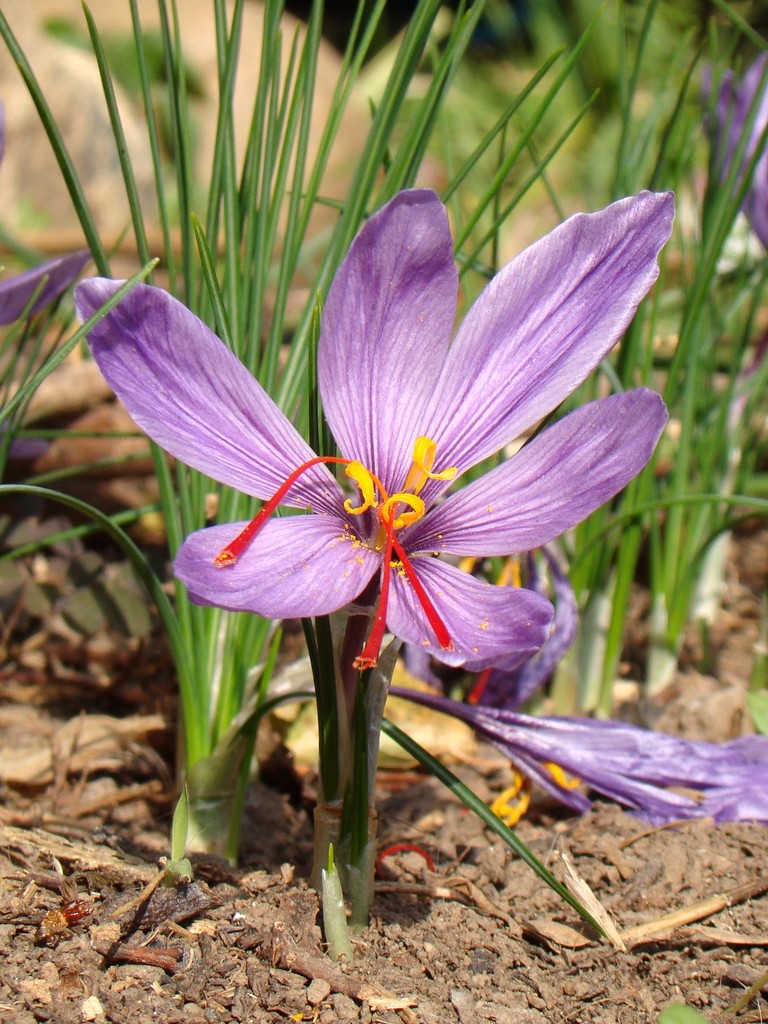
The saffron crocus is a charming bulbous perennial famous for producing the world's most expensive spice. It blooms in autumn with lovely purple flowers and bright red stigmas. These plants are quite hardy and thrive in well draining soil.
At a glance
- Care level
- Moderate
- Plant type
- Bulbous perennial
- Light
- Full sun
- Indoor light
- Direct sun
- Water
- Every 7 to 14 days
- Mature size
- 6 to 10 inches
- Growth rate
- Medium
- Hardiness
- USDA 6 to 9
- Bloom time
- Mid to late autumn
Care
Plant your corms in a sunny spot with excellent drainage to prevent rot. Watch for yellowing leaves which can indicate too much moisture in the soil. Ensure the bulbs have a dry dormant period during the summer months.
- Watering
- Water moderately during the growing season but keep dry while dormant.
- Feeding
- Apply a balanced bulb fertilizer once in early autumn as growth begins.
- Pruning
- Remove dead foliage only after it has turned completely brown and withered.
- Repotting
- Divide and repot corms every few years to prevent overcrowding.
- Soil
- Sandy or loamy well draining soil
- Soil pH
- 6.0 to 8.0
- Temperature
- -15 to 35°C
- Humidity
- 30 to 50%
- Drought tolerance
- High
- Lifespan
- Perennial, corms should be divided every 3 to 4 years.
- Fragrance
- Strong
- Deer and rabbits
- Moderate
Signs it needs repotting
- Corms becoming crowded and producing fewer flowers.
- Water pooling on the surface due to lack of space for roots.
Safety
- People
- The plant contains picrocrocin and other compounds that can be toxic if ingested in large quantities.
- Pets
- This plant is considered toxic to cats and dogs if ingested.
- Children
- Keep bulbs away from small children as they can be a choking hazard and cause illness if eaten.
- Contact allergens
- Handling the corms or foliage may cause mild skin irritation in sensitive individuals.
- Airborne allergens
- The pollen can trigger allergic reactions in those sensitive to crocus pollen.
- Edibility
- While the stigmas are the source of saffron spice, the rest of the plant is not considered edible and can cause digestive distress.
How to identify it
- Bright purple petals
- Three long red stigmas
- Grass like foliage
- Corm based growth habit
- Height
- 0.1 to 0.15m
- Spread
- 0.05 to 0.1m
- Leaves
- green, deciduous
- Flowers
- purple, violet, 4 to 6cm
Problems to watch for
- Bulb RotCommon
- RodentsCommon
- Crocus RotUncommon
- Slugs and SnailsUncommon
Check your saffron crocus from a photo
Pocket Botanist looks at a photo of your plant and tells you what's wrong and what to try first.
Scan with your phone's camera to get the app
Or go to pocketbotanist.app/get on your phone
Growing it
- Propagation
- division
- When to plant
- late summer, early autumn
- Overwintering
- Leave the foliage in place through winter and let it die back naturally in late spring to nourish the corm. Water moderately while the leaves are green, but avoid waterlogged soil to prevent rot.
- In containers
- It grows well in pots at least 15 cm deep, provided you use a gritty, fast draining potting mix.
Division
- 1. Dig up the corms after the foliage has fully yellowed in late spring.
- 2. Separate the new cormlets from the parent corm.
- 3. Store in a cool, dry place until late summer.
- 4. Replant the corms 10 cm deep in well draining soil.
Pair with drought tolerant Mediterranean herbs that won't shade the corms during their summer dormancy.
Grows well with
Similar species
- Autumn Crocus · Often confused with saffron, but it is highly toxic and not for culinary use.
Science
- Family
- Iridaceae
- Genus
- Crocus
- Order
- Asparagales
- Class
- Liliopsida
- Native range
- Southwest Asia and the Mediterranean region.
- Conservation
- This plant is a sterile triploid that relies entirely on human intervention for propagation.
It thrives in well drained, sunny locations with a distinct dry summer period to enter dormancy.
- Value to wildlife
- late season nectar source
- Pollinators
- bees
- Uses
- culinary spice, ornamental garden plant, dye production
Through the year
Ecological indicators
- Salinity
- 2/9
- Soil reaction
- 7/9
- Light
- 8/9
- Temperature
- 6/9
- Moisture
- 3/9
- Nutrients
- 5/9
Taxonomy resolved against GBIF.
Questions people ask
- Can I grow saffron in a pot?
- Yes, it grows well in containers provided the soil is very well draining.
- Why didn't my crocus bloom?
- They often fail to bloom if they do not receive enough summer heat or if the corms are planted too shallow.
Where the name comes from
The name comes from the Greek word krokos, while the specific epithet sativus means cultivated.
Good to know
- Saffron is the most expensive spice in the world by weight.
- The flowers open in the morning and must be harvested quickly to preserve quality.
- This species has been cultivated for over 3,000 years.
- The vibrant red stigmas are the only part of the plant used for culinary purposes.
Also in
Keep your saffron crocus growing
This page is a general guide. Save your plant in Pocket Botanist and you get care reminders timed for this plant, plus a care history that shows what worked.
Scan with your phone's camera to get the app
Or go to pocketbotanist.app/get on your phone
This guide was generated with AI on and checked against GBIF taxonomy. It is general information, not horticultural or veterinary advice. Read about how we build these guides.