 Pocket Botanist
Plant guide
Autumn Crocus.
Colchicum autumnale
Pronounced KOL-chi-kum aw-tum-NAH-lee
Also known as Autumn Crocus, Meadow Saffron, Naked Ladies



Scan with your phone's camera to get the app
Or go to pocketbotanist.app/get on your phone

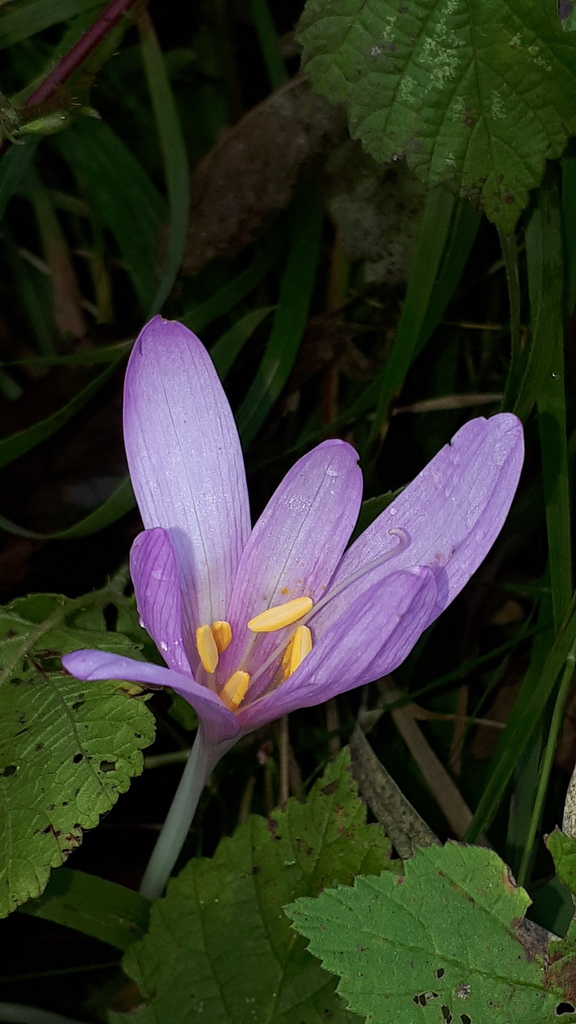
The autumn crocus is a lovely bulb that surprises you by blooming in the fall without any leaves. It adds a splash of color to your garden when most other flowers are fading. Just keep in mind that this plant is quite toxic if ingested.
At a glance
- Care level
- Easy
- Plant type
- Bulbous perennial
- Light
- Full sun to partial shade
- Indoor light
- Bright indirect
- Water
- Every 7 to 14 days
- Mature size
- 6 to 8 inches
- Growth rate
- Slow
- Hardiness
- USDA 4 to 9
- Bloom time
- Early to mid autumn
Care
Plant your bulbs in well draining soil during the summer months. Watch for yellowing leaves in the spring, which is a natural part of the growth cycle. Ensure the area stays relatively dry while the plant is dormant.
- Watering
- Keep the soil moist but not soggy during the active growing season.
- Feeding
- Apply a balanced bulb fertilizer once in the spring as the foliage begins to grow.
- Pruning
- Remove the foliage only after it has turned yellow and withered away naturally.
- Repotting
- Divide the bulbs every few years if they become too crowded in their spot.
- Soil
- Well draining, fertile soil
- Soil pH
- 6.0 to 7.5
- Temperature
- -34 to 30°C
- Humidity
- 40 to 70%
- Drought tolerance
- Moderate
- Lifespan
- Perennial, typically 10 plus years
- Deer and rabbits
- High
Signs it needs repotting
- Corms are crowded and pushing out of the soil.
- Flowering performance has significantly declined.
Safety
- People
- All parts of this plant contain colchicine, a potent toxin that causes severe gastrointestinal distress and organ failure.
- Pets
- This plant is highly toxic to both cats and dogs if consumed.
- Children
- Keep this plant away from children as all parts are highly poisonous if swallowed.
- Contact allergens
- Handling the corms can cause skin irritation in sensitive individuals.
- Airborne allergens
- There are no significant airborne allergy risks associated with this plant.
- Edibility
- This plant is extremely toxic if ingested and can be fatal.
How to identify it
- Leafless flowers emerge in autumn
- Petals are shades of pink or purple
- Leaves appear in the spring
- Flowers have six prominent stamens
- Height
- 0.1 to 0.2m
- Spread
- 0.1 to 0.15m
- Leaves
- green, deciduous
- Flowers
- pink, purple, white, 5 to 10cm
Problems to watch for
- Bulb RotCommon
- Slugs and SnailsCommon
- Gray MoldUncommon
- Root RotUncommon
Check your autumn crocus from a photo
Pocket Botanist looks at a photo of your plant and tells you what's wrong and what to try first.
Scan with your phone's camera to get the app
Or go to pocketbotanist.app/get on your phone
Growing it
- Propagation
- division, seed
- When to plant
- late summer
- Overwintering
- No special winter care is needed as the corms are hardy, but ensure the soil is well drained to prevent rot.
- In containers
- It is best grown in the ground, but can be kept in pots if the soil is allowed to dry out during the summer dormancy.
Division
- 1. Wait until the foliage has completely died back in summer.
- 2. Carefully lift the corms from the soil.
- 3. Separate the offsets from the main corm.
- 4. Replant the corms immediately at the same depth.
Pair with low growing perennials that do not mind the dormant summer period when the bulb needs dry soil.
Grows well with
- Hosta · Their large leaves help hide the dying foliage of the colchicum in late spring.
- Creeping Phlox · It provides a low growing carpet that complements the autumn blooms.
Similar species
- Crocus · They look similar but are unrelated and bloom at different times.
Science
- Family
- Colchicaceae
- Genus
- Colchicum
- Order
- Liliales
- Class
- Liliopsida
- Native range
- Central and southern Europe
- Conservation
- It is not currently threatened, but wild collection should be avoided to protect local populations.
It thrives in moist meadows and woodland edges where it benefits from seasonal moisture cycles.
- Value to wildlife
- late season nectar source
- Pollinators
- bees
- Uses
- ornamental border plant, rock garden specimen
Through the year
Ecological indicators
- Salinity
- 1/9
- Soil reaction
- 6/9
- Light
- 6/9
- Temperature
- 5/9
- Moisture
- 6/9
- Nutrients
- 5/9
Taxonomy resolved against GBIF.
Questions people ask
- Why are there no leaves on my plant?
- It is normal for this plant to produce flowers and leaves at completely different times of the year.
- When should I plant the corms?
- Plant them in late summer before the autumn flowering cycle begins.
Where the name comes from
The name Colchicum refers to Colchis, an ancient region in the Caucasus where the plant was said to grow, and autumnale refers to its autumn flowering habit.
Good to know
- The leaves appear in spring and die back completely before the flowers emerge in autumn.
- It is a member of the Colchicaceae family, not the lily family.
- The toxin colchicine has been used in medicine for centuries, particularly for gout.
Also in
Keep your autumn crocus growing
This page is a general guide. Save your plant in Pocket Botanist and you get care reminders timed for this plant, plus a care history that shows what worked.
Scan with your phone's camera to get the app
Or go to pocketbotanist.app/get on your phone
This guide was generated with AI on and checked against GBIF taxonomy. It is general information, not horticultural or veterinary advice. Read about how we build these guides.