 Pocket Botanist
Plant guide
Bearberry cotoneaster.
Cotoneaster dammeri
Pronounced koh-toh-nee-AS-ter DAM-mer-eye
Also known as Bearberry Cotoneaster



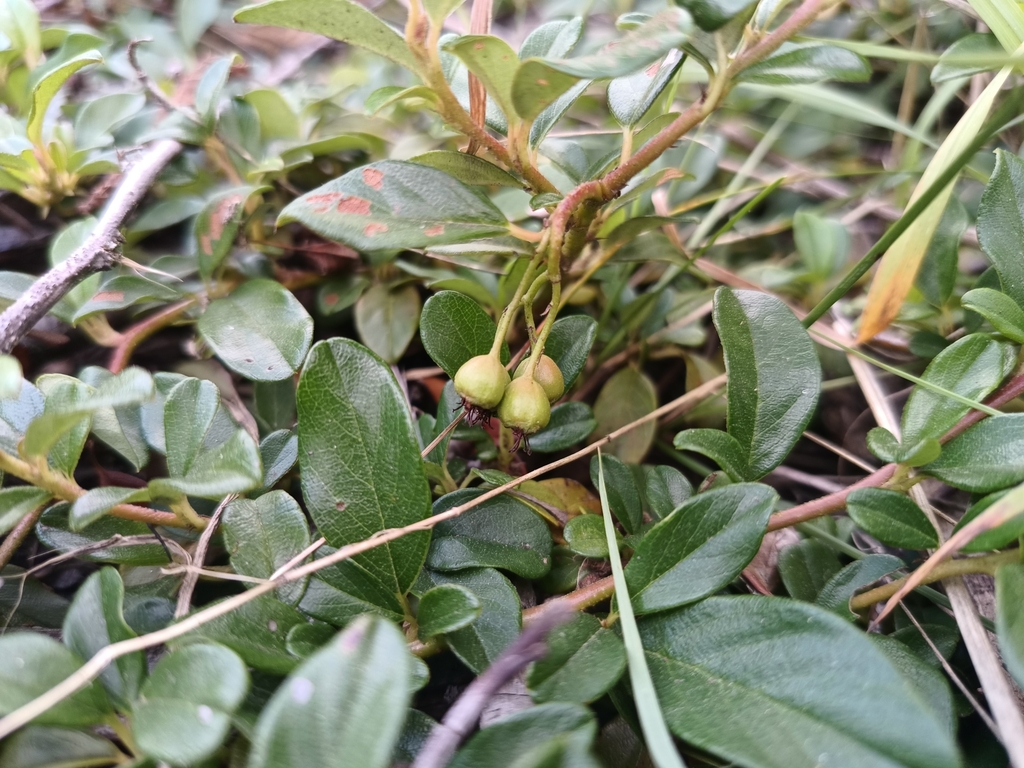
This hardy, low growing shrub is a fantastic choice for ground cover. It stays evergreen in many climates and produces lovely white flowers followed by bright red berries. You'll find it's quite tough and handles various garden conditions well.
At a glance
- Care level
- Easy
- Plant type
- Evergreen shrub
- Light
- Full sun to partial shade
- Indoor light
- Bright indirect
- Water
- Every 7 to 14 days
- Mature size
- 1 to 2 feet tall, 6 feet wide
- Growth rate
- Medium
- Hardiness
- USDA 5 to 8
- Bloom time
- Late spring to early summer
Care
Plant this shrub in well draining soil and ensure it gets plenty of sunlight to encourage the best berry production. Keep an eye out for leaf spots or scale insects, which can occasionally bother the foliage. Prune back any unruly stems after the berries have dropped to keep the shape tidy.
- Watering
- Water deeply once the top inch of soil feels dry to the touch.
- Feeding
- Apply a balanced, slow release fertilizer once in early spring.
- Pruning
- Trim back long or damaged stems in late winter or early spring.
- Repotting
- Repot only if the plant becomes rootbound in its container.
- Soil
- Well draining, loamy soil
- Soil pH
- 6.0 to 7.5
- Temperature
- -25 to 35°C
- Humidity
- 40 to 70%
- Drought tolerance
- Moderate
- Lifespan
- Perennial, typically 15 to 25 years
- Deer and rabbits
- Moderate
Signs it needs repotting
- Roots growing out of the drainage holes
- Water running straight through the pot without soaking in
- Stunted growth during the active season
Safety
- People
- All parts of the plant contain cyanogenic glycosides which can be harmful if ingested in large quantities.
- Pets
- The berries may cause mild gastrointestinal upset if ingested by cats or dogs.
- Children
- The bright red berries can be tempting to small children and should be kept out of reach to prevent ingestion.
- Contact allergens
- Handling the foliage may cause mild skin irritation in sensitive individuals.
- Airborne allergens
- The pollen may cause mild reactions in those prone to seasonal allergies.
- Edibility
- The berries are generally considered inedible and may cause stomach upset if consumed.
How to identify it
- Prostrate, mat forming growth habit
- Small, leathery, dark green leaves
- Tiny white or pinkish flowers
- Bright red, persistent berries
- Trailing, woody stems
- Height
- 0.1 to 0.3m
- Spread
- 1 to 2m
- Leaves
- dark green, evergreen
- Flowers
- white, 0.5 to 1cm
- Fruit
- red, Autumn to winter
Problems to watch for
- Fire BlightCommon
- Scale InsectsCommon
- AphidsUncommon
- Root RotUncommon
By symptom
Check your bearberry cotoneaster from a photo
Pocket Botanist looks at a photo of your plant and tells you what's wrong and what to try first.
Growing it
- Propagation
- cuttings, layering, seed
- When to plant
- spring, autumn
- Overwintering
- It is hardy and requires no special protection in most climates. Ensure the soil remains well drained to prevent winter root rot.
- In containers
- It grows well in large, wide containers, but ensure the pot has excellent drainage to prevent root rot.
Semi-hardwood cuttings
- 1. Take 10 cm cuttings in late summer.
- 2. Remove lower leaves.
- 3. Dip in rooting hormone.
- 4. Place in moist, sandy soil.
- 5. Keep in a bright, sheltered spot until rooted.
Pair this with taller, upright shrubs to create a layered look that hides the bare stems of larger plants.
Grows well with
- Juniper — They share similar soil and light requirements while providing contrasting textures.
- Daylily — The upright foliage of daylilies complements the low, spreading habit of the cotoneaster.
Similar species
- Rockspray Cotoneaster — It has a similar spreading habit but with a distinct herringbone branching pattern.
Science
- Family
- Rosaceae
- Genus
- Cotoneaster
- Order
- Rosales
- Class
- Magnoliopsida
- Native range
- Central China
- Conservation
- This species is not of conservation concern and is widely cultivated.
It grows as a prostrate shrub in rocky, mountainous areas where it stabilizes soil.
- Value to wildlife
- nectar source, winter food for birds
- Pollinators
- bees, butterflies
- Uses
- groundcover, erosion control, rock gardens, bank stabilization
Through the year
Ecological indicators
- Salinity
- 2/9
- Soil reaction
- 6/9
- Light
- 7/9
- Temperature
- 5/9
- Moisture
- 5/9
- Nutrients
- 4/9
Taxonomy resolved against GBIF.
Questions people ask
- Is it deer resistant?
- Yes, it generally has moderate resistance to deer browsing.
- Does it need pruning?
- Pruning is rarely needed, but you can trim it back in late winter to maintain its shape.
Where the name comes from
The name refers to the foliage resemblance to the quince tree, while dammeri honors the collector U. Dammer.
Good to know
- The name Cotoneaster comes from the Latin cotoneum meaning quince and aster meaning resembling.
- It is native to central China.
- The trailing stems can root wherever they touch the soil, helping the plant spread.
Also in
Keep your bearberry cotoneaster growing
This page is a general guide. Save your plant in Pocket Botanist and you get care reminders timed for this plant, plus a care history that shows what worked.
This guide was generated with AI and checked against GBIF taxonomy. It is general information, not horticultural or veterinary advice. Read about how we build these guides.