 Pocket Botanist
Guide botanique
Cotoneaster dammeri.
Cotoneaster dammeri
Prononciation koh-toh-nee-AS-ter DAM-mer-eye
Aussi appelée Cotoneaster dammeri



Cet arbuste rustique et bas est un excellent choix pour un couvre-sol. Il reste persistant dans de nombreux climats et produit de jolies fleurs blanches suivies de baies rouge vif. Vous constaterez qu'il est assez résistant et qu'il s'adapte bien à diverses conditions de jardin.
En un coup d'œil
- Niveau d'entretien
- Facile
- Type de plante
- Arbuste persistant
- Lumière
- Plein soleil à ombre partielle
- Lumière en intérieur
- Lumière vive indirecte
- Arrosage
- Tous les 7 à 14 jours
- Taille adulte
- 1 à 2 pieds de haut, 6 pieds de large
- Croissance
- Moyenne
- Rusticité
- USDA 5 à 8
- Floraison
- Fin du printemps au début de l'été
Entretien
Plantez cet arbuste dans un sol bien drainé et assurez-vous qu'il reçoive beaucoup de soleil pour encourager la meilleure production de baies. Gardez un œil sur les taches foliaires ou les cochenilles, qui peuvent parfois affecter le feuillage. Taillez les tiges indisciplinées après la chute des baies pour garder une forme soignée.
- Arrosage
- Arrosez profondément une fois que le premier centimètre de sol semble sec au toucher.
- Engrais
- Appliquez un engrais équilibré à libération lente une fois au début du printemps.
- Taille
- Taillez les tiges longues ou abîmées à la fin de l'hiver ou au début du printemps.
- Rempotage
- Rempotez uniquement si la plante devient à l'étroit dans son conteneur.
- Sol
- Sol limoneux bien drainé
- pH du sol
- 6.0 à 7.5
- Température
- -25 à 35°C
- Humidité
- 40 à 70%
- Résistance à la sécheresse
- Moyenne
- Durée de vie
- Vivace, généralement de 15 à 25 ans
- Résistance aux chevreuils et lapins
- Moyenne
Signes qu'il faut rempoter
- Les racines sortent des trous de drainage
- L'eau traverse le pot sans s'infiltrer
- Croissance ralentie pendant la saison active
Sécurité
- Humains
- Toutes les parties de la plante contiennent des glycosides cyanogènes qui peuvent être nocifs s'ils sont ingérés en grandes quantités.
- Animaux
- Les baies peuvent provoquer de légers troubles gastro-intestinaux si elles sont ingérées par des chats ou des chiens.
- Enfants
- Les baies rouge vif peuvent être tentantes pour les jeunes enfants et doivent être tenues hors de leur portée pour éviter l'ingestion.
- Allergènes de contact
- La manipulation du feuillage peut provoquer une légère irritation cutanée chez les personnes sensibles.
- Allergènes aéroportés
- Le pollen peut provoquer des réactions légères chez les personnes sujettes aux allergies saisonnières.
- Comestibilité
- Les baies sont généralement considérées comme non comestibles et peuvent provoquer des maux d'estomac si elles sont consommées.
Comment l'identifier
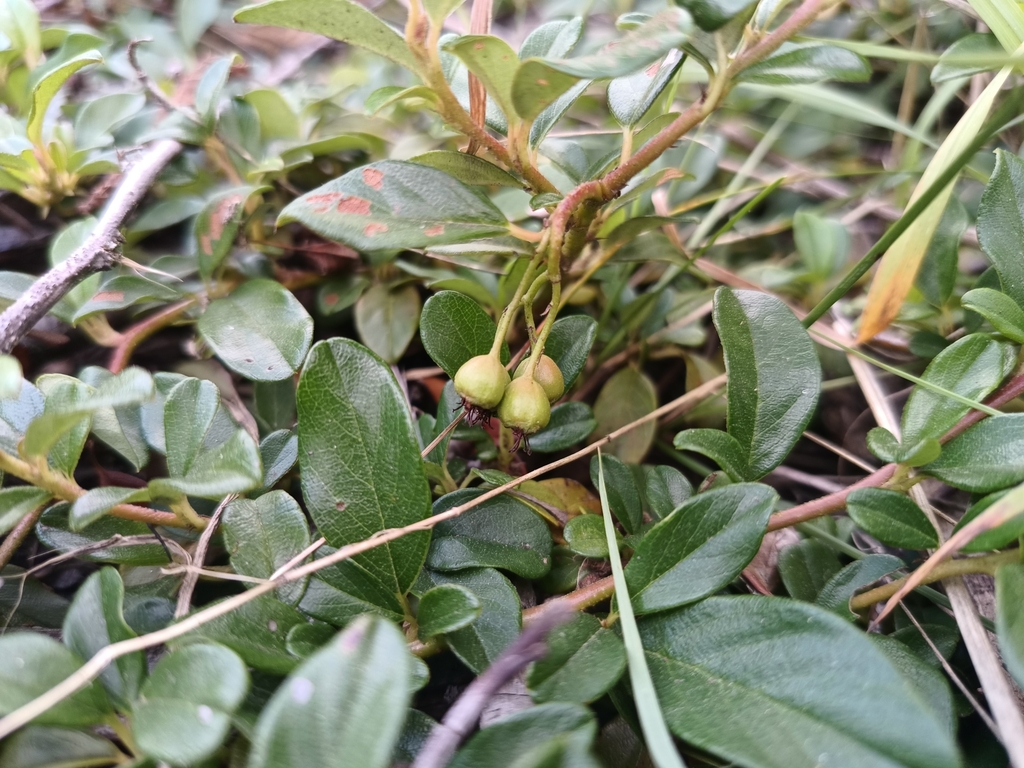
- Port prostré, formant un tapis
- Petites feuilles coriaces, vert foncé
- Minuscules fleurs blanches ou rosées
- Baies rouge vif, persistantes
- Tiges rampantes et ligneuses
- Hauteur
- 0,1 à 0,3m
- Envergure
- 1 à 2m
- Feuilles
- vert foncé, persistant
- Fleurs
- blanc, 0,5 à 1cm
- Fruits
- rouge, Automne à hiver
Problèmes à surveiller
- CochenillesCourant
- Feu bactérienCourant
- Pourriture des racinesPeu courant
- PuceronsPeu courant
- Cochenilles à coque — De petits insectes suceurs de sève qui peuvent affaiblir la plante et provoquer le jaunissement des feuilles.
Par symptôme
Vérifie la santé de ta plante en photo
Pocket Botanist analyse une photo de ta plante et te dit ce qui ne va pas et quoi essayer en premier.
La cultiver
- Multiplication
- boutures, marcottage, semis
- Quand planter
- printemps, automne
- Hivernage
- Il est rustique et ne nécessite aucune protection particulière dans la plupart des climats. Assurez-vous que le sol reste bien drainé pour éviter la pourriture des racines en hiver.
- En pot
- Il pousse bien dans de grands contenants larges, mais assurez-vous que le pot a un excellent drainage pour éviter la pourriture des racines.
Boutures semi-aoûtées
- 1. Prélevez des boutures de 10 cm à la fin de l'été.
- 2. Retirez les feuilles inférieures.
- 3. Trempez dans de l'hormone de bouturage.
- 4. Placez dans un sol humide et sableux.
- 5. Gardez dans un endroit lumineux et abrité jusqu'à l'enracinement.
Associez-le à des arbustes plus grands et dressés pour créer un aspect superposé qui masque les tiges nues des plantes plus grandes.
Bonnes associations
- Juniperus — Ils partagent des exigences similaires en matière de sol et de lumière tout en offrant des textures contrastées.
- Hémérocalle — Le feuillage dressé des hémérocalles complète le port bas et étalé du cotoneaster.
Espèces similaires
- Cotoneaster horizontalis — Il a un port étalé similaire mais avec un motif de ramification distinct en arête de poisson.
Science
- Famille
- Rosaceae
- Genre
- Cotoneaster
- Ordre
- Rosales
- Classe
- Magnoliopsida
- Région d'origine
- Chine centrale
- Préservation
- Cette espèce n'est pas préoccupante en matière de conservation et est largement cultivée.
Il pousse comme un arbuste prostré dans les zones rocheuses et montagneuses où il stabilise le sol.
- Intérêt pour la faune
- source de nectar, nourriture hivernale pour les oiseaux
- Pollinisateurs
- abeilles, papillons
- Utilisations
- couvre-sol, lutte contre l'érosion, jardins de rocaille, stabilisation des berges
Au fil des saisons
Repères écologiques
- Salinité
- 2/9
- Réaction du sol
- 6/9
- Lumière
- 7/9
- Température
- 5/9
- Humidité
- 5/9
- Nutriments
- 4/9
Taxonomie vérifiée avec le GBIF.
Ce qu'on demande souvent
- Est-il résistant aux cerfs ?
- Oui, il a généralement une résistance modérée aux dommages causés par les cerfs.
- A-t-il besoin d'être taillé ?
- La taille est rarement nécessaire, mais vous pouvez la raccourcir à la fin de l'hiver pour maintenir sa forme.
D'où vient le nom
Le nom fait référence à la ressemblance du feuillage avec le cognassier, tandis que dammeri honore le collecteur U. Dammer.
Bon à savoir
- Le nom Cotoneaster vient du latin cotoneum signifiant coing et aster signifiant ressemblant.
- Il est originaire de Chine centrale.
- Les tiges rampantes peuvent s'enraciner partout où elles touchent le sol, aidant la plante à se propager.
Aussi dans
Garde ta plante en pleine forme
Cette page est un guide général. Enregistre ta plante dans Pocket Botanist et tu reçois des rappels d'entretien adaptés à cette plante, ainsi qu'un historique d'entretien qui montre ce qui a marché.
Ce guide a été généré par IA et vérifié avec la taxonomie du GBIF. Il s'agit d'informations générales, et non de conseils horticoles ou vétérinaires. Découvre comment nous concevons ces guides.