 Pocket Botanist
Pflanzenratgeber
Enchanter's nightshade.
Circaea lutetiana
Aussprache sir-SEE-uh loo-teh-tee-AH-nuh
Auch bekannt als Common Enchanter's Nightshade, Enchanter's Nightshade, Enchanter's nightshade, Witch's grass, Enchanter's-Nightshade


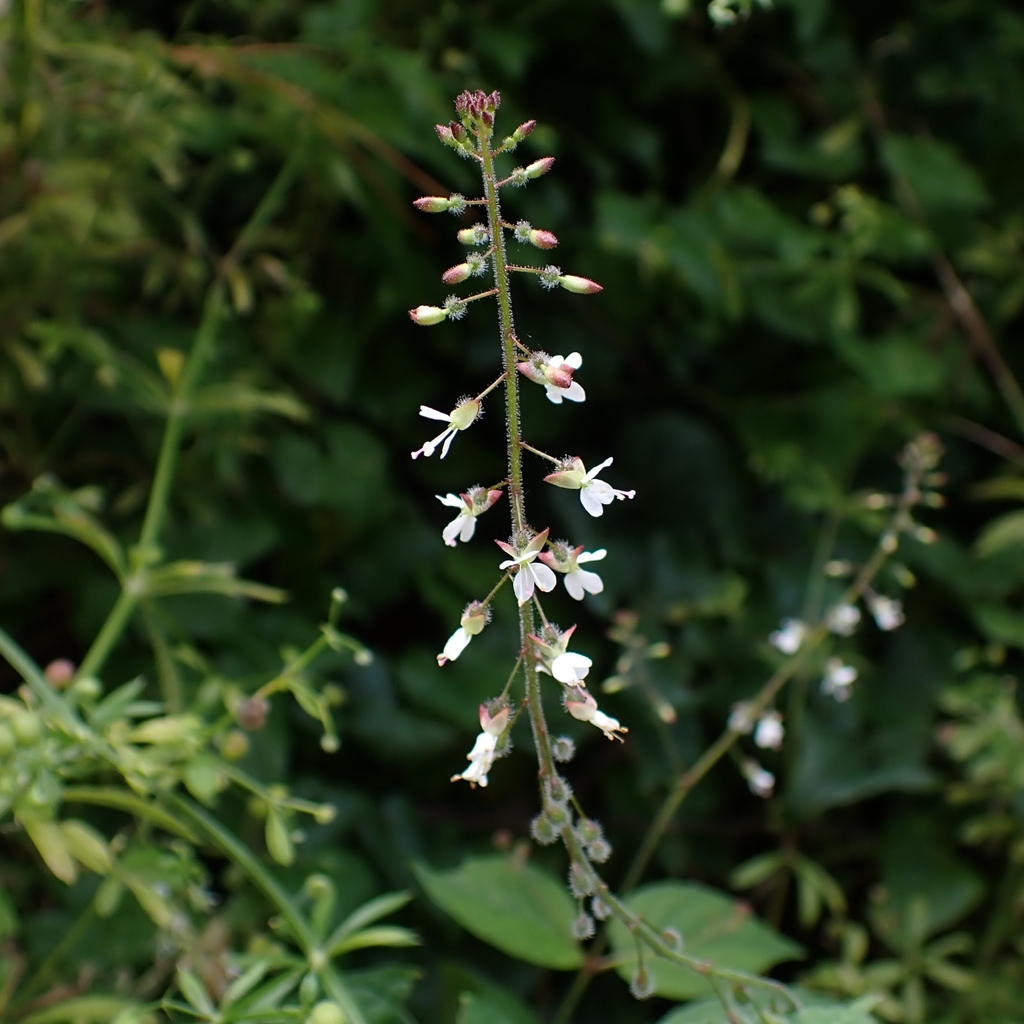
This charming woodland perennial is a common sight in shaded forests across Europe and Asia. It spreads through underground runners to form lovely patches in damp, cool areas. You'll find it's quite resilient in the right garden spot.

Auf einen Blick
- Pflegestufe
- Einfach
- Pflanzenart
- Perennial herb
- Licht
- Full shade to partial shade
- Licht im Innenraum
- Wenig Licht
- Gießen
- Alle 3 bis 7 Tage
- Endgröße
- 24 inches
- Wachstum
- Mittel
- Winterhärte
- USDA 4 bis 8
- Blütezeit
- Mid to late summer
Pflege
Keep the soil consistently moist to mimic its natural forest floor habitat. Watch for wilting during dry spells, as it prefers to stay cool and damp. It can spread quickly, so keep an eye on its footprint in your garden beds.
- Gießen
- Ensure the soil stays damp but not waterlogged.
- Düngen
- A light application of organic compost in spring is plenty.
- Schneiden
- Cut back dead stems in late autumn or early spring.
- Umtopfen
- Divide clumps every few years to keep the plant vigorous.
- Boden
- Humus rich and moist
- Boden-pH
- Neutral to slightly acidic
- Temperatur
- -20 bis 30°C
- Luftfeuchtigkeit
- 40 bis 70%
Sicherheit
- Menschen
- There is no significant toxicity reported for this plant.
- Kinder
- The small, sticky burrs can be a nuisance if they get stuck in hair or clothing.
- Kontaktallergene
- The foliage can cause mild skin irritation in sensitive individuals.
- Allergene in der Luft
- There are no notable respiratory allergens associated with this plant.
- Essbarkeit
- This plant is not considered edible and should be avoided.
So erkennst du die Pflanze
- Opposite ovate leaves with pointed tips
- Small white or pinkish flowers
- Two petals per flower
- Hooked bristles on fruit capsules
- Slender stems reaching knee height
- Höhe
- 0,2 bis 0,6m
- Breite
- 0,3 bis 0,9m
- Blätter
- green, deciduous
- Blüten
- white, pink, 0,5 bis 1cm
- Früchte
- green, brown, Late summer to autumn
Häufige Probleme
- Powdery mildew — A white fungal growth appears on leaves during periods of high humidity.
Standort und Pflege
- Vermehrung
- division, seed
- Pflanzzeit
- spring, autumn
Group this plant with other shade lovers that enjoy consistent moisture to create a lush woodland display.
Gute Pflanzpartner
- Buschwindröschen — They share similar requirements for moist, shaded woodland environments.
- Asarum canadense — This makes a lovely, low growing companion for shaded areas.
Ähnliche Arten
- Circaea alpina — It is a smaller, more delicate relative found in cooler, higher elevations.
Botanisches
- Familie
- Onagraceae
- Gattung
- Circaea
- Ordnung
- Myrtales
- Klasse
- Magnoliopsida
- Ursprüngliche Heimat
- Europe, Western Asia, and parts of North America.
- Artenschutz
- This plant is common and not of conservation concern.
It thrives in moist, shaded woodland floors where it competes for light under the canopy.
- Nutzen für Wildtiere
- nectar source
- Bestäuber
- Bienen, flies
- Verwendung
- woodland garden, shade groundcover
Im Jahresverlauf
Ökologische Zeigerwerte
- Salzgehalt
- 1/9
- Bodenreaktion
- 6/9
- Licht
- 2/9
- Temperatur
- 5/9
- Feuchtigkeit
- 7/9
- Nährstoffe
- 6/9
Taxonomie abgeglichen mit GBIF.
Häufige Fragen
- Is it invasive?
- It can be aggressive in small gardens due to its spreading rhizomes.
- Does it need full sun?
- No, it prefers deep to partial shade.
Woher der Name kommt
The name Circaea honors the sorceress Circe, while lutetiana refers to Lutetia, the ancient name for Paris.
Gut zu wissen
- It is commonly known as enchanter's nightshade.
- The genus name refers to Circe, the Greek enchantress, due to its woodland habitat.
- It spreads via underground rhizomes to form colonies.
Auch in
Probleme mit Enchanter's nightshade?
Diese Seite bietet allgemeine Infos. Pocket Botanist erkennt Probleme anhand eines Fotos deiner echten Pflanze, passt das Gießen an dein Licht und deinen Standort an und erinnert dich an die Pflege.
Dieser Ratgeber wurde mit KI erstellt und mit der GBIF-Taxonomie abgeglichen. Er dient zur allgemeinen Information und ersetzt keine gärtnerische oder tierärztliche Beratung. Hier erfährst du, wie wir diese Ratgeber erstellen.