 Pocket Botanist
Pflanzenratgeber
Water fern.
Azolla filiculoides
Aussprache uh-ZOH-luh fil-ih-koy-DEEZ
Auch bekannt als Floating Fern, Pacific azolla, Pacific azolla, Pacific mosquitofern, Pacific mosquito fern, Pacific mosquitofern, Red Fern, Water Fern, Water Fern, Fairy moss


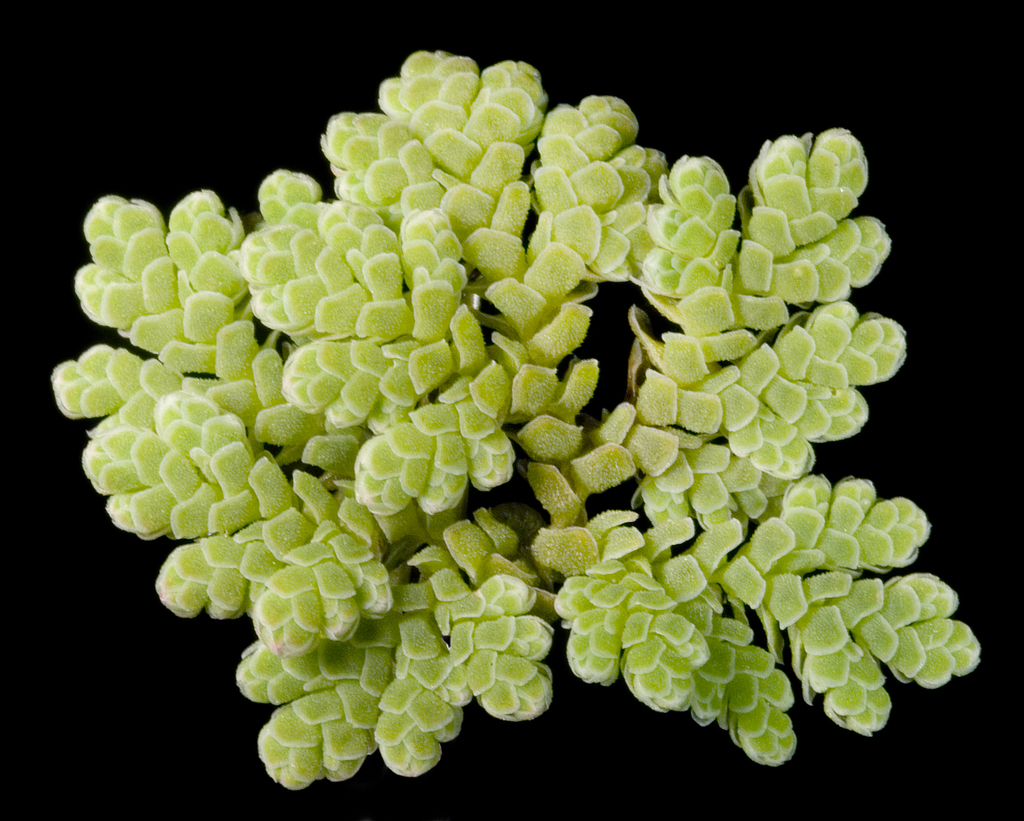
This tiny floating aquatic fern is a fascinating plant that forms dense mats on the water surface. It is well known for its symbiotic relationship with nitrogen fixing cyanobacteria. You will often see it turning reddish in cooler weather or high light.

Auf einen Blick
- Pflegestufe
- Einfach
- Pflanzenart
- Aquatic fern
- Licht
- Full sun to partial shade
- Licht im Innenraum
- Hell, indirekt
- Gießen
- Alle 0 Tage
- Endgröße
- 1 to 2 centimeters
- Wachstum
- Schnell
- Winterhärte
- USDA 7 bis 10
Pflege
Keep this plant in a calm body of water with plenty of sunlight. Watch for rapid spread, as it can quickly cover an entire pond surface if left unchecked. Ensure it stays moist at all times since it is strictly aquatic.
- Gießen
- This plant must remain floating in water at all times.
- Düngen
- Usually obtains nutrients from the water, but a light liquid aquatic fertilizer helps in nutrient poor ponds.
- Schneiden
- Scoop out excess plants to prevent them from completely covering the water surface.
- Umtopfen
- This is a free floating plant and does not require potting.
- Boden
- None, aquatic
- Boden-pH
- 6.0 to 8.0
- Temperatur
- 0 bis 30°C
- Luftfeuchtigkeit
- 70 bis 100%
Sicherheit
- Menschen
- There is no evidence of human toxicity, but it should not be eaten due to potential water contamination.
- Kinder
- Keep away from small children as it can be a choking hazard if ingested from water features.
- Essbarkeit
- This plant is not intended for human consumption and may accumulate heavy metals from water.
So erkennst du die Pflanze
- Tiny triangular overlapping leaves
- Floating on water surface
- Roots hang directly into water
- Color shifts green to red
- Höhe
- 0,01 bis 0,02m
- Breite
- 0,1 bis 10m
- Blätter
- green, red, deciduous
- Blüten
- 0cm
Häufige Probleme
- Overgrowth — It can quickly cover the entire surface of a pond, blocking light and oxygen.
Standort und Pflege
- Vermehrung
- division
- Pflanzzeit
- spring, summer
Use this plant to shade out algae in small ponds.
Gute Pflanzpartner
- Eichhornia crassipes — They both thrive in similar aquatic conditions.
Ähnliche Arten
- Duckweed — It is a similar floating plant often found in the same habitats.
Botanisches
- Familie
- Salviniaceae
- Gattung
- Azolla
- Ordnung
- Salviniales
- Klasse
- Polypodiopsida
- Ursprüngliche Heimat
- Americas
- Artenschutz
- It is considered an invasive species in many parts of the world outside its native range.
It floats on the water surface and thrives in nutrient rich, still, or slow moving water.
- Nutzen für Wildtiere
- provides cover for aquatic insects, habitat for small fish
- Verwendung
- water garden cover, natural fertilizer, aquarium plant
Im Jahresverlauf
Ökologische Zeigerwerte
- Salzgehalt
- 1/9
- Bodenreaktion
- 5/9
- Licht
- 7/9
- Temperatur
- 6/9
- Feuchtigkeit
- 9/9
- Nährstoffe
- 7/9
Taxonomie abgeglichen mit GBIF.
Häufige Fragen
- Is it a moss?
- No, it is a tiny aquatic fern.
- How do I control it?
- Simply scoop the excess plants off the water surface with a net.
Woher der Name kommt
The name Azolla comes from the Greek words for dry and to destroy, referring to its tendency to die when dried out.
Gut zu wissen
- It is often called fairy moss.
- The plant turns reddish in bright sun or cold temperatures.
- It is one of the fastest growing plants on earth.
Probleme mit Water fern?
Diese Seite bietet allgemeine Infos. Pocket Botanist erkennt Probleme anhand eines Fotos deiner echten Pflanze, passt das Gießen an dein Licht und deinen Standort an und erinnert dich an die Pflege.
Dieser Ratgeber wurde mit KI erstellt und mit der GBIF-Taxonomie abgeglichen. Er dient zur allgemeinen Information und ersetzt keine gärtnerische oder tierärztliche Beratung. Hier erfährst du, wie wir diese Ratgeber erstellen.