 Pocket Botanist
Guide botanique
Water fern.
Azolla filiculoides
Prononciation uh-ZOH-luh fil-ih-koy-DEEZ
Aussi appelée Floating Fern, Pacific azolla, Pacific azolla, Pacific mosquitofern, Pacific mosquito fern, Pacific mosquitofern, Red Fern, Water Fern, Water Fern, Fairy moss


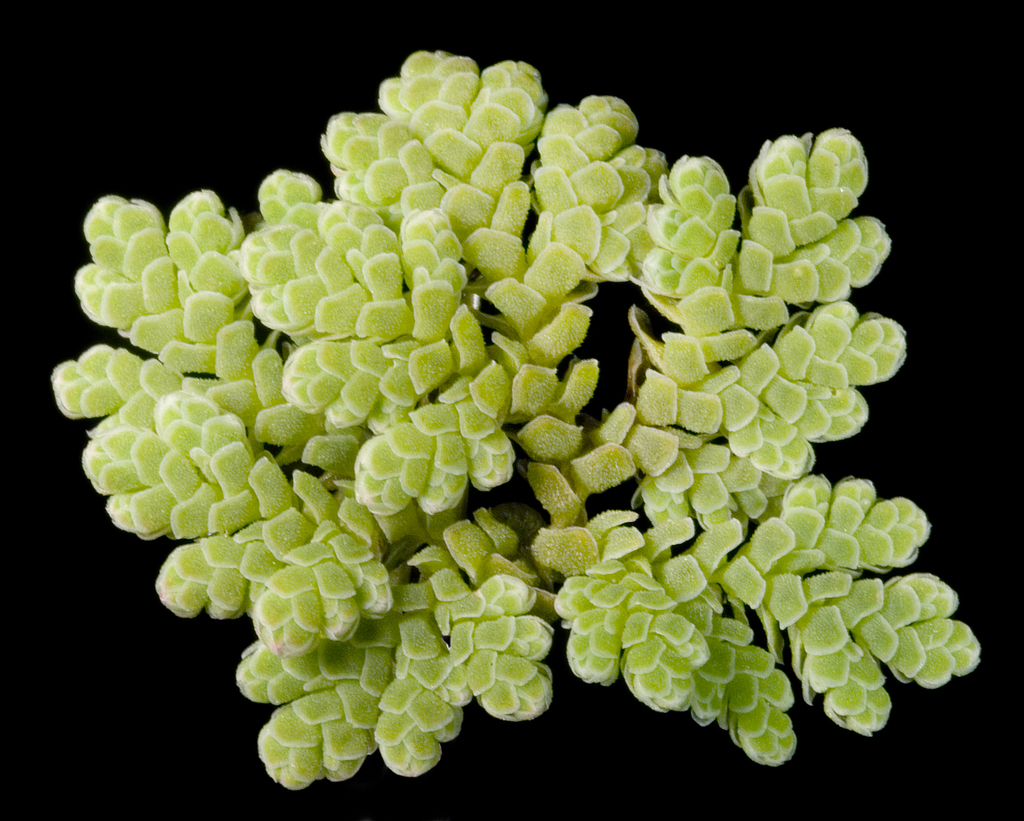
This tiny floating aquatic fern is a fascinating plant that forms dense mats on the water surface. It is well known for its symbiotic relationship with nitrogen fixing cyanobacteria. You will often see it turning reddish in cooler weather or high light.

En un coup d'œil
- Niveau d'entretien
- Facile
- Type de plante
- Aquatic fern
- Lumière
- Full sun to partial shade
- Lumière en intérieur
- Lumière vive indirecte
- Arrosage
- Tous les 0 jours
- Taille adulte
- 1 to 2 centimeters
- Croissance
- Rapide
- Rusticité
- USDA 7 à 10
Entretien
Keep this plant in a calm body of water with plenty of sunlight. Watch for rapid spread, as it can quickly cover an entire pond surface if left unchecked. Ensure it stays moist at all times since it is strictly aquatic.
- Arrosage
- This plant must remain floating in water at all times.
- Engrais
- Usually obtains nutrients from the water, but a light liquid aquatic fertilizer helps in nutrient poor ponds.
- Taille
- Scoop out excess plants to prevent them from completely covering the water surface.
- Rempotage
- This is a free floating plant and does not require potting.
- Sol
- None, aquatic
- pH du sol
- 6.0 to 8.0
- Température
- 0 à 30°C
- Humidité
- 70 à 100%
Sécurité
- Humains
- There is no evidence of human toxicity, but it should not be eaten due to potential water contamination.
- Enfants
- Keep away from small children as it can be a choking hazard if ingested from water features.
- Comestibilité
- This plant is not intended for human consumption and may accumulate heavy metals from water.
Comment l'identifier
- Tiny triangular overlapping leaves
- Floating on water surface
- Roots hang directly into water
- Color shifts green to red
- Hauteur
- 0,01 à 0,02m
- Envergure
- 0,1 à 10m
- Feuilles
- green, red, deciduous
- Fleurs
- 0cm
Problèmes courants
- Overgrowth — It can quickly cover the entire surface of a pond, blocking light and oxygen.
La cultiver
- Multiplication
- division
- Quand planter
- spring, summer
Use this plant to shade out algae in small ponds.
Bonnes associations
- Eichhornia crassipes — They both thrive in similar aquatic conditions.
Espèces similaires
- Duckweed — It is a similar floating plant often found in the same habitats.
Science
- Famille
- Salviniaceae
- Genre
- Azolla
- Ordre
- Salviniales
- Classe
- Polypodiopsida
- Région d'origine
- Americas
- Préservation
- It is considered an invasive species in many parts of the world outside its native range.
It floats on the water surface and thrives in nutrient rich, still, or slow moving water.
- Intérêt pour la faune
- provides cover for aquatic insects, habitat for small fish
- Utilisations
- water garden cover, natural fertilizer, aquarium plant
Au fil des saisons
Repères écologiques
- Salinité
- 1/9
- Réaction du sol
- 5/9
- Lumière
- 7/9
- Température
- 6/9
- Humidité
- 9/9
- Nutriments
- 7/9
Taxonomie vérifiée avec le GBIF.
Ce qu'on demande souvent
- Is it a moss?
- No, it is a tiny aquatic fern.
- How do I control it?
- Simply scoop the excess plants off the water surface with a net.
D'où vient le nom
The name Azolla comes from the Greek words for dry and to destroy, referring to its tendency to die when dried out.
Bon à savoir
- It is often called fairy moss.
- The plant turns reddish in bright sun or cold temperatures.
- It is one of the fastest growing plants on earth.
Ta plante a mauvaise mine ?
Cette page est un guide général. Pocket Botanist diagnostique les problèmes directement à partir d'une photo de ta plante, adapte l'arrosage à sa luminosité et te prévient quand il faut t'en occuper.
Ce guide a été généré par IA et vérifié avec la taxonomie du GBIF. Il s'agit d'informations générales, et non de conseils horticoles ou vétérinaires. Découvre comment nous concevons ces guides.