 Pocket Botanist
Plant guide
Jack-in-the-pulpit.
Arisaema triphyllum
Pronounced ar-ih-SEE-muh try-FILL-um
Also known as Indian-turnip, Jack In The Pulpit, Jack-in-the-pulpit, Indian Jack-in-the-pulpit


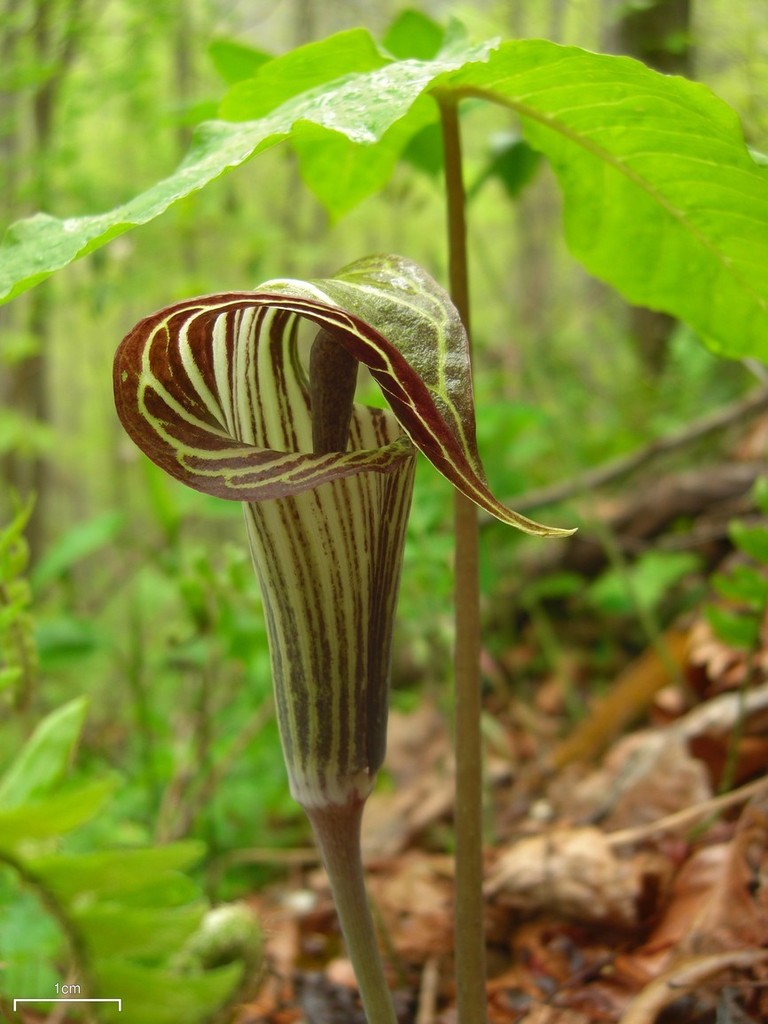
This charming woodland perennial is famous for its unique hooded flower structure that resembles a preacher in a pulpit. It thrives in shaded, moist environments and adds a touch of wild beauty to any garden. You will love watching the green and purple striped spathe emerge in spring.

At a glance
- Care level
- Moderate
- Plant type
- Perennial
- Light
- Partial shade to full shade
- Indoor light
- Medium light
- Water
- Every 3 to 7 days
- Mature size
- 60 cm tall
- Growth rate
- Medium
- Hardiness
- USDA 4 to 9
- Bloom time
- Mid to late spring
Care
Keep the soil consistently moist, mimicking its natural forest floor habitat. Watch for wilting during dry spells, as it does not tolerate drought well. Ensure the soil stays rich in organic matter to support its seasonal growth cycle.
- Watering
- Keep the soil consistently damp but not waterlogged.
- Feeding
- Apply a balanced organic fertilizer in early spring as growth begins.
- Pruning
- Remove dead foliage once it turns brown in late autumn.
- Repotting
- Repot only when the corms become too crowded in the container.
- Soil
- Rich, moist, well-draining woodland soil
- Soil pH
- Acidic to neutral
- Temperature
- -30 to 30°C
- Humidity
- 50 to 80%
- Drought tolerance
- Low
- Lifespan
- Perennial, typically 10 plus years
- Deer and rabbits
- High
Signs it needs repotting
- Roots growing out of the drainage holes
- Stunted growth during the active season
Safety
- People
- All parts of the plant are toxic due to the presence of calcium oxalate crystals.
- Pets
- This plant is toxic to cats and dogs due to calcium oxalate crystals.
- Children
- Keep this plant away from children because the berries and foliage are highly irritating if chewed or swallowed.
- Contact allergens
- Handling the plant can cause skin irritation or dermatitis in sensitive individuals.
- Airborne allergens
- There is no significant evidence of airborne allergen risk.
- Edibility
- The plant contains calcium oxalate crystals which cause severe burning and swelling if ingested raw.
How to identify it
- Three leaflets per leaf stalk
- Hooded spathe with striped pattern
- Club like spadix inside spathe
- Clusters of bright red berries
- Height
- 0.3 to 0.6m
- Spread
- 0.2 to 0.3m
- Leaves
- green, deciduous
- Flowers
- green, brown, purple, 5 to 15cm
- Fruit
- bright red, Late summer to early autumn
Problems to watch for
Check your jack-in-the-pulpit from a photo
Pocket Botanist looks at a photo of your plant and tells you what's wrong and what to try first.
Growing it
- Propagation
- seed, division
- When to plant
- spring, autumn
- Overwintering
- The plant dies back to the ground in autumn. No special winter care is needed as the corm is hardy underground.
- In containers
- It grows well in pots if kept consistently moist and in a shaded location.
Division
- 1. Wait until the plant is dormant in late summer or autumn.
- 2. Carefully dig up the corm.
- 3. Separate the small offsets from the main corm.
- 4. Replant the offsets in rich soil.
Pair with other moisture loving woodland plants to maintain a consistent microclimate.
Grows well with
- Trillium — They share similar woodland habitat requirements.
- Wild Ginger — It makes a great groundcover companion in shady spots.
Similar species
- Green Dragon — It is a related species with a similar growth habit.
Science
- Family
- Araceae
- Genus
- Arisaema
- Order
- Alismatales
- Class
- Liliopsida
- Native range
- Eastern North America
- Conservation
- It is not currently endangered, but wild collection should be avoided to protect local populations.
It thrives in moist, rich woodland soils where it relies on specific flies for pollination.
- Value to wildlife
- nectar source, attracts specific fungus gnats
- Pollinators
- beetles
- Uses
- woodland garden, shade border, botanical interest
Through the year
Ecological indicators
- Soil reaction
- 5/9
- Light
- 2/9
- Moisture
- 7/9
- Salinity
- 1/9
- Temperature
- 5/9
- Nutrients
- 6/9
Taxonomy resolved against GBIF.
Questions people ask
- Does it need full sun?
- No, it prefers partial to full shade.
- Can I eat the berries?
- No, they are toxic and will cause severe mouth irritation.
Where the name comes from
The name Jack in the Pulpit refers to the spadix standing inside the spathe like a preacher in a pulpit, while triphyllum refers to its three leaflets.
Good to know
- The spathe acts as a trap for small insects.
- The corm was historically used by indigenous peoples as a food source after extensive processing.
- It is a member of the Arum family.
- The plant goes dormant in mid summer if conditions become too dry.
Also in
Keep your jack-in-the-pulpit growing
This page is a general guide. Save your plant in Pocket Botanist and you get care reminders timed for this plant, plus a care history that shows what worked.
This guide was generated with AI and checked against GBIF taxonomy. It is general information, not horticultural or veterinary advice. Read about how we build these guides.