 Pocket Botanist
Plant guide
White Trillium.
Trillium grandiflorum
Pronounced TRIL-ee-um gran-di-FLOR-um
Also known as Large-flower Trillium, great white trillium, large white trillium, large-flowered trillium, snow trillium, white trillium, white wakerobin, Trille Grandiflore



Scan with your phone's camera to get the app
Or go to pocketbotanist.app/get on your phone
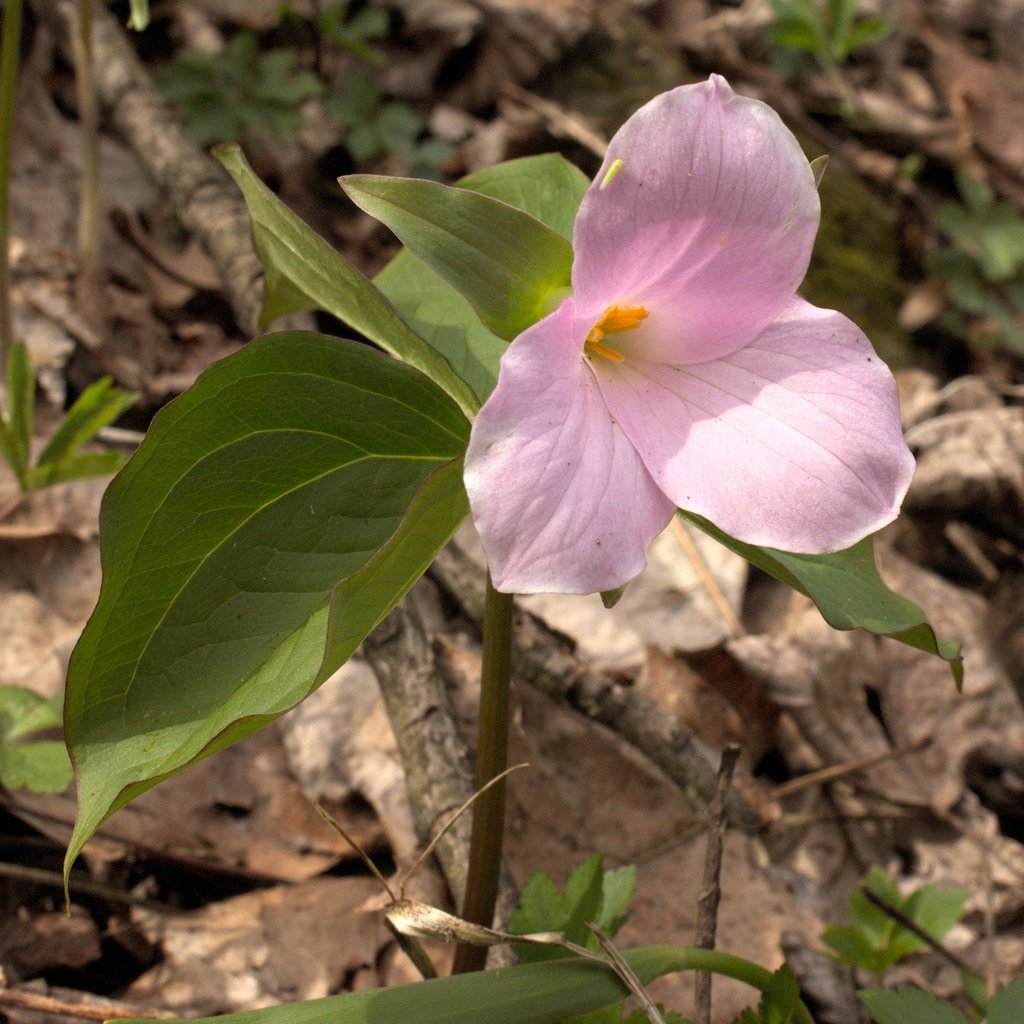
The white trillium is a lovely woodland perennial that signals the arrival of spring. It features a single, elegant white flower held above a whorl of three leaves. These plants are perfect for shaded gardens with rich, moist soil.

At a glance
- Care level
- Moderate
- Plant type
- Perennial
- Light
- Partial shade to full shade
- Indoor light
- Medium light
- Water
- Every 5 to 10 days
- Mature size
- 12 to 18 inches
- Growth rate
- Slow
- Hardiness
- USDA 4 to 8
- Bloom time
- Mid to late spring
Care
Plant these in a spot that mimics their native forest floor with dappled shade and organic matter. Keep an eye out for slugs or snails that enjoy snacking on the foliage. Ensure the soil stays consistently moist but never waterlogged to keep the rhizomes healthy.
- Watering
- Keep the soil consistently moist but avoid letting it sit in standing water.
- Feeding
- Apply a light layer of compost or leaf mold in the spring to provide nutrients.
- Pruning
- Simply remove dead or yellowing foliage once the plant goes dormant in late summer.
- Repotting
- These plants prefer to remain undisturbed and only need division if they become overcrowded.
- Soil
- Humus-rich, moist, well-draining soil
- Soil pH
- 6.0 to 7.0
- Temperature
- -30 to 25°C
- Humidity
- 50 to 80%
- Drought tolerance
- Low
- Lifespan
- Long-lived perennial, can persist for decades.
- Deer and rabbits
- Low
Safety
- People
- The plant contains saponins that can cause digestive distress if ingested.
- Pets
- This plant contains saponins and may cause vomiting or mild digestive upset in cats and dogs if eaten.
- Children
- Keep children away from the berries as they may be mistaken for edible fruit.
- Contact allergens
- There are no significant skin irritation reports for this species.
- Airborne allergens
- The pollen is not typically considered a major allergen.
- Edibility
- While some historical uses exist, the plant is generally considered toxic and should not be consumed.
How to identify it
- Three large, broad green leaves
- Single white flower with three petals
- Petals fade to pink with age
- Stems rise directly from rhizomes
- Height
- 0.2 to 0.45m
- Spread
- 0.2 to 0.3m
- Leaves
- green, deciduous
- Flowers
- white, pink, 5 to 10cm
- Fruit
- red, Late summer
Problems to watch for
- DeerCommon
- Slugs and SnailsCommon
- Leaf SpotUncommon
- Root RotUncommon
Check your white trillium from a photo
Pocket Botanist looks at a photo of your plant and tells you what's wrong and what to try first.
Scan with your phone's camera to get the app
Or go to pocketbotanist.app/get on your phone
Growing it
- Propagation
- seed, division
- When to plant
- spring, autumn
- Overwintering
- The plant is fully hardy and requires no special winter protection. Simply allow the natural leaf litter to remain over the dormant rhizomes.
- In containers
- They are not well suited for containers as they require specific woodland soil conditions and deep root runs.
Division
- Wait until the plant has gone dormant in late summer.
- Carefully dig up the rhizome cluster without damaging the roots.
- Gently pull the rhizomes apart, ensuring each piece has at least one bud.
- Replant immediately in rich, moist soil at the same depth as before.
Plant these in groups with other spring ephemerals to create a lush forest floor effect that persists even after the Trillium goes dormant.
Grows well with
- Wild Ginger · It provides a low, deciduous groundcover that complements the taller Trillium.
- Bloodroot · Both are spring ephemerals that thrive in the same woodland conditions.
- Maidenhair Fern · The delicate fronds provide a beautiful textural contrast to the broad leaves of the Trillium.
Similar species
- Red Trillium · It shares the same growth habit but features deep maroon flowers.
- Yellow Trillium · This species has distinct yellow flowers and mottled foliage.
Science
- Family
- Melanthiaceae
- Genus
- Trillium
- Order
- Liliales
- Class
- Liliopsida
- Native range
- Eastern North America
- Conservation
- In some regions, wild populations are threatened by over-collection and deer overgrazing.
This plant thrives in the dappled light of deciduous forests, emerging early to capture sunlight before the tree canopy fully leafs out.
- Value to wildlife
- nectar source, seed dispersal by ants
- Pollinators
- bees, butterflies
- Uses
- woodland gardens, shade borders, native plant restoration
Through the year
Ecological indicators
- Salinity
- 1/9
- Soil reaction
- 6/9
- Light
- 2/9
- Temperature
- 4/9
- Moisture
- 6/9
- Nutrients
- 5/9
Taxonomy resolved against GBIF.
Questions people ask
- Why did my Trillium disappear?
- Trilliums are ephemeral, meaning they go dormant and disappear underground by mid-summer.
- Can I move my Trillium?
- They resent disturbance, so it is best to plant them in a permanent spot where they can remain undisturbed.
Where the name comes from
The name Trillium comes from the Latin 'tres' for three, reflecting the plant's tri-part structure, while 'grandiflorum' means large-flowered.
Good to know
- Trillium seeds have a special appendage called an elaiosome that attracts ants, which carry the seeds to their nests.
- It can take up to seven years for a plant to reach flowering maturity from seed.
- The name refers to the three petals, three sepals, and three leaves arranged in a whorl.
Also in
Keep your white trillium growing
This page is a general guide. Save your plant in Pocket Botanist and you get care reminders timed for this plant, plus a care history that shows what worked.
Scan with your phone's camera to get the app
Or go to pocketbotanist.app/get on your phone
This guide was generated with AI on and checked against GBIF taxonomy. It is general information, not horticultural or veterinary advice. Read about how we build these guides.