 Pocket Botanist
Plant guide
Northern maidenhair fern.
Adiantum pedatum
Pronounced ad-ee-AN-tum peh-DAY-tum
Also known as Northern maidenhair fern, five-finger fern, maidenfern, maidenhair, maidenhair fern, northern maidenhair, pointerweed



Scan with your phone's camera to get the app
Or go to pocketbotanist.app/get on your phone

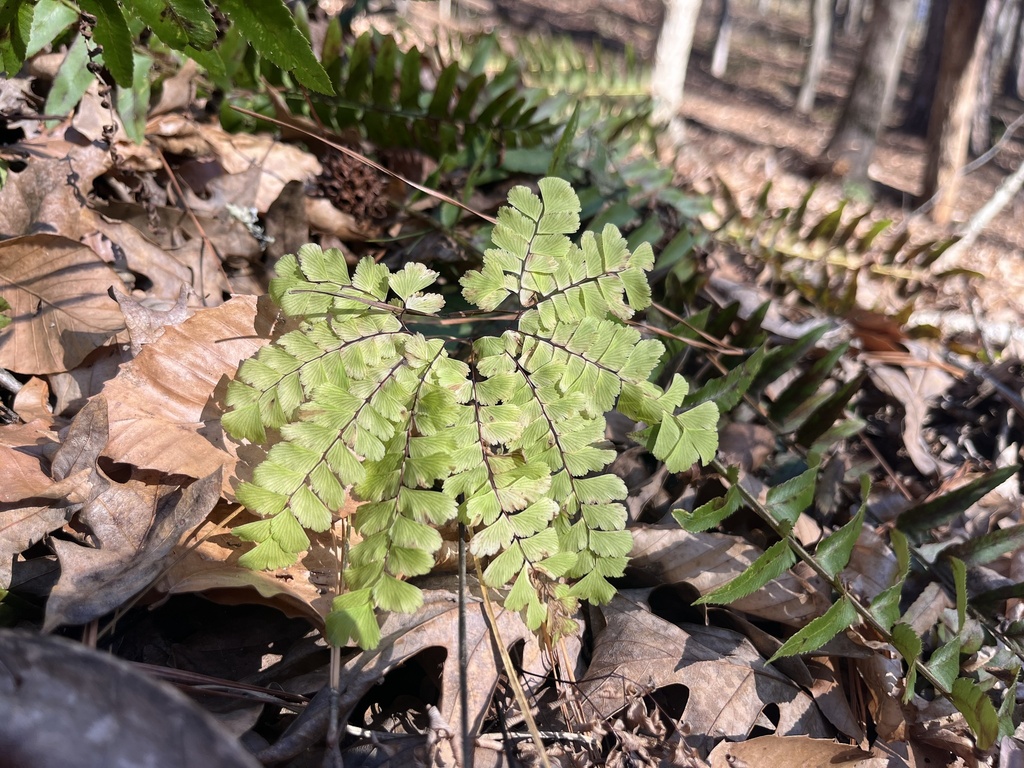
This elegant fern is a woodland native that loves cool, shaded spots in the garden. It features delicate, fan shaped fronds that arch gracefully from dark, wiry stems. It is a wonderful choice for adding texture to a moist, shady border.
At a glance
- Care level
- Moderate
- Plant type
- Perennial fern
- Light
- Partial shade to full shade
- Indoor light
- Medium light
- Water
- Every 3 to 7 days
- Mature size
- 1 to 2 feet
- Growth rate
- Slow
- Hardiness
- USDA 3 to 8
Care
Keep the soil consistently moist but never soggy to mimic its natural forest floor home. Watch for browning leaf edges, which usually signal the air is too dry or the soil has dried out. Provide plenty of organic matter in the soil to help it thrive.
- Watering
- Keep the soil evenly damp at all times.
- Feeding
- Apply a balanced, diluted liquid fertilizer during the active growing season.
- Pruning
- Trim away dead or damaged fronds in late winter or early spring before new growth starts.
- Repotting
- Repot only when the plant becomes rootbound or needs fresh soil.
- Soil
- Moist, humus rich, well draining soil
- Soil pH
- 6.0 to 7.0
- Temperature
- -40 to 30°C
- Humidity
- 60 to 90%
- Drought tolerance
- Low
- Lifespan
- Perennial, typically 10 plus years
- Deer and rabbits
- High
Signs it needs repotting
- roots growing out of the drainage holes
- stunted growth
- soil drying out too quickly
Safety
- People
- It is generally considered non toxic to humans.
- Children
- The plant is safe for children, though the delicate fronds are easily damaged by rough handling.
- Contact allergens
- There are no known significant skin irritants associated with this fern.
- Airborne allergens
- The spores released from the underside of the fronds may cause mild respiratory irritation in sensitive individuals.
- Edibility
- This plant is not considered edible and should not be consumed.
How to identify it
- Fan shaped leaflets
- Dark wiry stems
- Delicate lacy appearance
- Fronds arranged in circles
- Height
- 0.3 to 0.6m
- Spread
- 0.3 to 0.45m
- Leaves
- bright green, deciduous
- Flowers
- 0cm
Problems to watch for
- Frond scorch · The delicate leaves turn brown and crispy when exposed to direct sun or dry air.
Check your northern maidenhair fern from a photo
Pocket Botanist looks at a photo of your plant and tells you what's wrong and what to try first.
Scan with your phone's camera to get the app
Or go to pocketbotanist.app/get on your phone
Growing it
- Propagation
- division, spores
- When to plant
- spring, early autumn
- Overwintering
- The fronds will die back naturally in autumn, so you can trim them to the ground once they turn brown. Apply a light layer of mulch to protect the rhizomes during the coldest months.
- In containers
- It grows well in pots if kept in a shaded, humid spot with a minimum 20 centimeter diameter container.
Division
- 1. Carefully dig up the clump in early spring.
- 2. Gently pull the rhizomes apart into smaller sections.
- 3. Replant the divisions immediately in moist, shady soil.
Pair this fern with other woodland plants that appreciate rich, humusy soil and consistent moisture.
Grows well with
- Hosta · They share similar shade and moisture requirements.
- Wild Ginger · It makes a lovely ground cover companion that thrives in the same woodland conditions.
Similar species
- Southern Maidenhair Fern · It has a similar delicate appearance but prefers warmer climates.
Science
- Family
- Pteridaceae
- Genus
- Adiantum
- Order
- Polypodiales
- Class
- Polypodiopsida
- Native range
- Eastern North America and parts of East Asia.
- Conservation
- It is not currently listed as endangered, but wild collection should be avoided to protect local populations.
It grows in cool, moist, shaded forest floors where it benefits from high organic matter in the soil.
- Value to wildlife
- provides cover for small ground dwelling creatures
- Uses
- woodland gardens, shaded borders, container gardening
Through the year
Ecological indicators
- Salinity
- 1/9
- Soil reaction
- 6/9
- Light
- 2/9
- Temperature
- 4/9
- Moisture
- 7/9
- Nutrients
- 5/9
Taxonomy resolved against GBIF.
Questions people ask
- Does it need full shade?
- Yes, it prefers dappled shade or full shade to keep its fronds from burning.
- How often should I water it?
- Keep the soil consistently moist but not waterlogged.
Where the name comes from
The name Adiantum comes from the Greek word for unwetted, referring to the way water beads off the leaves, while pedatum describes the foot shaped arrangement of the fronds.
Good to know
- The common name refers to the thin, dark, hair like stalks that support the fronds.
- It is one of the few ferns that thrives in neutral to slightly alkaline soil.
- The fronds are often used in floral arrangements for their airy texture.
Also in
Keep your northern maidenhair fern growing
This page is a general guide. Save your plant in Pocket Botanist and you get care reminders timed for this plant, plus a care history that shows what worked.
Scan with your phone's camera to get the app
Or go to pocketbotanist.app/get on your phone
This guide was generated with AI on and checked against GBIF taxonomy. It is general information, not horticultural or veterinary advice. Read about how we build these guides.