 Pocket Botanist
Guía de plantas
El predicador.
Arisaema triphyllum
Pronunciación ar-ih-SEE-muh try-FILL-um
También se conoce como Nabo indio, Indian-turnip, El predicador, Indian Jack-in-the-pulpit


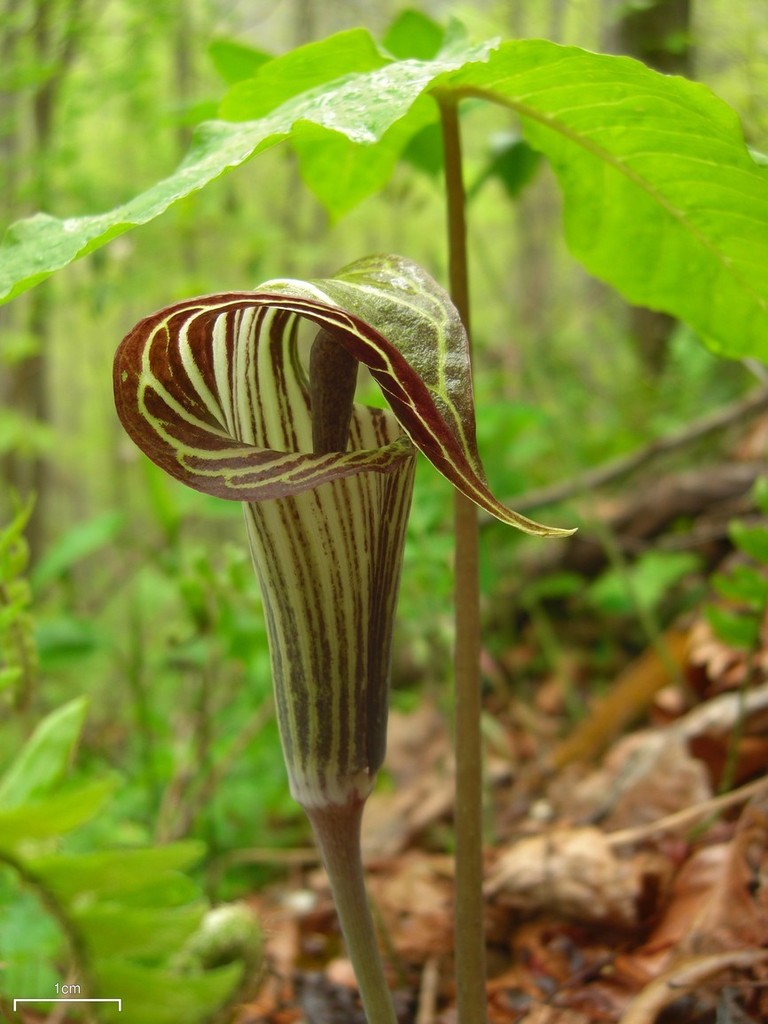
Esta encantadora planta perenne de bosque es famosa por su singular estructura floral con capucha que se asemeja a un predicador en un púlpito. Prospera en ambientes sombreados y húmedos y añade un toque de belleza silvestre a cualquier jardín. Te encantará ver cómo emerge la espata a rayas verdes y moradas en primavera.

De un vistazo
- Nivel de cuidados
- Media
- Tipo de planta
- Perenne
- Luz
- Sombra parcial a sombra completa
- Luz en interior
- Luz media
- Riego
- Cada 3 a 7 días
- Tamaño adulto
- 60 cm de altura
- Ritmo de crecimiento
- Medio
- Rusticidad
- USDA 4 a 9
- Floración
- Mediados a finales de primavera
Cuidados
Mantén la tierra constantemente húmeda, imitando su hábitat natural de suelo de bosque. Vigila si se marchita durante las sequías, ya que no tolera bien la sequía. Asegúrate de que la tierra permanezca rica en materia orgánica para apoyar su ciclo de crecimiento estacional.
- Riego
- Mantén la tierra constantemente húmeda pero no encharcada.
- Abonado
- Aplica un fertilizante orgánico equilibrado a principios de primavera, cuando comience el crecimiento.
- Poda
- Retira el follaje muerto una vez que se ponga marrón a finales de otoño.
- Trasplante
- Trasplanta solo cuando los cormos se aprieten demasiado en el contenedor.
- Suelo
- Tierra de bosque rica, húmeda y bien drenada
- pH del suelo
- Ácido a neutro
- Temperatura
- -30 a 30°C
- Humedad
- 50 a 80%
- Tolerancia a la sequía
- Baja
- Longevidad
- Perenne, típicamente 10 años o más
- Resistencia a ciervos y conejos
- Alta
Señales de que necesita trasplante
- Raíces saliendo de los agujeros de drenaje
- Crecimiento atrofiado durante la temporada activa
Seguridad
- Personas
- Todas las partes de la planta son tóxicas debido a la presencia de cristales de oxalato de calcio.
- Mascotas
- Esta planta es tóxica para gatos y perros debido a los cristales de oxalato de calcio.
- Niños
- Mantenga esta planta alejada de los niños porque las bayas y el follaje son muy irritantes si se mastican o se tragan.
- Alérgenos por contacto
- El manejo de la planta puede causar irritación de la piel o dermatitis en personas sensibles.
- Alérgenos en el aire
- No hay evidencia significativa de riesgo de alérgenos transportados por el aire.
- Comestibilidad
- La planta contiene cristales de oxalato de calcio que causan quemaduras y hinchazón severas si se ingieren crudos.
Cómo identificarla
- Tres foliolos por tallo de hoja
- Espata con capucha y patrón de rayas
- Espádice en forma de maza dentro de la espata
- Racimos de bayas de color rojo brillante
- Altura
- 0,3 a 0,6m
- Anchura
- 0,2 a 0,3m
- Hojas
- verde, caducifolio
- Flores
- verde, marrón, púrpura, 5 a 15cm
- Frutos
- rojo brillante, Finales de verano a principios de otoño
Problemas a vigilar
- Babosas y caracolesComún
- RoyaComún
- Manchas foliaresPoco común
- Podredumbre de los bulbosPoco común
- Podredumbre radicularPoco común
- Ciervos y corzosRara
- Óxido — Infección fúngica que causa manchas anaranjadas en las hojas.
Por síntoma
Revisa tu el predicador con una foto
Pocket Botanist mira una foto de tu planta y te dice qué le pasa y qué probar primero.
Cómo cultivarla
- Propagación
- semilla, división
- Cuándo plantar
- primavera, otoño
- Cuidados en invierno
- La planta se seca hasta el suelo en otoño. No se necesita ningún cuidado especial de invierno, ya que el cormo es resistente bajo tierra.
- En maceta
- Crece bien en macetas si se mantiene constantemente húmeda y en un lugar sombreado.
División
- 1. Espera hasta que la planta esté inactiva a finales de verano o en otoño.
- 2. Desentierra con cuidado el cormo.
- 3. Separa las pequeñas crías del cormo principal.
- 4. Replanta las crías en tierra rica.
Combínala con otras plantas de bosque que aman la humedad para mantener un microclima constante.
Buenas compañeras
- White Trillium — Comparten requisitos de hábitat forestal similares.
- Asarum canadense — Es un excelente compañero para cubrir el suelo en lugares sombreados.
Especies parecidas
- Arisaema dracontium — Es una especie relacionada con un hábito de crecimiento similar.
Ciencia
- Familia
- Araceae
- Género
- Arisaema
- Orden
- Alismatales
- Clase
- Liliopsida
- Distribución natural
- Noreste de América del Norte
- Conservación
- Actualmente no está en peligro, pero se debe evitar la recolección silvestre para proteger las poblaciones locales.
Prospera en suelos ricos y húmedos de bosques, donde depende de moscas específicas para la polinización.
- Valor para la fauna
- fuente de néctar, atrae a ciertos mosquitos del hongo
- Polinizadores
- escarabajos
- Usos
- jardín de bosque, borde sombreado, interés botánico
A lo largo del año
Indicadores ecológicos
- Reacción del suelo
- 5/9
- Luz
- 2/9
- Humedad
- 7/9
- Salinidad
- 1/9
- Temperatura
- 5/9
- Nutrientes
- 6/9
Taxonomía cotejada con GBIF.
Lo que más preguntan
- ¿Necesita sol directo?
- No, prefiere sombra parcial a completa.
- ¿Puedo comer las bayas?
- No, son tóxicas y causarán irritación severa en la boca.
De dónde viene el nombre
El nombre 'Jack in the Pulpit' se refiere al espádice que se alza dentro de la espata como un predicador en un púlpito, mientras que 'triphyllum' se refiere a sus tres folíolos.
Bueno saberlo
- La espata actúa como trampa para insectos pequeños.
- El cormo fue utilizado históricamente por pueblos indígenas como fuente de alimento después de un extenso procesamiento.
- Es miembro de la familia Arum.
- La planta entra en dormancia a mediados del verano si las condiciones se vuelven demasiado secas.
También en
Que tu el predicador siga creciendo
Esta página es una guía general. Guarda tu planta en Pocket Botanist y tendrás recordatorios de cuidado pensados para esta planta, además de un historial de cuidados que muestra qué ha funcionado.
Esta guía se ha generado con IA y se ha cotejado con la taxonomía de GBIF. Es información general, no asesoramiento botánico ni veterinario. Descubre cómo elaboramos estas guías.