 Pocket Botanist
Guide botanique
Jack-in-the-pulpit.
Arisaema triphyllum
Prononciation ar-ih-SEE-muh try-FILL-um
Aussi appelée Indian-turnip, Indien-navet, Jack-in-the-pulpit, Indian Jack-in-the-pulpit


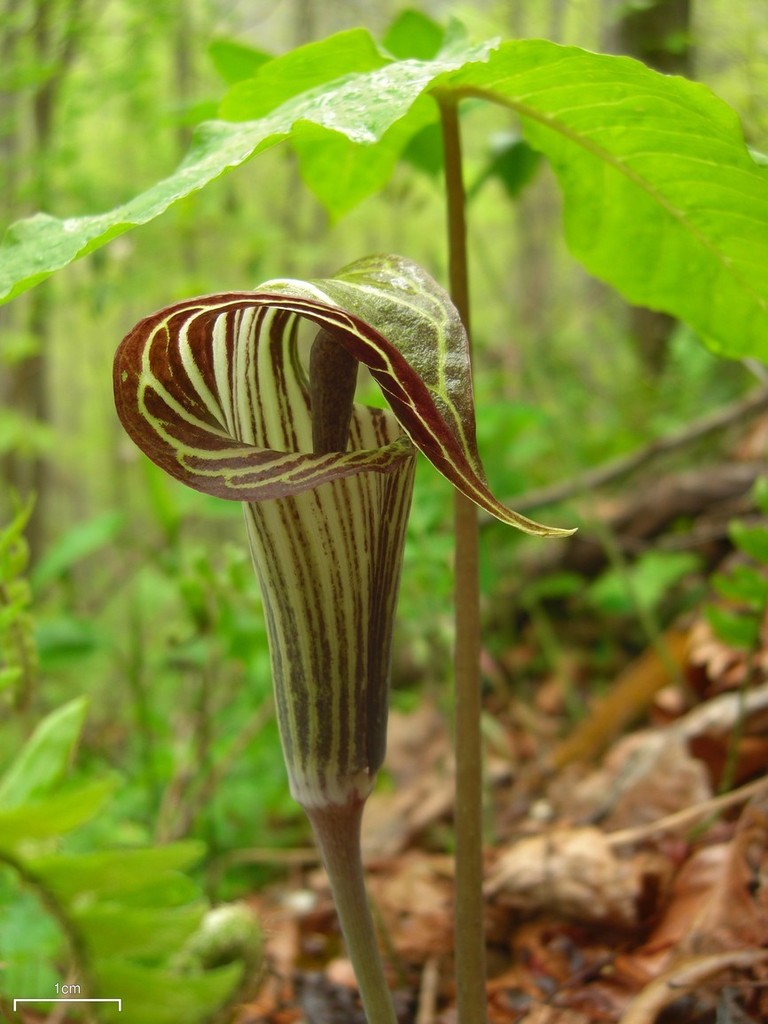
Cette charmante plante vivace des bois est célèbre pour sa structure florale unique en forme de capuchon qui ressemble à un prédicateur dans une chaire. Elle prospère dans les environnements ombragés et humides et ajoute une touche de beauté sauvage à n'importe quel jardin. Vous adorerez voir l'spathe rayée verte et violette émerger au printemps.

En un coup d'œil
- Niveau d'entretien
- Moyenne
- Type de plante
- Vivace
- Lumière
- Mi-ombre à ombre totale
- Lumière en intérieur
- Lumière moyenne
- Arrosage
- Tous les 3 à 7 jours
- Taille adulte
- 60 cm de haut
- Croissance
- Moyenne
- Rusticité
- USDA 4 à 9
- Floraison
- Mi à fin du printemps
Entretien
Gardez le sol constamment humide, en imitant son habitat naturel de sol de forêt. Surveillez le flétrissement pendant les périodes sèches, car il ne tolère pas bien la sécheresse. Assurez-vous que le sol reste riche en matière organique pour soutenir son cycle de croissance saisonnier.
- Arrosage
- Gardez le sol constamment humide mais pas détrempé.
- Engrais
- Appliquez un engrais organique équilibré au début du printemps, au début de la croissance.
- Taille
- Retirez le feuillage mort une fois qu'il devient brun à la fin de l'automne.
- Rempotage
- Rempotez uniquement lorsque les cormes deviennent trop serrés dans le conteneur.
- Sol
- Sol de bois riche, humide et bien drainé
- pH du sol
- Acide à neutre
- Température
- -30 à 30°C
- Humidité
- 50 à 80%
- Résistance à la sécheresse
- Faible
- Durée de vie
- Vivace, généralement 10 ans et plus
- Résistance aux chevreuils et lapins
- Élevée
Signes qu'il faut rempoter
- Racines sortant des trous de drainage
- Croissance ralentie pendant la saison active
Sécurité
- Humains
- Toutes les parties de la plante sont toxiques en raison de la présence de cristaux d'oxalate de calcium.
- Animaux
- Cette plante est toxique pour les chats et les chiens en raison des cristaux d'oxalate de calcium.
- Enfants
- Tenez cette plante à l'écart des enfants car les baies et le feuillage sont très irritants s'ils sont mâchés ou avalés.
- Allergènes de contact
- La manipulation de la plante peut provoquer une irritation cutanée ou une dermatite chez les personnes sensibles.
- Allergènes aéroportés
- Il n'y a aucune preuve significative de risque d'allergène aéroporté.
- Comestibilité
- La plante contient des cristaux d'oxalate de calcium qui provoquent de graves brûlures et gonflements si ingérés crus.
Comment l'identifier
- Trois folioles par tige foliaire
- Spathe capuchonnée avec motif rayé
- Spadix en forme de massue à l'intérieur de la spathe
- Grappes de baies rouge vif
- Hauteur
- 0,3 à 0,6m
- Envergure
- 0,2 à 0,3m
- Feuilles
- vert, caduc
- Fleurs
- vert, brun, violet, 5 à 15cm
- Fruits
- rouge vif, Fin de l'été au début de l'automne
Problèmes à surveiller
- Limaces et escargotsCourant
- RouilleCourant
- Pourriture des bulbesPeu courant
- Pourriture des racinesPeu courant
- Taches foliairesPeu courant
- Cerfs et chevreuilsRare
Par symptôme
Vérifie la santé de ta plante en photo
Pocket Botanist analyse une photo de ta plante et te dit ce qui ne va pas et quoi essayer en premier.
La cultiver
- Multiplication
- semis, division
- Quand planter
- printemps, automne
- Hivernage
- La plante meurt jusqu'au sol en automne. Aucun soin hivernal spécial n'est nécessaire car le corme est résistant sous terre.
- En pot
- Elle pousse bien en pots si elle est maintenue constamment humide et dans un endroit ombragé.
Division
- 1. Attendez que la plante soit dormante à la fin de l'été ou en automne.
- 2. Dégagez soigneusement le corme.
- 3. Séparez les petits rejets du corme principal.
- 4. Replantez les rejets dans un sol riche.
Associez-la à d'autres plantes forestières aimant l'humidité pour maintenir un microclimat constant.
Bonnes associations
- White Trillium — Ils partagent des exigences d'habitat forestier similaires.
- Asarum canadense — Il fait un excellent couvre-sol compagnon dans les endroits ombragés.
Espèces similaires
- Arisaema dracontium — C'est une espèce apparentée avec un port de croissance similaire.
Science
- Famille
- Araceae
- Genre
- Arisaema
- Ordre
- Alismatales
- Classe
- Liliopsida
- Région d'origine
- Est de l'Amérique du Nord
- Préservation
- Elle n'est pas actuellement en danger, mais la collecte sauvage devrait être évitée pour protéger les populations locales.
Elle prospère dans les sols forestiers humides et riches où elle dépend de mouches spécifiques pour la pollinisation.
- Intérêt pour la faune
- source de nectar, attire des sciarides spécifiques
- Pollinisateurs
- coléoptères
- Utilisations
- jardin forestier, bordure ombragée, intérêt botanique
Au fil des saisons
Repères écologiques
- Réaction du sol
- 5/9
- Lumière
- 2/9
- Humidité
- 7/9
- Salinité
- 1/9
- Température
- 5/9
- Nutriments
- 6/9
Taxonomie vérifiée avec le GBIF.
Ce qu'on demande souvent
- A-t-elle besoin de plein soleil ?
- Non, elle préfère l'ombre partielle à l'ombre complète.
- Puis-je manger les baies ?
- Non, elles sont toxiques et provoqueront une irritation sévère de la bouche.
D'où vient le nom
Le nom de Jack-in-the-pulpit fait référence au spadice dressé à l'intérieur de la spathe comme un prédicateur dans une chaire, tandis que triphyllum fait référence à ses trois folioles.
Bon à savoir
- La spathe agit comme un piège pour les petits insectes.
- Le corme était historiquement utilisé par les peuples autochtones comme source de nourriture après un traitement approfondi.
- C'est un membre de la famille des Aracées.
- La plante entre en dormance au milieu de l'été si les conditions deviennent trop sèches.
Aussi dans
Garde ta plante en pleine forme
Cette page est un guide général. Enregistre ta plante dans Pocket Botanist et tu reçois des rappels d'entretien adaptés à cette plante, ainsi qu'un historique d'entretien qui montre ce qui a marché.
Ce guide a été généré par IA et vérifié avec la taxonomie du GBIF. Il s'agit d'informations générales, et non de conseils horticoles ou vétérinaires. Découvre comment nous concevons ces guides.