 Pocket Botanist
Plant guide
Aloe Vera.
Aloe vera
Pronounced AL-oh VEER-uh
Also known as Aloe, Barbados Aloe, Barbados Aloes, Common Aloes, Curaçao aloe, Indian aloe, Jaffarabad aloe, Mediterranean aloe



Scan with your phone's camera to get the app
Or go to pocketbotanist.app/get on your phone

Aloe vera is a popular succulent known for its soothing gel found inside its thick, fleshy leaves. It thrives in sunny spots and is quite forgiving if you forget to water it occasionally. This plant makes a wonderful addition to any bright windowsill.
At a glance
- Care level
- Easy
- Plant type
- Succulent
- Light
- Full sun
- Indoor light
- Direct sun
- Water
- Every 14 to 28 days
- Mature size
- 60 to 100 cm
- Growth rate
- Medium
- Hardiness
- USDA 9 to 11
- Bloom time
- Late winter to spring
Care
Plant your aloe in well draining soil and ensure the pot has drainage holes to prevent root rot. Watch for mushy leaves or browning tips, which often signal that the plant is getting too much water. Give it plenty of bright light to keep it happy and healthy.
- Watering
- Allow the soil to dry out completely between waterings.
- Feeding
- Feed sparingly with a balanced liquid fertilizer during the growing season.
- Pruning
- Remove dead or damaged leaves at the base as needed.
- Repotting
- Repot only when the plant becomes root bound or produces too many offsets.
- Soil
- Sandy, well draining cactus mix
- Soil pH
- 6.0 to 8.0
- Temperature
- 10 to 35°C
- Humidity
- 20 to 50%
- Drought tolerance
- High
- Lifespan
- Perennial, typically 10 to 20 years
- Deer and rabbits
- High
Signs it needs repotting
- Roots growing out of the drainage holes
- The plant becomes top heavy and tips over
- Water drains through the pot immediately without soaking in
Safety
- People
- Ingesting the raw latex or skin can cause digestive distress, while the clear gel is generally considered safe for topical use.
- Pets
- This plant is toxic to cats and dogs if ingested.
- Children
- The sharp, serrated leaf edges can scratch or cut a child's skin if handled carelessly.
- Contact allergens
- Some people may experience skin irritation or contact dermatitis from the sap.
- Airborne allergens
- There are no significant reports of respiratory allergies associated with this plant.
- Edibility
- The outer green skin contains aloin, which acts as a strong laxative and can cause severe abdominal cramping.
How to identify it
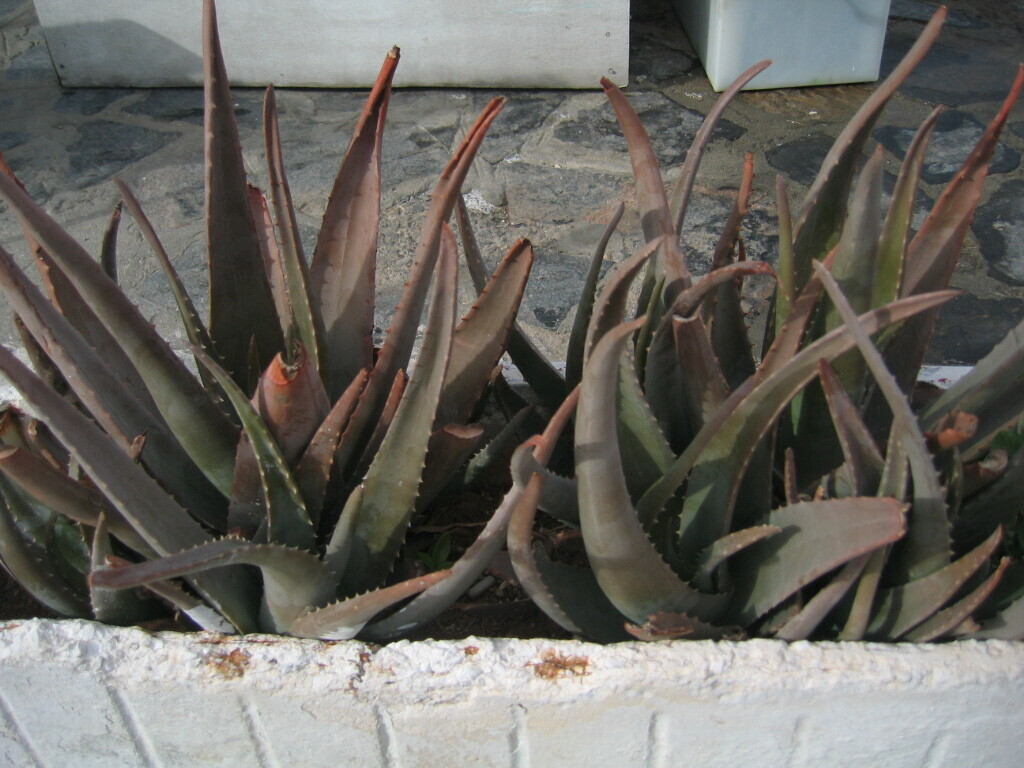
- Thick, fleshy, lance shaped leaves
- Spiny, serrated leaf margins
- Rosette growth pattern
- Spikes of tubular yellow flowers
- Height
- 0.6 to 1m
- Spread
- 0.3 to 0.6m
- Leaves
- gray-green, blue-green, evergreen
- Flowers
- yellow, orange, 2 to 3cm
Problems to watch for
- MealybugsCommon
- Root RotCommon
- Brown Leaf EdgesUncommon
- Fungus GnatsUncommon
- Scale InsectsUncommon
- EdemaRare
Check your aloe vera from a photo
Pocket Botanist looks at a photo of your plant and tells you what's wrong and what to try first.
Scan with your phone's camera to get the app
Or go to pocketbotanist.app/get on your phone
Growing it
- Propagation
- division, cuttings
- When to plant
- spring, summer
- Overwintering
- Move the plant indoors before the first frost. Reduce watering significantly during the winter months as the plant enters a period of dormancy.
- In containers
- Aloe vera grows very well in containers, provided the pot has excellent drainage and is not too large for the root system.
Offset Division
- Wait for the mother plant to produce small offsets or pups.
- Gently remove the pup from the base of the mother plant.
- Allow the cut end of the pup to callous for two days.
- Plant the pup in a well draining succulent potting mix.
- Water sparingly until new roots establish.
Group succulents together to simplify your watering schedule and maintain a consistent aesthetic.
Grows well with
- Jade Plant · They share similar water and light requirements.
- Snake Plant · Both plants tolerate low water and thrive in similar indoor conditions.
Similar species
- Aloe arborescens · It is a larger, shrubby relative with similar care needs.
Science
- Family
- Asphodelaceae
- Genus
- Aloe
- Order
- Asparagales
- Class
- Liliopsida
- Native range
- Arabian Peninsula
- Conservation
- This species is widely cultivated and naturalized worldwide. Its true wild origin is uncertain, and it is not considered threatened.
It survives in arid environments by storing moisture in its leaves and closing its pores during the day to prevent water loss.
- Value to wildlife
- nectar source
- Pollinators
- bees, hummingbirds
- Uses
- ornamental, skincare, traditional medicine
Through the year
Ecological indicators
- Salinity
- 2/9
- Soil reaction
- 6/9
- Light
- 7/9
- Moisture
- 2/9
- Nutrients
- 3/9
- Temperature
- 8/9
Taxonomy resolved against GBIF.
Questions people ask
- How often should I water my Aloe?
- Water only when the top two inches of soil are completely dry.
- Why are the leaves turning brown?
- This is often a sign of too much direct sun or inconsistent watering.
Where the name comes from
The genus name Aloe comes from the Arabic word alloeh, meaning bitter, while the species name vera is Latin for true.
Good to know
- Aloe vera is a succulent that stores water in its thick, fleshy leaves.
- The plant is often called the burn plant because of its soothing properties.
- It thrives in bright light and tolerates full sun once acclimated.
- Aloe vera is not a cactus, despite its appearance.
Also in
Keep your aloe vera growing
This page is a general guide. Save your plant in Pocket Botanist and you get care reminders timed for this plant, plus a care history that shows what worked.
Scan with your phone's camera to get the app
Or go to pocketbotanist.app/get on your phone
This guide was generated with AI on and checked against GBIF taxonomy. It is general information, not horticultural or veterinary advice. Read about how we build these guides.