 Pocket Botanist
Plant guide
Golden trumpet.
Allamanda cathartica
Pronounced al-uh-MAN-duh kath-AR-tih-kuh
Also known as Buttercup, Golden Trumpet, Yellow Bell, allamanda, common trumpetvine, golden-trumpet, yellow allamanda



Scan with your phone's camera to get the app
Or go to pocketbotanist.app/get on your phone
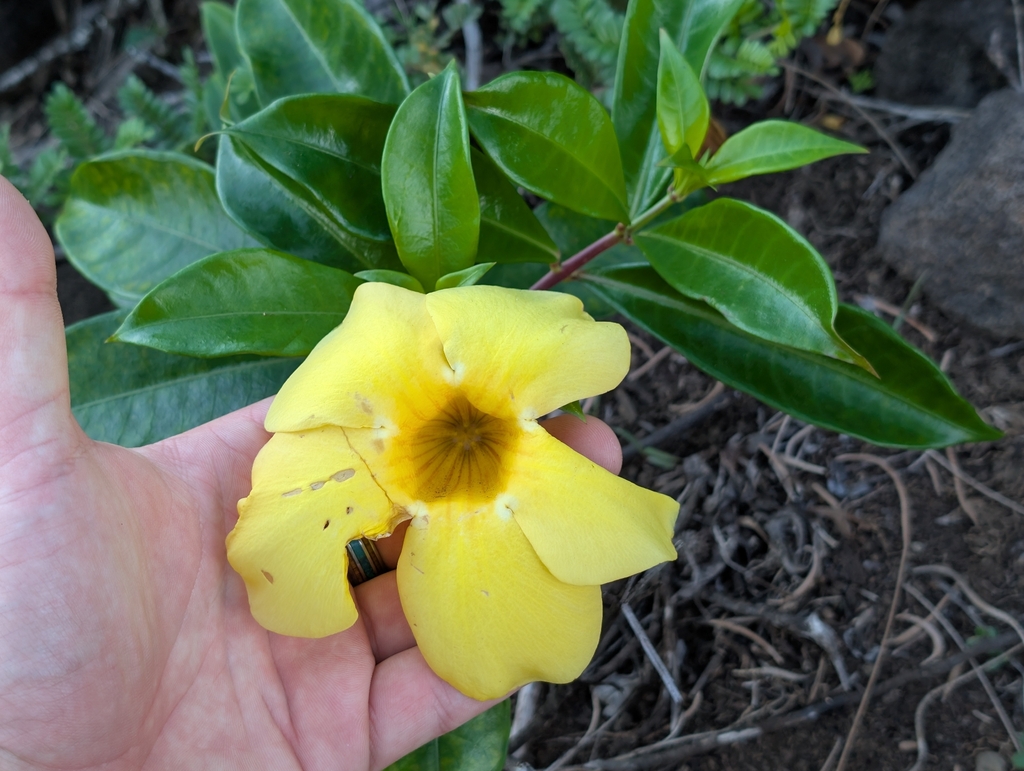
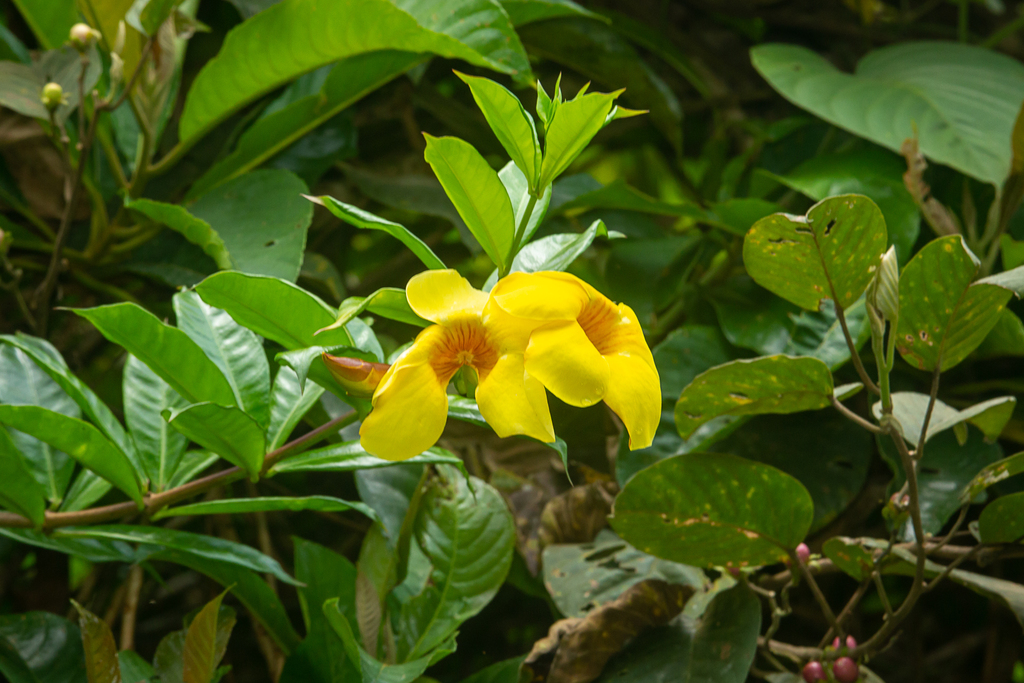
The golden trumpet is a stunning tropical vine known for its large, bright yellow, funnel shaped flowers. It loves warm weather and thrives when it gets plenty of sunshine. You will find it makes a beautiful addition to a trellis or fence in frost free climates.
At a glance
- Care level
- Moderate
- Plant type
- Tropical vine
- Light
- Full sun to partial shade
- Indoor light
- Bright indirect
- Water
- Every 3 to 7 days
- Mature size
- 10 to 20 feet
- Growth rate
- Fast
- Hardiness
- USDA 10 to 11
- Bloom time
- Spring to fall
Care
Provide a sturdy support for the vines to climb and keep the soil consistently moist during the growing season. Watch for yellowing leaves which often indicate poor drainage or overwatering. Prune back the stems after flowering to encourage a bushier shape and more blooms next time.
- Watering
- Keep the soil evenly moist but never soggy.
- Feeding
- Feed with a balanced liquid fertilizer during the active growing months.
- Pruning
- Trim back long stems in late winter or early spring to maintain size.
- Repotting
- Move to a larger container once the roots fill the current pot.
- Soil
- Well draining, fertile soil
- Soil pH
- 6.0 to 7.0
- Temperature
- 15 to 35°C
- Humidity
- 60 to 90%
- Drought tolerance
- Low
- Lifespan
- Perennial, typically 5 to 10 years.
- Fragrance
- Light
- Deer and rabbits
- Moderate
Signs it needs repotting
- Roots growing out of the drainage holes.
- Water running straight through the pot without soaking in.
- Stunted growth during the active season.
Safety
- People
- The milky sap is toxic and can cause skin irritation or internal poisoning if swallowed.
- Pets
- This plant is toxic to cats and dogs if ingested, as it contains compounds that can cause digestive upset.
- Children
- Keep this plant away from children as the sap is irritating and the plant is poisonous if eaten.
- Contact allergens
- The milky latex sap can cause contact dermatitis in sensitive individuals.
- Airborne allergens
- There is no significant evidence of respiratory allergies associated with this plant.
- Edibility
- All parts of this plant are toxic if ingested and can cause severe gastrointestinal distress.
How to identify it
- Large trumpet shaped yellow flowers
- Glossy dark green evergreen leaves
- Vining growth habit
- Milky white sap in stems
- Height
- 2 to 6m
- Spread
- 1.5 to 3m
- Leaves
- green, evergreen
- Flowers
- yellow, 7 to 12cm
- Fruit
- brown, Late summer
Problems to watch for
- AphidsCommon
- Spider MitesCommon
- ChlorosisUncommon
- Root RotUncommon
- Scale InsectsUncommon
- Sooty MoldUncommon
Check your golden trumpet from a photo
Pocket Botanist looks at a photo of your plant and tells you what's wrong and what to try first.
Scan with your phone's camera to get the app
Or go to pocketbotanist.app/get on your phone
Growing it
- Propagation
- cuttings, seed
- When to plant
- spring, summer
- Overwintering
- Move containers indoors before the first frost. Keep the plant in a bright, warm spot and reduce watering significantly during the winter months.
- In containers
- It grows very well in large containers, provided the pot is at least 40 centimeters wide and has excellent drainage.
Stem Cuttings
- 1. Take a 15 centimeter cutting from a non-flowering stem.
- 2. Remove the lower leaves.
- 3. Dip the cut end in rooting hormone.
- 4. Place in a moist, well-draining potting mix.
- 5. Cover with a plastic bag to maintain high humidity until rooted.
Pair this vine with other sun-loving tropicals that appreciate consistent moisture and rich soil.
Grows well with
Similar species
- Mandevilla · They share a similar vining habit and trumpet shaped flowers.
Science
- Family
- Apocynaceae
- Genus
- Allamanda
- Order
- Gentianales
- Class
- Magnoliopsida
- Native range
- Tropical South America, specifically Brazil.
- Conservation
- It is not currently listed as endangered or protected.
It grows as a woody vine in tropical forests, climbing over other vegetation to reach sunlight.
- Value to wildlife
- nectar source
- Pollinators
- bees, butterflies, hummingbirds
- Uses
- ornamental vine, trellis cover, container plant
Through the year
Ecological indicators
- Salinity
- 2/9
- Soil reaction
- 6/9
- Light
- 8/9
- Temperature
- 8/9
- Moisture
- 6/9
- Nutrients
- 7/9
Taxonomy resolved against GBIF.
Questions people ask
- Can I grow this indoors?
- Yes, it thrives in a bright, sunny window if you maintain high humidity.
- How often should I prune it?
- Prune it in late winter or early spring to encourage bushier growth and more flowers.
Where the name comes from
The genus honors Swiss botanist Frederic Louis Allamand, while the species name cathartica refers to its historical use as a purgative.
Good to know
- It is often called the golden trumpet vine.
- The plant is native to Brazil.
- It requires plenty of sunlight to produce its signature yellow blooms.
- It is a vigorous grower that needs regular pruning to stay tidy.
Also in
Keep your golden trumpet growing
This page is a general guide. Save your plant in Pocket Botanist and you get care reminders timed for this plant, plus a care history that shows what worked.
Scan with your phone's camera to get the app
Or go to pocketbotanist.app/get on your phone
This guide was generated with AI on and checked against GBIF taxonomy. It is general information, not horticultural or veterinary advice. Read about how we build these guides.