 Pocket Botanist
Pflanzenratgeber
Chickpea.
Cicer arietinum
Aussprache SY-ser air-ee-TEE-num
Auch bekannt als Bengal gram, Chick Pea, chickpea, garbanzo


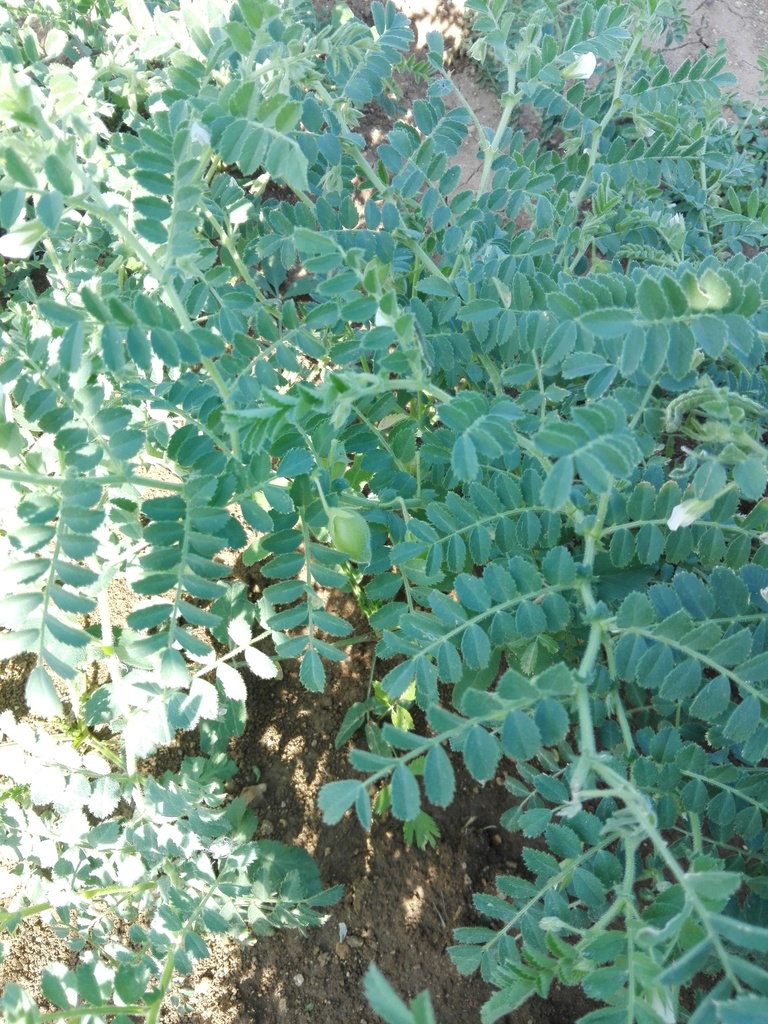
Chickpeas are a classic legume that thrive in sunny spots with well draining soil. They produce lovely fern like foliage and small pods containing edible seeds. You'll enjoy watching them grow from seed to harvest in your own garden.
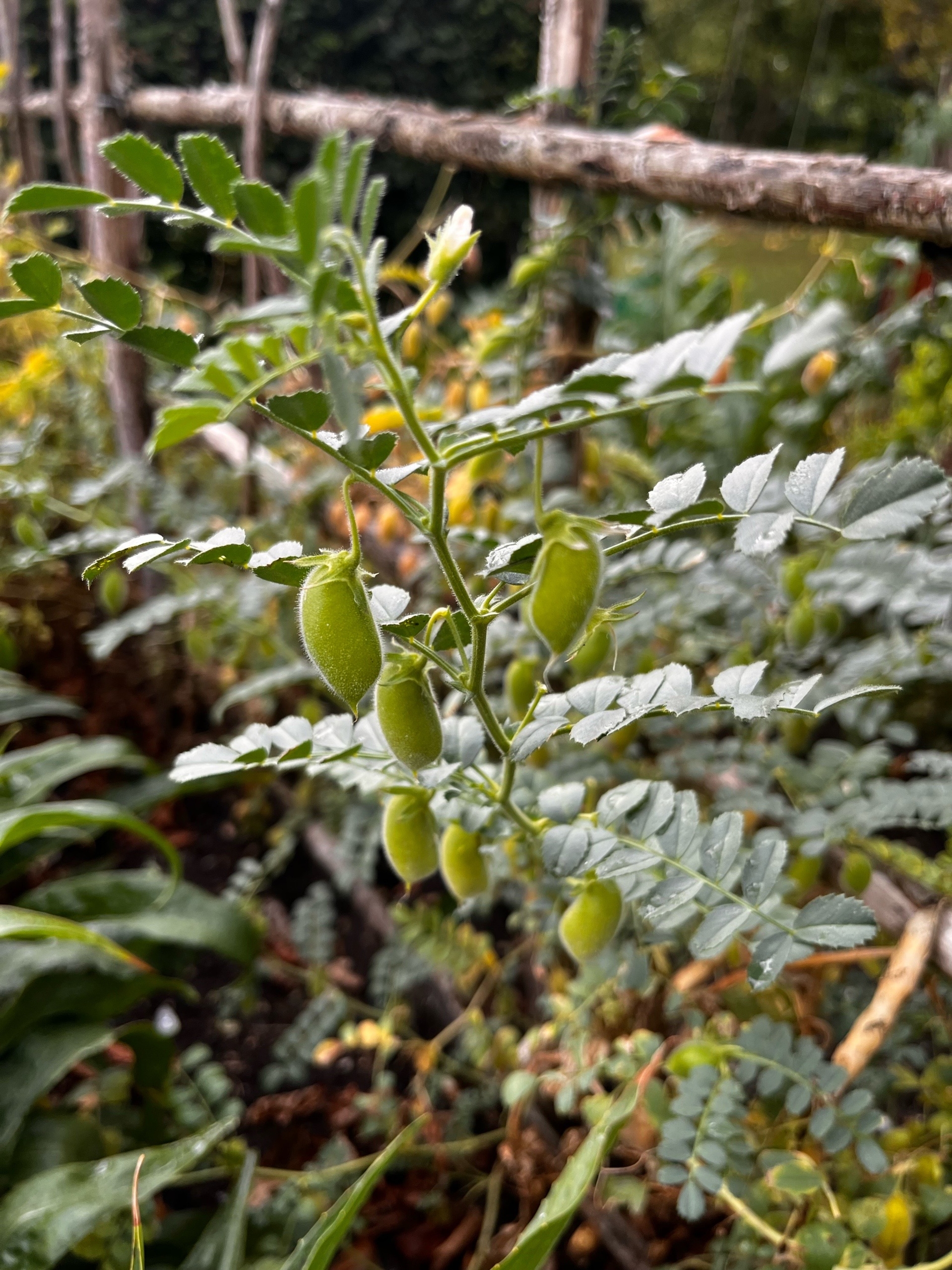
Auf einen Blick
- Pflegestufe
- Einfach
- Pflanzenart
- Annual legume
- Licht
- Full sun
- Licht im Innenraum
- Direkte Sonne
- Gießen
- Alle 3 bis 7 Tage
- Endgröße
- 2 feet
- Wachstum
- Schnell
- Winterhärte
- USDA 9 bis 11
- Blütezeit
- Late spring to early summer
Pflege
Keep the soil consistently moist while they are flowering and setting pods to ensure a good harvest. Watch for yellowing leaves which can indicate overwatering or poor drainage. Provide support for the stems if they start to lean as the pods get heavy.
- Gießen
- Water deeply whenever the top inch of soil feels dry to the touch.
- Düngen
- Use a low nitrogen fertilizer to avoid excessive foliage growth at the expense of pods.
- Schneiden
- Generally no pruning is needed unless you want to remove dead or diseased stems.
- Umtopfen
- Chickpeas are annuals and are typically grown directly in the ground or large containers for one season.
- Boden
- Well draining sandy loam
- Boden-pH
- 6.0 to 7.0
- Temperatur
- 5 bis 30°C
- Luftfeuchtigkeit
- 30 bis 50%
- Trockenheitstoleranz
- Hoch
- Lebensdauer
- Annual, one growing season
- Wildverbiss-Resistenz
- Mittel
Anzeichen fürs Umtopfen
- Roots circling the bottom of the pot.
- Stunted growth despite regular feeding.
Sicherheit
- Menschen
- The plant is generally safe, but raw seeds contain lectins that require cooking to be edible.
- Kinder
- The small, hard seeds pose a choking hazard to young children if left raw and unattended.
- Kontaktallergene
- Handling the glandular hairs on the foliage can cause skin irritation in sensitive individuals.
- Allergene in der Luft
- Chickpea pollen is not typically a significant allergen.
- Essbarkeit
- Raw chickpeas contain toxins that are neutralized through thorough cooking.
So erkennst du die Pflanze
- Fern like compound leaves
- Small white or purple flowers
- Inflated pods containing seeds
- Upright branching stems
- Höhe
- 0,2 bis 0,6m
- Breite
- 0,2 bis 0,4m
- Blätter
- green, deciduous
- Blüten
- white, pink, purple, 0,5 bis 1cm
- Früchte
- green, tan, Late summer
Häufige Probleme
- Ascochyta blight — A fungal infection causing dark spots on leaves and stems.
- Aphids — Small insects that suck sap from tender new growth.
Standort und Pflege
- Vermehrung
- seed
- Pflanzzeit
- Spring
- Überwinterung
- This is an annual plant that completes its life cycle in one season and does not require overwintering.
- Im Kübel
- They grow well in pots at least 30 centimeters deep with good drainage.
Direct Sowing
- 1. Soak seeds in water for 8 hours before planting.
- 2. Sow seeds 5 centimeters deep in well drained soil.
- 3. Space plants 15 centimeters apart.
- 4. Keep soil moist until germination occurs.
Planting aromatic herbs nearby helps mask the scent of the crop from hungry pests.
Gute Pflanzpartner
Fernhalten von
- Zwiebel — Onions can inhibit the growth of legumes when planted in close proximity.
Ähnliche Arten
- Lens culinaris — They share similar growth requirements as cool season legumes.
Botanisches
- Familie
- Fabaceae
- Gattung
- Cicer
- Ordnung
- Fabales
- Klasse
- Magnoliopsida
- Ursprüngliche Heimat
- Western Asia and the Mediterranean region.
- Artenschutz
- Not of conservation concern as it is a widely cultivated crop.
It thrives in well drained, alkaline soils and prefers cool, dry climates for optimal pod development.
- Nutzen für Wildtiere
- nectar source
- Bestäuber
- Bienen
- Verwendung
- culinary, cover crop, nitrogen fixation
Im Jahresverlauf
Ökologische Zeigerwerte
- Salzgehalt
- 2/9
- Bodenreaktion
- 7/9
- Licht
- 8/9
- Temperatur
- 6/9
- Feuchtigkeit
- 3/9
- Nährstoffe
- 4/9
Taxonomie abgeglichen mit GBIF.
Häufige Fragen
- Can I grow chickpeas in a container?
- Yes, they grow well in pots at least 30 centimeters deep.
- Do they need a trellis?
- Most varieties are bushy and do not require support.
Woher der Name kommt
The name Cicer is the Latin word for chickpea, while arietinum refers to the ram like shape of the seed.
Gut zu wissen
- Chickpeas are a staple ingredient in hummus and falafel.
- They are highly drought tolerant compared to many other legumes.
- The plant secretes malic acid from its leaves, which was historically collected for medicinal use.
Auch in
Probleme mit Chickpea?
Diese Seite bietet allgemeine Infos. Pocket Botanist erkennt Probleme anhand eines Fotos deiner echten Pflanze, passt das Gießen an dein Licht und deinen Standort an und erinnert dich an die Pflege.
Dieser Ratgeber wurde mit KI erstellt und mit der GBIF-Taxonomie abgeglichen. Er dient zur allgemeinen Information und ersetzt keine gärtnerische oder tierärztliche Beratung. Hier erfährst du, wie wir diese Ratgeber erstellen.