 Pocket Botanist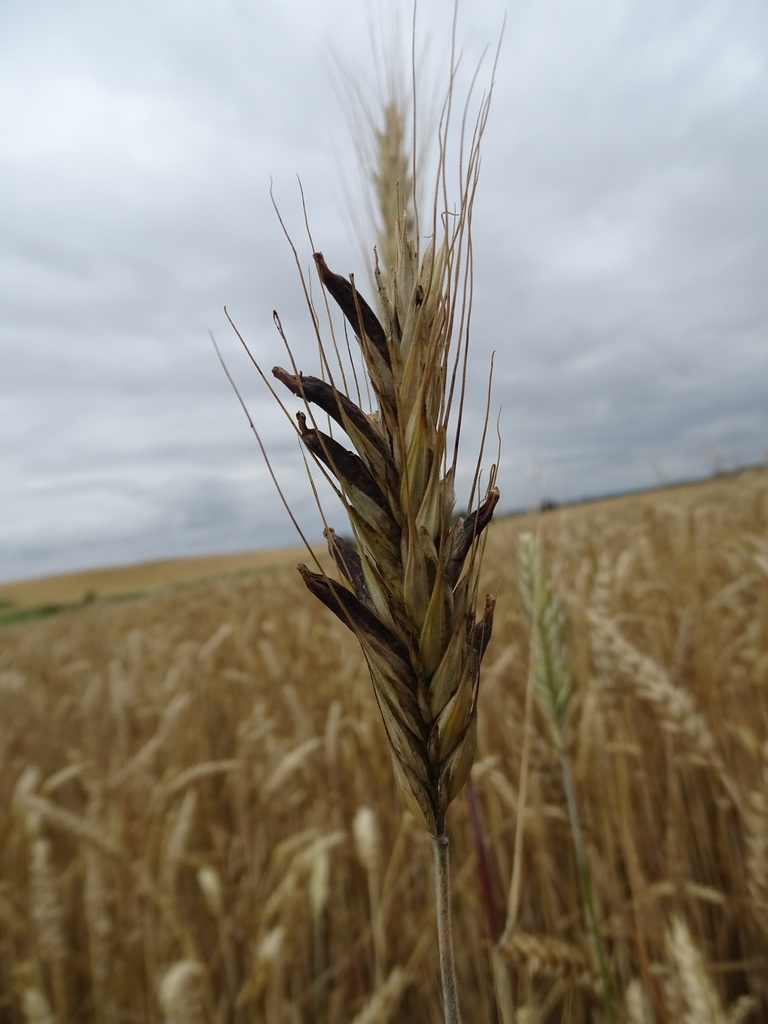
Symptoms by part
Fruit
You will see sticky, yellowish honeydew dripping from the flower heads, followed by the development of hard, purple to black, elongated fungal bodies that protrude where the grain should be.
Causes
- Cool and wet weather during the flowering stage of the grass or cereal crop.
- Delayed pollination which leaves the flower open and vulnerable to fungal spores for a longer period.
- Presence of infected wild grasses nearby that act as a reservoir for spores.
Could be confused with
- Smut · Smut produces masses of fine, powdery black spores that easily rub off, whereas ergot sclerotia are hard, solid, and do not rub off.
Treatment
- Harvest the affected crop early to prevent the sclerotia from falling to the ground.
- Clean the harvested grain thoroughly using gravity tables or air screens to remove the heavier, distinctively shaped ergot bodies.
- Mow or burn wild grasses along field edges before they reach the flowering stage to reduce local spore counts.
Without chemicals
- Rotate crops with non susceptible species like legumes or broadleaf plants to break the life cycle.
- Use deep plowing to bury sclerotia at least 5 centimeters deep, which prevents them from germinating and releasing spores.
- Select certified, clean seed lots that are free from ergot sclerotia for planting.
Preventing it
- Plant high quality, certified seeds to ensure no sclerotia are introduced into the soil.
- Maintain uniform crop growth to ensure a short and synchronized flowering window.
- Control weeds and wild grasses in and around the planting area to eliminate alternative hosts.
Season
The warm growing season, specifically during the flowering or heading stage of the plant.
Spread risk
Moderate
Severity
Moderate
When to act
Act immediately upon seeing the sticky honeydew stage to manage the spread, or during harvest to ensure the grain is safe. If you suspect your grain is contaminated, do not use it for feed or food.
Think it's Ergot?
This guide covers the general picture. Pocket Botanist looks at your actual plant from a photo and tells you what's really going on, how serious it is, and what to try first. Identification and a health check are free.


Questions people ask
- Can I eat grain that has ergot in it?
- No, you should never eat or feed grain contaminated with ergot because the alkaloids are toxic and can cause serious health issues.
- Does ergot kill the plant?
- Ergot does not typically kill the plant, but it significantly reduces the yield and quality of the grain harvest.
This guide was generated with AI and is general information, not horticultural advice. Read about how we build these guides.