 Pocket Botanist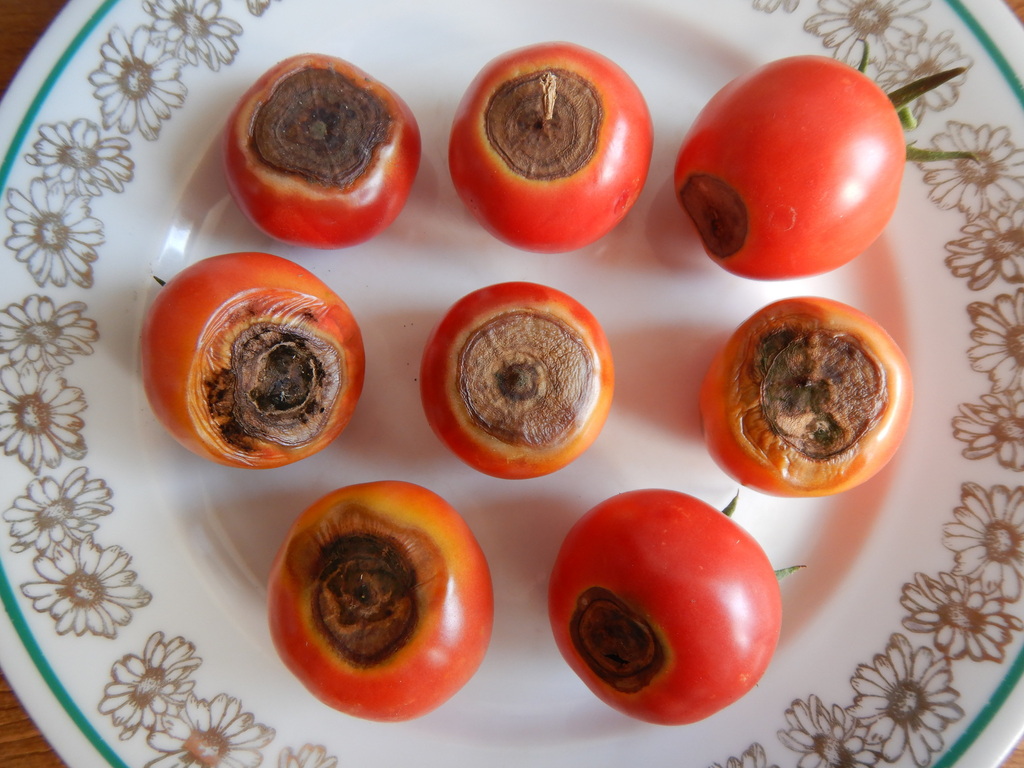
Symptoms by part
Leaves
Look for small brown or black spots that develop concentric rings, creating a target like pattern, often surrounded by a yellow halo.
Fruit
Dark, sunken, leathery spots appear near the stem end of the fruit, which may eventually become covered in a dark, velvety fungal growth.
Causes
- High humidity or frequent rainfall that keeps foliage wet for extended periods.
- Warm temperatures between 20 to 30 degrees Celsius.
- Splashing water from the soil onto the lower leaves during irrigation.
- Poor air circulation within the plant canopy.
Could be confused with
- Septoria Leaf Spot · Septoria spots are smaller, more numerous, and feature tiny black specks in the center rather than the distinct concentric rings of Early Blight.
- Late Blight · Late Blight causes larger, water soaked lesions that often have a white fuzzy growth on the underside of leaves and spreads much faster.
Treatment
- Prune away the lowest, infected leaves immediately to stop the fungus from moving upward.
- Remove and destroy any fruit showing signs of sunken, leathery spots to prevent further spore production.
- Apply potassium bicarbonate to the foliage to alter the surface pH and inhibit fungal growth, follow the label.
Without chemicals
- Mulch heavily around the base of the plant to create a barrier that prevents soil borne spores from splashing onto leaves.
- Water only at the base of the plant to keep the foliage dry.
- Space plants further apart to improve airflow and allow leaves to dry quickly after rain.
- Use a rain cover or cloche to protect plants from excessive moisture during wet spells.
Chemical options
- Potassium bicarbonate, mix with water and spray onto leaves to disrupt fungal development, follow the label.
Preventing it
- Rotate your crops so that nightshade family plants are not grown in the same soil more than once every three years.
- Remove all plant debris from the garden at the end of the season to prevent spores from overwintering.
- Choose resistant varieties when selecting seeds or transplants.
- Stake or cage plants to keep foliage off the ground.
Season
The warm growing season, especially during periods of high humidity.
Spread risk
High
Severity
Moderate
When to act
Act as soon as you spot the first target shaped lesions on the lower leaves. If the entire plant becomes defoliated and the fruit is severely damaged, remove and dispose of the plant entirely to protect the rest of your garden.
Think it's Early Blight?
This guide covers the general picture. Pocket Botanist looks at your actual plant from a photo and tells you what's really going on, how serious it is, and what to try first. Identification and a health check are free.


Questions people ask
- Can I eat tomatoes that have Early Blight?
- If the fruit itself is not showing signs of decay or lesions, it is generally safe to eat, but you should wash it thoroughly.
- Will my plant recover if I remove the infected leaves?
- Yes, removing infected leaves slows the spread of the disease and allows the plant to focus its energy on healthy growth, provided you also improve airflow and keep the foliage dry.
Plants it affects
This guide was generated with AI and is general information, not horticultural advice. Read about how we build these guides.