 Pocket Botanist
Guide botanique
Grass tree.
Xanthorrhoea preissii
Prononciation zan-thor-REE-uh PREE-see-eye
Aussi appelée Balga



This iconic Australian native is a slow growing plant that develops a thick, blackened trunk over many years. It produces a tall, dramatic flower spike that can reach several feet in height. You will love how it adds a unique, architectural look to your garden.
En un coup d'œil
- Niveau d'entretien
- Moyenne
- Type de plante
- Perennial shrub
- Lumière
- Full sun
- Lumière en intérieur
- Soleil direct
- Arrosage
- Tous les 14 à 30 jours
- Taille adulte
- 3 to 5 meters
- Croissance
- Lente
- Rusticité
- USDA 9 à 11
- Floraison
- Winter to spring
Entretien
Ensure the soil drains exceptionally well to prevent root rot, as these plants are very sensitive to excess moisture. Watch for yellowing leaves or a soft trunk, which are clear signs of overwatering. They thrive best when left undisturbed in a sunny spot.
- Arrosage
- Water sparingly, allowing the soil to dry out completely between sessions.
- Engrais
- Use a low phosphorus native plant fertilizer during the growing season.
- Taille
- Only remove dead, brown leaves from the base of the crown.
- Rempotage
- These plants dislike root disturbance, so only repot when absolutely necessary.
- Sol
- Sandy, well draining soil
- pH du sol
- Acidic to neutral
- Température
- -5 à 40°C
- Humidité
- 20 à 60%
- Résistance à la sécheresse
- Élevée
- Durée de vie
- Perennial, can live for several hundred years.
- Parfum
- Léger
- Résistance aux chevreuils et lapins
- Élevée
Signes qu'il faut rempoter
- Roots growing out of the drainage holes.
- Water sitting on the surface for too long.
- The plant appears stunted or stops growing.
Sécurité
- Humains
- The resin is generally considered non-toxic, but ingestion is not recommended.
- Enfants
- The stiff, needle-like leaves are sharp and pose a puncture risk to small children.
- Allergènes de contact
- The sharp, stiff leaf tips can cause mechanical skin irritation.
- Allergènes aéroportés
- The pollen produced during flowering can trigger mild allergic reactions in sensitive individuals.
- Comestibilité
- The plant is not considered edible and should not be consumed.
Comment l'identifier
- Long, thin, grass like leaves
- Thick, blackened, resinous trunk
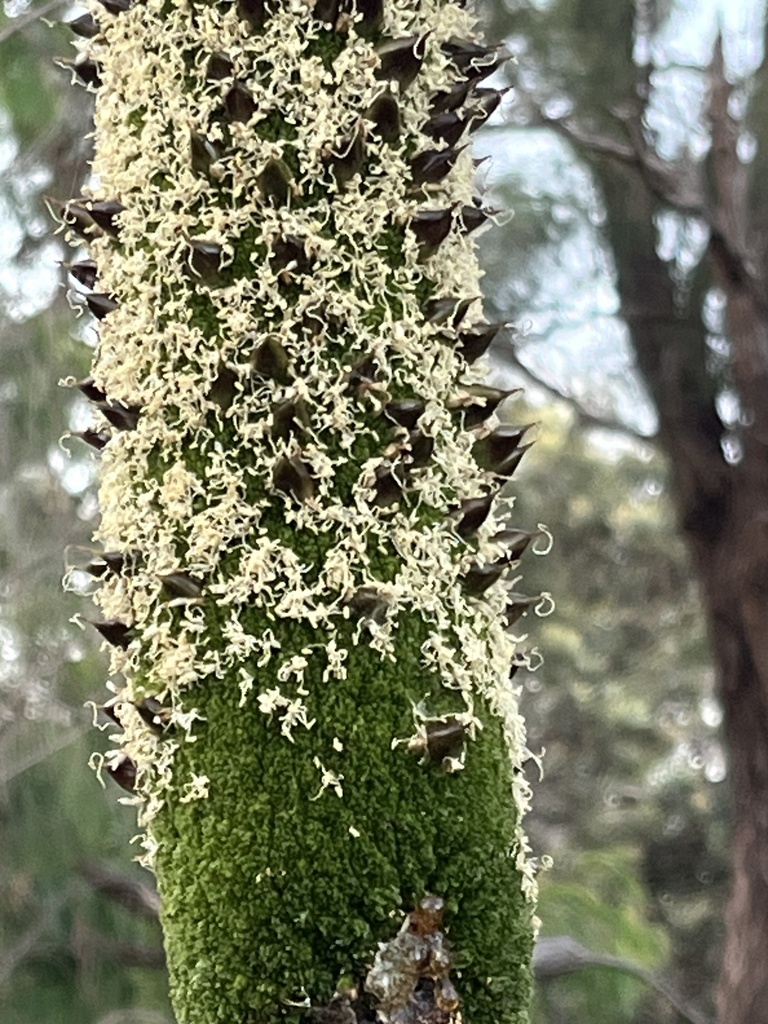
- Tall, cylindrical flower spikes
- Dense, rounded foliage crown
- Hauteur
- 1,5 à 3m
- Envergure
- 1 à 2m
- Feuilles
- green, blue-green, evergreen
- Fleurs
- cream, white, 1 à 2cm
- Fruits
- brown, Summer
Problèmes courants
- Root rot — Fungal decay caused by overly wet soil conditions.
La cultiver
- Multiplication
- seed
- Quand planter
- spring, autumn
- Hivernage
- Ensure the plant is kept in a frost-free environment if temperatures drop below freezing. Keep the soil very dry during the winter months to prevent rot.
- En pot
- It can be grown in large, deep pots with excellent drainage, but prefers being planted in the ground.
Seed propagation
- 1. Collect mature seeds from the dry flower spike.
- 2. Sow seeds in a well-draining sandy potting mix.
- 3. Keep the soil lightly moist until germination occurs.
- 4. Transplant seedlings carefully once they are large enough to handle.
Group with other drought-tolerant Australian natives to ensure consistent water needs.
Bonnes associations
- Banksia — They share similar requirements for well-draining, nutrient-poor soil.
- Anigozanthos — They provide a striking textural contrast in dry, sunny gardens.
Espèces similaires
- Xanthorrhoea australis — It is a closely related species with a similar growth habit and appearance.
Science
- Famille
- Asphodelaceae
- Genre
- Xanthorrhoea
- Ordre
- Asparagales
- Classe
- Liliopsida
- Région d'origine
- Southwestern Australia
- Préservation
- This species is protected in its native range and wild collection is strictly regulated.
It is a fire-adapted species that relies on periodic burning to clear competition and stimulate flowering.
- Intérêt pour la faune
- nectar source, habitat for insects
- Pollinisateurs
- abeilles, papillons, coléoptères
- Utilisations
- ornamental specimen, xeriscaping, coastal garden
Au fil des saisons
Repères écologiques
- Salinité
- 4/9
- Réaction du sol
- 5/9
- Lumière
- 8/9
- Température
- 7/9
- Humidité
- 2/9
- Nutriments
- 1/9
Taxonomie vérifiée avec le GBIF.
Ce qu'on demande souvent
- How fast does it grow?
- It is extremely slow, growing only 1 to 2 centimeters of trunk per year.
- Does it need fertilizer?
- It is adapted to nutrient-poor soils and generally does not require supplemental feeding.
D'où vient le nom
The genus name comes from the Greek words for yellow and flow, referring to the resin. The specific epithet honors the German botanist Ludwig Preiss.
Bon à savoir
- It is commonly known as a grass tree.
- The trunk is actually a dense accumulation of old leaf bases and resin.
- It often flowers more prolifically following a bushfire.
- The resin was historically used as a glue by Indigenous Australians.
Aussi dans
Ta plante a mauvaise mine ?
Cette page est un guide général. Pocket Botanist diagnostique les problèmes directement à partir d'une photo de ta plante, adapte l'arrosage à sa luminosité et te prévient quand il faut t'en occuper.
Ce guide a été généré par IA et vérifié avec la taxonomie du GBIF. Il s'agit d'informations générales, et non de conseils horticoles ou vétérinaires. Découvre comment nous concevons ces guides.