 Pocket Botanist
Plant guide
Bilberry.
Vaccinium myrtillus
Pronounced vak-SIN-ee-um mir-TIL-us
Also known as Bilberry, Blaeberry, European blueberry



Scan with your phone's camera to get the app
Or go to pocketbotanist.app/get on your phone

The bilberry is a charming, low growing shrub that produces delicious dark blue berries in the summer. It thrives in cool, acidic woodland environments and is a close relative of the blueberry. You will love watching it turn beautiful shades of red and orange in the autumn.
At a glance
- Care level
- Moderate
- Plant type
- Deciduous shrub
- Light
- Partial shade to full sun
- Indoor light
- Bright indirect
- Water
- Every 3 to 7 days
- Mature size
- 1 to 2 feet
- Growth rate
- Slow
- Hardiness
- USDA 3 to 7
- Bloom time
- Late spring
Care
Keep the soil consistently moist and ensure it stays acidic for the best results. Watch for wilting if the soil dries out too much or if the summer heat becomes intense. Providing a layer of mulch helps keep the roots cool and retains necessary moisture.
- Watering
- Keep the soil evenly moist but never waterlogged.
- Feeding
- Apply an acid loving plant fertilizer once in early spring.
- Pruning
- Trim back dead or crowded branches in late winter while the plant is dormant.
- Repotting
- Repot only when the plant has clearly outgrown its container.
- Soil
- Acidic, peaty, well drained soil
- Soil pH
- 4.5 to 5.5
- Temperature
- -30 to 25°C
- Humidity
- 50 to 80%
- Drought tolerance
- Low
- Lifespan
- Perennial, typically 10 to 20 years.
- Deer and rabbits
- Moderate
Signs it needs repotting
- Roots growing out of drainage holes.
- Stunted growth.
- Soil pulling away from pot edges.
Safety
- People
- The plant is non toxic, though excessive consumption of leaves is not recommended.
- Children
- Small berries may pose a minor choking hazard to very young children.
- Contact allergens
- None notable.
- Airborne allergens
- Pollen may cause mild reactions in sensitive individuals.
- Edibility
- Ensure positive identification before consumption as some wild berries can be mistaken for toxic lookalikes.
How to identify it
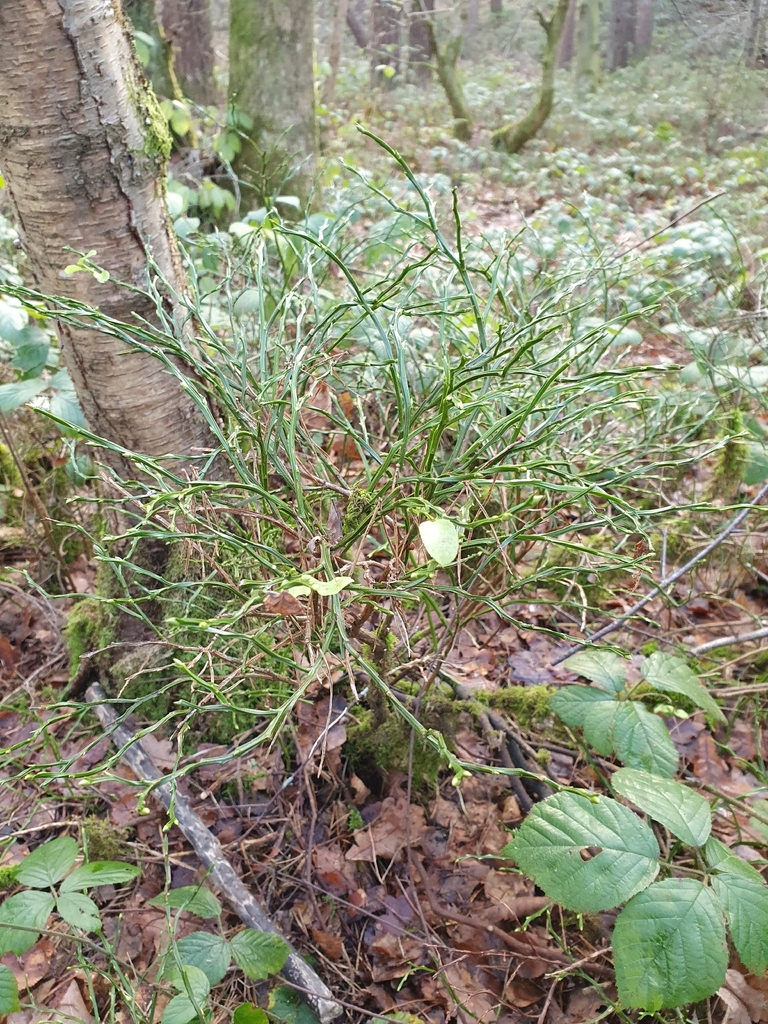
- Deciduous shrub with green angled stems
- Small oval leaves with serrated edges
- Solitary urn shaped pinkish flowers
- Dark blue berries with red flesh
- Height
- 0.15 to 0.6m
- Spread
- 0.2 to 0.5m
- Leaves
- bright green, deciduous
- Flowers
- pinkish green, 0.5 to 0.8cm
- Fruit
- blue, black, Late summer
Problems to watch for
- Mummy BerryCommon
- RustCommon
- ChlorosisUncommon
- Leaf ScorchUncommon
- PhytophthoraUncommon
- Root RotUncommon
Check your bilberry from a photo
Pocket Botanist looks at a photo of your plant and tells you what's wrong and what to try first.
Scan with your phone's camera to get the app
Or go to pocketbotanist.app/get on your phone
Growing it
- Propagation
- seed, cuttings, division
- When to plant
- spring, autumn
- Overwintering
- The plant is fully hardy and requires no special protection, though a layer of mulch can help protect roots in harsh climates.
- In containers
- Not well suited for containers due to strict soil and moisture requirements.
Cuttings
- Take softwood cuttings in early summer.
- Dip in rooting hormone.
- Place in a peat based medium under mist.
Group with other acid loving plants to maintain the soil pH they require.
Grows well with
- Heather · They share similar acidic soil and moisture requirements.
- Lingonberry · They are natural companions in forest understories.
Similar species
- Bog Bilberry · It is a closely related species that grows in similar habitats.
Science
- Family
- Ericaceae
- Genus
- Vaccinium
- Order
- Ericales
- Class
- Magnoliopsida
- Native range
- Northern and Central Europe, Northern Asia.
- Conservation
- It is widespread and not currently considered threatened in its native range.
It thrives in acidic, nutrient poor soils of heathlands and coniferous forests.
- Value to wildlife
- nectar source, food for birds
- Pollinators
- bees
- Uses
- culinary, ornamental, groundcover
Through the year
Ecological indicators
- Salinity
- 1/9
- Soil reaction
- 2/9
- Light
- 5/9
- Temperature
- 3/9
- Moisture
- 5/9
- Nutrients
- 2/9
Taxonomy resolved against GBIF.
Questions people ask
- Can I grow bilberries in a pot?
- They are difficult to keep happy in containers due to their specific soil acidity needs.
- Do they need full sun?
- They prefer partial shade to thrive.
Where the name comes from
The name Vaccinium is the ancient Latin name for the blueberry, while myrtillus refers to the resemblance of the leaves to those of the myrtle plant.
Good to know
- Bilberries are often smaller and darker than common blueberries.
- The juice of the fruit is a natural dye.
- They are a staple food for many forest animals.
- These plants prefer acidic, peaty soils.
Keep your bilberry growing
This page is a general guide. Save your plant in Pocket Botanist and you get care reminders timed for this plant, plus a care history that shows what worked.
Scan with your phone's camera to get the app
Or go to pocketbotanist.app/get on your phone
This guide was generated with AI on and checked against GBIF taxonomy. It is general information, not horticultural or veterinary advice. Read about how we build these guides.