 Pocket Botanist
Plant guide
Blueberry.
Vaccinium corymbosum
Pronounced vak-SIN-ee-um kor-im-BO-sum
Also known as American Blueberry, Blueberry, Highbush Blueberry, New Jersey Blueberry, Smallflower Blueberry, Smooth Highbush Blueberry, Southern Blueberry, Swamp Blueberry



Scan with your phone's camera to get the app
Or go to pocketbotanist.app/get on your phone
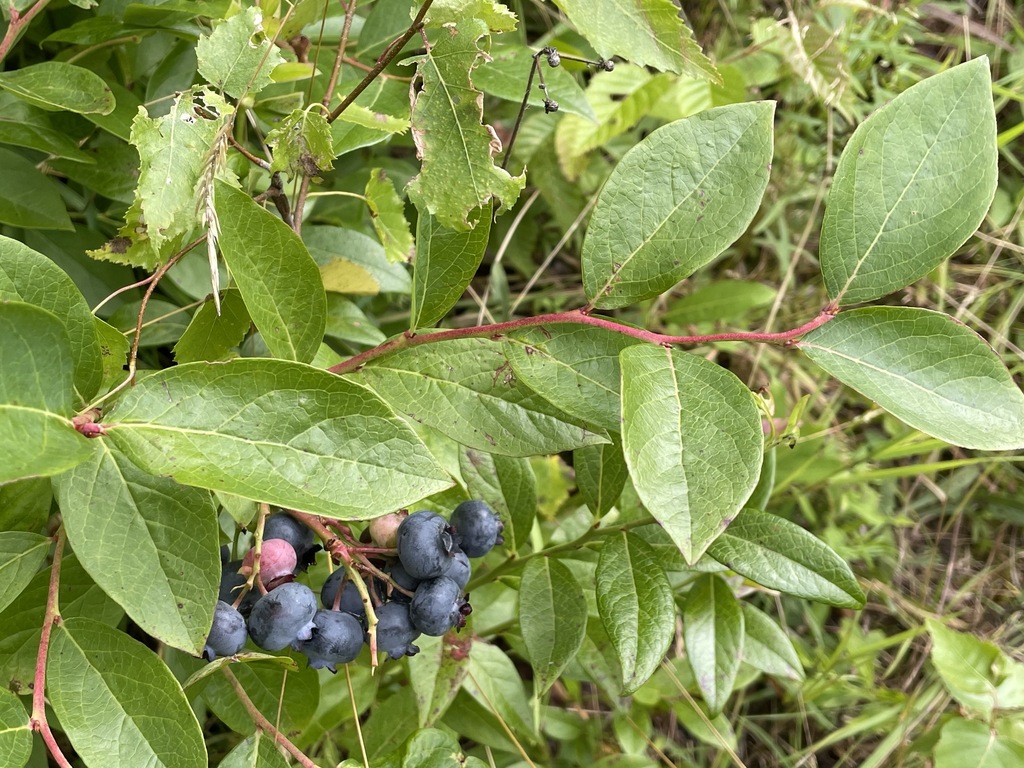
The highbush blueberry is a fantastic deciduous shrub that offers delicious fruit and lovely fall color. It thrives in acidic soil and needs a sunny spot to produce a heavy crop. You will enjoy its bell shaped flowers in spring followed by tasty berries in summer.

At a glance
- Care level
- Moderate
- Plant type
- Shrub
- Light
- Full sun
- Indoor light
- Direct sun
- Water
- Every 3 to 7 days
- Mature size
- 2 to 3 meters
- Growth rate
- Medium
- Hardiness
- USDA 3 to 7
- Bloom time
- Mid to late spring
Care
Keep the soil consistently moist and acidic to ensure the plant stays healthy. Watch for yellowing leaves which often signal a need for more acidic soil or iron supplements. Prune annually to remove old wood and encourage new growth for better fruit production.
- Watering
- Keep the soil evenly moist but not waterlogged.
- Feeding
- Use an acid loving fertilizer during the growing season.
- Pruning
- Prune in late winter while the plant is dormant.
- Repotting
- Repot only if the plant becomes root bound in a container.
- Soil
- Peaty, acidic, well draining soil
- Soil pH
- 4.5 to 5.5
- Temperature
- -30 to 35°C
- Humidity
- 40 to 70%
- Drought tolerance
- Low
- Lifespan
- Perennial, typically 20 to 50 years
- Fragrance
- Light
- Deer and rabbits
- Low
Signs it needs repotting
- Roots growing out of the drainage holes.
- Stunted growth despite proper fertilization.
- Soil drying out very quickly.
Safety
- People
- The plant is non toxic to humans.
- Children
- The berries are a choking hazard for very small children if not supervised.
- Contact allergens
- The leaves and stems are generally safe, though some individuals may experience mild skin irritation from handling.
- Airborne allergens
- The pollen can cause mild seasonal allergies for sensitive individuals.
- Edibility
- The berries are safe to eat, but ensure they are not treated with pesticides before consumption.
How to identify it
- Oval shaped leaves with smooth margins
- Small white or pink bell shaped flowers
- Clusters of blue berries with dusty bloom
- Stems turn reddish in winter
- Height
- 1.2 to 3.6m
- Spread
- 1.2 to 3m
- Leaves
- green, red, orange, deciduous
- Flowers
- white, pink, 0.5 to 1cm
- Fruit
- blue, black, Mid to late summer
Problems to watch for
- ChlorosisCommon
- Fruit FlyCommon
- Mummy BerryCommon
- AphidsUncommon
- CankerUncommon
- Japanese BeetlesUncommon
- Root RotUncommon
- Scale InsectsRare
Check your blueberry from a photo
Pocket Botanist looks at a photo of your plant and tells you what's wrong and what to try first.
Scan with your phone's camera to get the app
Or go to pocketbotanist.app/get on your phone
Growing it
- Propagation
- cuttings, seed
- When to plant
- early spring, late autumn
- Overwintering
- Apply a thick layer of organic mulch around the base to protect roots from freezing cycles. Prune dead wood in late winter before new growth begins.
- In containers
- They grow well in large pots, at least 40 liters, provided the soil remains acidic and moist.
Softwood Cuttings
- 1. Take 10 cm cuttings in early summer.
- 2. Remove lower leaves.
- 3. Dip in rooting hormone.
- 4. Place in moist peat and perlite mix.
- 5. Keep humid until rooted.
Mulch heavily with pine needles or pine bark to maintain the necessary soil acidity.
Grows well with
- Rhododendron · They share similar acidic soil requirements.
- Azalea · These shrubs thrive in the same acidic, organic rich conditions.
Similar species
- Lowbush Blueberry · It is a much smaller, ground covering relative.
Science
- Family
- Ericaceae
- Genus
- Vaccinium
- Order
- Ericales
- Class
- Magnoliopsida
- Native range
- Eastern North America
- Conservation
- This species is widespread and not currently of conservation concern.
It thrives in moist, acidic, well drained soils often found in bogs or woodland edges.
- Value to wildlife
- nectar source, provides food for birds
- Pollinators
- bees, butterflies
- Uses
- ornamental shrub, edible fruit production, wildlife garden
Through the year
Ecological indicators
- Salinity
- 1/9
- Soil reaction
- 2/9
- Light
- 7/9
- Temperature
- 5/9
- Moisture
- 6/9
- Nutrients
- 4/9
Taxonomy resolved against GBIF.
Questions people ask
- Do I need two plants for fruit?
- Yes, planting at least two different varieties improves cross pollination and fruit yield.
- How acidic should the soil be?
- They prefer a pH between 4.5 and 5.5.
Where the name comes from
Vaccinium is the Latin name for the bilberry, while corymbosum refers to the corymb like arrangement of its flowers.
Good to know
- Blueberries are one of the few fruits native to North America.
- The berries are packed with antioxidants.
- They require acidic soil to thrive.
- The flowers are bell shaped and hang in clusters.
Keep your blueberry growing
This page is a general guide. Save your plant in Pocket Botanist and you get care reminders timed for this plant, plus a care history that shows what worked.
Scan with your phone's camera to get the app
Or go to pocketbotanist.app/get on your phone
This guide was generated with AI on and checked against GBIF taxonomy. It is general information, not horticultural or veterinary advice. Read about how we build these guides.