 Pocket Botanist
Plant guide
Wych elm.
Ulmus glabra
Pronounced UL-mus GLAY-bruh
Also known as European mountain elm, Scotch elm, Scottish elm, Wych Elm



Scan with your phone's camera to get the app
Or go to pocketbotanist.app/get on your phone
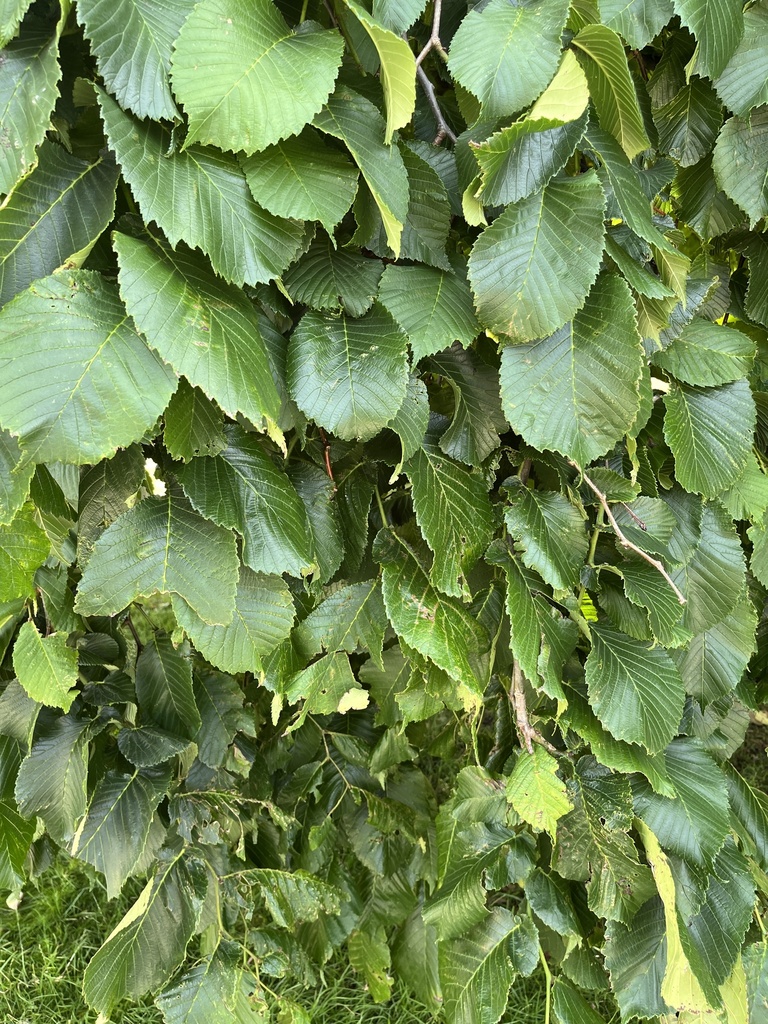
The Wych elm is a beautiful, large deciduous tree native to Europe. It is well known for its broad, spreading canopy and distinctive rough leaves. You will often see it thriving in cool, moist woodlands.

At a glance
- Care level
- Moderate
- Plant type
- Deciduous tree
- Light
- Full sun to partial shade
- Indoor light
- Bright indirect
- Water
- Every 7 to 14 days
- Mature size
- 30 to 40 meters
- Growth rate
- Medium
- Hardiness
- USDA 4 to 8
- Bloom time
- Early spring
Care
Keep the soil consistently moist but never waterlogged to ensure healthy growth. Watch for wilting or yellowing leaves, which can indicate issues with drainage or pests. Provide plenty of space for this tree to spread as it matures.
- Watering
- Keep the soil evenly moist, especially during dry spells.
- Feeding
- Apply a balanced fertilizer in early spring to support new growth.
- Pruning
- Remove dead or crossing branches during the dormant winter season.
- Repotting
- Repot only if grown in a container, ensuring you use a large enough vessel.
- Soil
- Deep, fertile, well drained soil
- Soil pH
- Neutral to slightly alkaline
- Temperature
- -35 to 30°C
- Humidity
- 40 to 70%
- Drought tolerance
- Moderate
- Lifespan
- Long-lived, often exceeding 100 years.
- Deer and rabbits
- Moderate
Safety
- People
- The plant is not considered toxic to humans.
- Children
- There are no specific safety concerns for children, though the tree is far too large for small garden play.
- Contact allergens
- The rough, sandpaper-like texture of the leaves can cause minor skin irritation in sensitive individuals.
- Airborne allergens
- The wind-dispersed pollen is a common seasonal allergen for many people in early spring.
- Edibility
- The samaras are edible but are generally considered a survival food rather than a culinary staple.
How to identify it
- Large, rough, serrated dark green leaves
- Asymmetrical leaf bases
- Broad, spreading, rounded canopy
- Clusters of small, papery winged seeds
- Height
- 20 to 40m
- Spread
- 15 to 25m
- Leaves
- green, yellow, deciduous
- Flowers
- green, brown, 0.5 to 1cm
- Fruit
- green, tan, late spring
Problems to watch for
- Dutch Elm Disease · A devastating fungal infection spread by bark beetles that causes wilting and death.
Check your wych elm from a photo
Pocket Botanist looks at a photo of your plant and tells you what's wrong and what to try first.
Scan with your phone's camera to get the app
Or go to pocketbotanist.app/get on your phone
Growing it
- Propagation
- seed, cuttings
- When to plant
- spring, autumn
- Overwintering
- No special protection is needed as it is fully hardy in its native range. Ensure the soil remains well-drained to prevent root rot during wet winters.
- In containers
- Not suitable for long-term container growth due to its massive size.
Seed
- 1. Collect samaras in late spring when they turn tan.
- 2. Sow immediately in moist, well-draining soil.
- 3. Keep the seedbed consistently moist until germination.
Plant shade-loving woodland perennials near the base to mimic the natural forest floor environment.
Grows well with
- English Ivy · It acts as a ground cover that thrives in the dappled shade beneath the canopy.
- Common Foxglove · It enjoys the woodland conditions and partial shade provided by the tree.
Similar species
- Field Elm · It shares a similar growth habit but has smaller, smoother leaves.
Science
- Family
- Ulmaceae
- Genus
- Ulmus
- Order
- Rosales
- Class
- Magnoliopsida
- Native range
- Europe and western Asia.
- Conservation
- The species is currently threatened in parts of its range due to Dutch Elm Disease.
It thrives in moist, fertile woodlands and is well adapted to cool, temperate climates.
- Value to wildlife
- larval host plant, nesting site
- Pollinators
- bees, butterflies
- Uses
- shade tree, park specimen, wildlife habitat
Through the year
Ecological indicators
- Salinity
- 2/9
- Soil reaction
- 6/9
- Light
- 6/9
- Temperature
- 4/9
- Moisture
- 6/9
- Nutrients
- 7/9
Taxonomy resolved against GBIF.
Questions people ask
- Is this tree prone to Dutch Elm Disease?
- Yes, it is highly susceptible to the fungus and requires careful monitoring.
- How fast does it grow?
- It is a moderately fast grower, especially when young and provided with deep, fertile soil.
Where the name comes from
The name glabra means smooth and refers to the bark, which stays smooth for many years on young trees, unlike the very rough leaves.
Good to know
- The wood is highly valued for its interlocking grain, which makes it resistant to splitting.
- It is one of the few elms native to northern Europe.
- The leaves are famously asymmetrical at the base.
Keep your wych elm growing
This page is a general guide. Save your plant in Pocket Botanist and you get care reminders timed for this plant, plus a care history that shows what worked.
Scan with your phone's camera to get the app
Or go to pocketbotanist.app/get on your phone
This guide was generated with AI on and checked against GBIF taxonomy. It is general information, not horticultural or veterinary advice. Read about how we build these guides.