 Pocket Botanist
Pflanzenratgeber
Eastern hemlock.
Tsuga canadensis
Aussprache SOO-guh kan-uh-DEN-sis
Auch bekannt als Black Hemlock, Canada Hemlock, Canadian Hemlock, Common Hemlock, Eastern Hemlock, Eastern Hemlock-Spruce, Hemlock, Hemlock Spruce


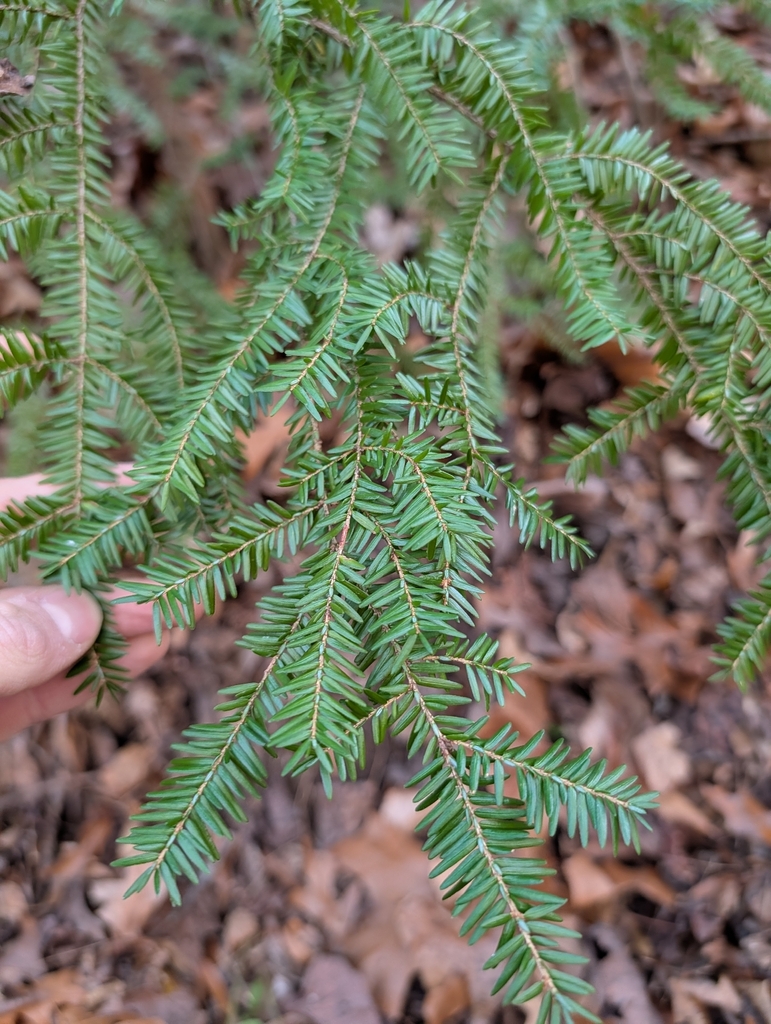
The Eastern hemlock is a graceful, long-lived conifer that thrives in cool, moist environments. It features a soft, feathery appearance that makes it a beautiful addition to larger landscapes. You will love how its delicate needles add texture to your garden.

Auf einen Blick
- Pflegestufe
- Mittel
- Pflanzenart
- Coniferous evergreen tree
- Licht
- Partial shade to full shade
- Licht im Innenraum
- Hell, indirekt
- Gießen
- Alle 7 bis 14 Tage
- Endgröße
- 60 to 80 feet
- Wachstum
- Langsam
- Winterhärte
- USDA 3 bis 7
- Blütezeit
- Mid spring
Pflege
Keep the soil consistently moist and protect the tree from harsh, drying winds. Watch for signs of stress like needle drop or yellowing, which often indicate improper moisture levels. It prefers cooler climates and struggles in intense summer heat.
- Gießen
- Keep the soil evenly moist but never waterlogged.
- Düngen
- Apply a slow-release, acid-loving fertilizer in early spring.
- Schneiden
- Prune in late winter or early spring to remove dead or damaged branches.
- Umtopfen
- Repot only if necessary, as these trees prefer to remain undisturbed.
- Boden
- Moist, well-drained, acidic soil
- Boden-pH
- Acidic
- Temperatur
- -35 bis 30°C
- Luftfeuchtigkeit
- 50 bis 90%
- Trockenheitstoleranz
- Gering
- Lebensdauer
- Perennial, can live for several hundred years
- Wildverbiss-Resistenz
- Gering
Anzeichen fürs Umtopfen
- Roots circling the bottom of the pot
- Water draining through too quickly
- Stunted growth despite proper care
Sicherheit
- Menschen
- The plant is not considered toxic, but the needles can be a mechanical irritant if ingested.
- Kinder
- The small cones are a potential choking hazard for small children.
- Kontaktallergene
- The needles are slightly sharp and may cause minor skin irritation upon handling.
- Allergene in der Luft
- Pollen can be a mild trigger for those with sensitive respiratory systems during the spring.
- Essbarkeit
- The needles are sometimes used for tea, but ensure correct identification as some yew species are highly toxic.
So erkennst du die Pflanze
- Short, flat, dark green needles
- Two white bands on needle undersides
- Small, woody, pendulous cones
- Drooping, graceful leading shoot
- Rough, scaly, reddish brown bark
- Höhe
- 12 bis 21m
- Breite
- 6 bis 10m
- Blätter
- dark green, evergreen
- Blüten
- yellow, green, 0,5 bis 1cm
- Früchte
- brown, Autumn
Häufige Probleme
- Hemlock woolly adelgid — Small insects that feed on sap and cause needle drop and branch dieback.
Standort und Pflege
- Vermehrung
- seed, cuttings
- Pflanzzeit
- spring, autumn
- Überwinterung
- Ensure the root zone is well mulched to retain moisture and protect against deep freezes.
- Im Kübel
- It is not ideal for long term container growth due to its large size, but young specimens can be kept in large pots for a few years.
Cuttings
- Take semi hardwood cuttings in late summer.
- Dip the base in rooting hormone.
- Place in a well draining medium and keep humid until rooted.
Group with other acid loving, shade tolerant shrubs to create a cohesive woodland aesthetic.
Gute Pflanzpartner
- Mountain Laurel — They share similar requirements for acidic soil and partial shade.
- Rhododendron maximum — These plants naturally grow together in cool, moist woodland settings.
Ähnliche Arten
- Tsuga caroliniana — It is a smaller, more drought tolerant relative found in the southern Appalachians.
Botanisches
- Familie
- Pinaceae
- Gattung
- Tsuga
- Ordnung
- Pinales
- Klasse
- Pinopsida
- Ursprüngliche Heimat
- Eastern North America
- Artenschutz
- The species is currently threatened by the hemlock woolly adelgid, an invasive insect causing widespread decline.
It thrives in cool, moist, acidic soils and often dominates north facing slopes and ravines.
- Nutzen für Wildtiere
- nesting habitat, winter cover, seeds for birds
- Bestäuber
- Bienen, Schmetterlinge
- Verwendung
- ornamental specimen, privacy hedge, wildlife habitat, bonsai
Im Jahresverlauf
Ökologische Zeigerwerte
- Salzgehalt
- 1/9
- Bodenreaktion
- 3/9
- Licht
- 3/9
- Temperatur
- 3/9
- Feuchtigkeit
- 6/9
- Nährstoffe
- 4/9
Taxonomie abgeglichen mit GBIF.
Häufige Fragen
- Can I grow this in full sun?
- It prefers partial shade, especially in warmer climates where afternoon sun can scorch the needles.
- How often should I water it?
- Keep the soil consistently moist, especially during the first few years after planting.
Woher der Name kommt
The genus name Tsuga is the Japanese name for hemlock, while the specific epithet canadensis refers to its native range in Canada.
Gut zu wissen
- Hemlocks are incredibly shade tolerant and can grow in the deep forest understory for decades.
- They are among the longest lived trees in the eastern United States.
- The wood is relatively soft and was historically used for construction and paper pulp.
Auch in
Probleme mit Eastern hemlock?
Diese Seite bietet allgemeine Infos. Pocket Botanist erkennt Probleme anhand eines Fotos deiner echten Pflanze, passt das Gießen an dein Licht und deinen Standort an und erinnert dich an die Pflege.
Dieser Ratgeber wurde mit KI erstellt und mit der GBIF-Taxonomie abgeglichen. Er dient zur allgemeinen Information und ersetzt keine gärtnerische oder tierärztliche Beratung. Hier erfährst du, wie wir diese Ratgeber erstellen.