 Pocket Botanist
Symptoms by part
Stems
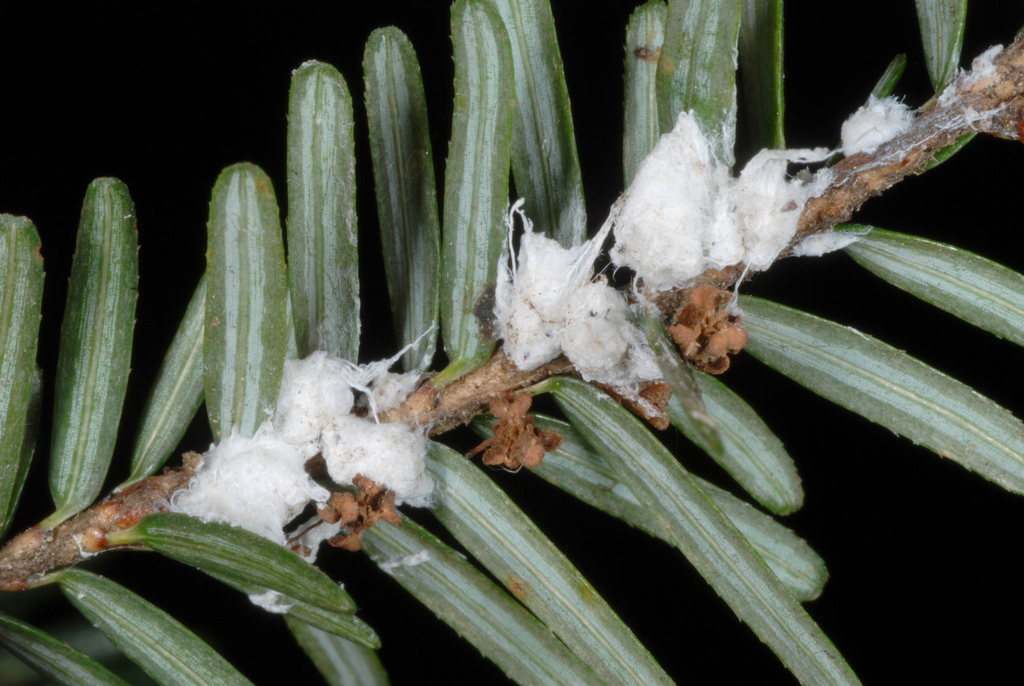
Look for small white cottony masses at the base of the needles where they attach to the twig.
Leaves
Needles may turn a grayish green color, dry out, and eventually drop off the tree prematurely.
Causes
- Introduction of the pest via infested nursery stock.
- Natural spread through wind currents carrying the tiny crawlers.
- Movement of the pest on the feathers or fur of birds and other wildlife traveling between trees.
Could be confused with
- Spittlebug · Spittlebug foam is usually larger and wetter, whereas adelgid masses are dry, white, and waxy.
- Scale insects · Scale insects often have a hard, protective shell rather than the fluffy, cottony appearance of the adelgid.
Find out what's really wrong with your plant
Problems that look alike are easy to mix up. Pocket Botanist looks at a photo of your actual plant and tells you what's going on, how serious it is, and what to try first. Identification and a health check are free.



Scan with your phone's camera to get the app
Or go to pocketbotanist.app/get on your phone
Treatment
- 1. Prune out and destroy heavily infested branches to reduce the immediate population.
- 2. Spray the foliage thoroughly with plant oils during the active crawler stage to smother the insects.
- 3. Apply fatty acids to the infested stems and needles to disrupt the insect's protective coating, follow the label.
Without chemicals
- Prune away infested twigs and branches to lower the overall pest load.
- Ensure trees are planted in sites that do not cause undue stress, as healthy trees are more resilient.
- Remove and destroy any fallen infested needles or debris from around the base of the tree.
Chemical options
- Plant oils, apply as a dormant or summer spray to coat the insects, follow the label.
- Fatty acids, spray directly onto the cottony masses to kill the pests on contact, follow the label.
Preventing it
- Inspect all new hemlock trees carefully for white cottony masses before planting them in your landscape.
- Avoid moving firewood or plant materials from areas known to have infestations.
- Keep trees well watered during dry spells to help them maintain their natural defenses.
Season
The pest is most active during the cool months of the year, and the white cottony masses are most visible from late autumn to early summer.
Spread risk
High
Severity
High
When to act
Act as soon as you spot the white cottony masses to prevent the infestation from spreading further. If the tree is very large or the infestation is widespread, hire a professional tree surgeon to handle the treatment safely.
Keep your plants healthy from here
Save your plants in Pocket Botanist and you get care reminders timed for each one, plus a care history that shows what worked. Identification and a health check are free.
Questions people ask
- Can I save a tree that is already losing needles?
- Yes, if the tree still has a significant amount of green foliage, you can often save it with consistent treatment, though it may take several seasons to recover.
- Does this pest affect other types of evergreen trees?
- No, the Hemlock Woolly Adelgid is specific to hemlock trees and will not infest pines, spruces, or firs.
Plants it affects
Answers plant by plant
This guide was generated with AI on and is general information, not horticultural advice. Read about how we build these guides.