 Pocket Botanist
Plant guide
Planta cebra.
Tradescantia zebrina
Pronounced tra-des-KAN-tee-uh ze-BREE-nuh
Also known as Inchplant, Inchplant, Wandering jew, Cockroach grass, Purple wandering Jew, Silver inch plant, Striped trad, Striped wandering creeper, Striped wandering Jew, Wandering zebrina, Zebra plant, wandering-Jew, Inch-plant, Creeping Charlie, Wandering Jew, Zebra Plant


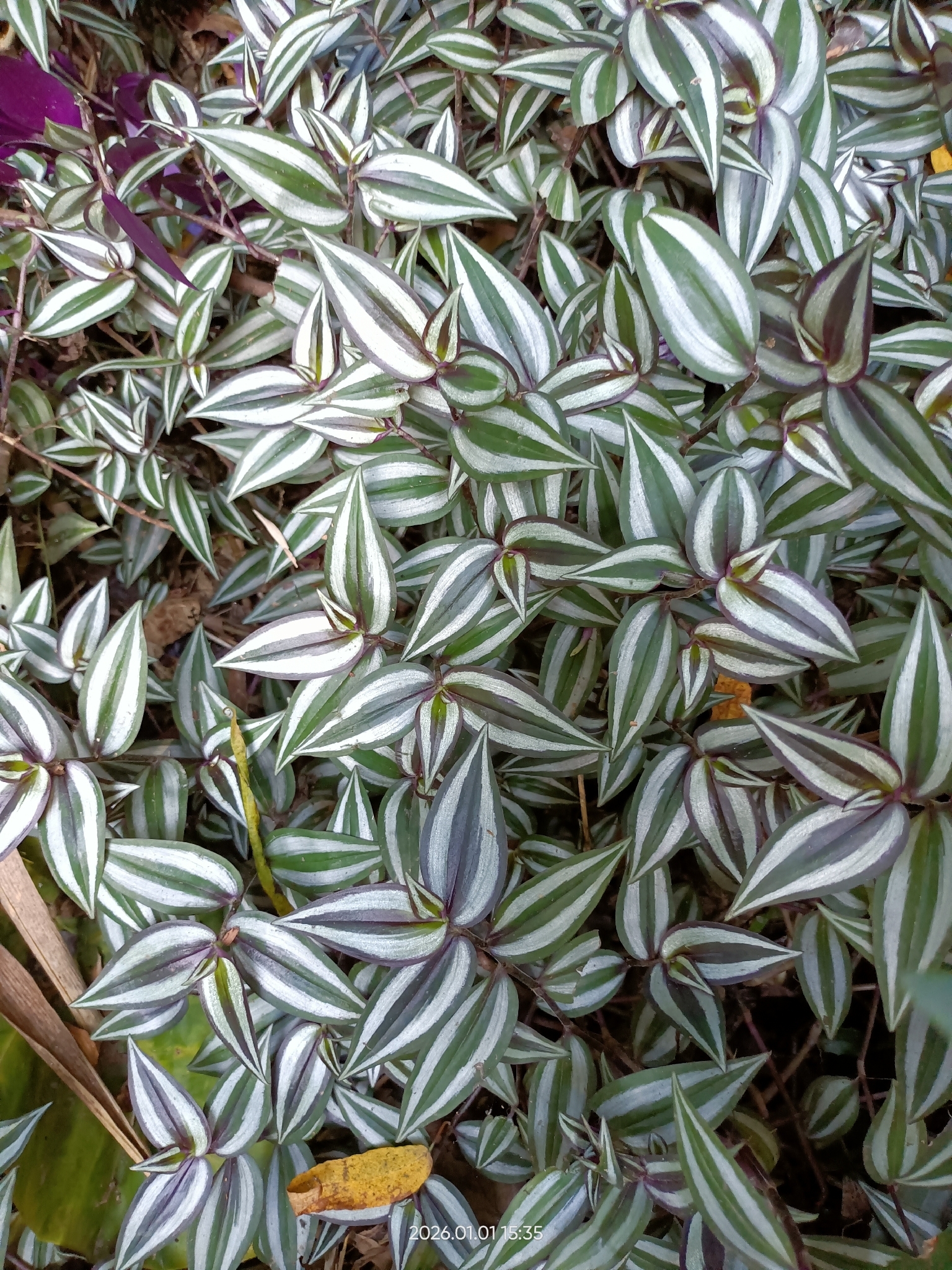
The inch plant is a fast growing trailing beauty that adds a splash of purple and silver to any room. It is quite easy to care for and looks lovely in a hanging basket. You will find it grows quickly when it gets enough light.
At a glance
- Care level
- Easy
- Plant type
- Herbaceous perennial
- Light
- Bright indirect light is best for keeping those vibrant leaf colors.
- Indoor light
- bright-indirect
- Water
- Every 5 to 10 days
- Mature size
- 30 to 60 cm
- Growth rate
- fast
- Hardiness
- USDA 9 to 11
- Bloom time
- Spring to summer
Care
Keep the soil lightly moist but never soggy to prevent root rot. Watch for leggy stems, which usually mean the plant is craving more light. You can easily pinch back the tips to encourage a bushier shape.
- Watering
- Water when the top inch of soil feels dry to the touch.
- Feeding
- Use a balanced liquid fertilizer diluted to half strength during the growing season.
- Pruning
- Trim back long stems regularly to maintain a compact and full appearance.
- Repotting
- Repot when the plant becomes root bound or the soil loses its structure.
- Soil
- Well draining peat based potting mix
- Soil pH
- 6.0 to 7.5
- Temperature
- 10 to 24°C
- Humidity
- 40 to 60%
- Drought tolerance
- moderate
- Lifespan
- Perennial, typically 3 to 5 years.
- Deer and rabbits
- moderate
Signs it needs repotting
- Roots growing out of the drainage holes.
- Water running straight through the pot without soaking in.
- The plant stops growing during the active season.
Safety
- People
- The sap can cause skin irritation or dermatitis in sensitive individuals.
- Pets
- This plant is mildly toxic to cats and dogs if ingested.
- Children
- Keep this plant out of reach of small children as the sap can cause mouth and throat irritation if they chew on the leaves.
- Contact allergens
- The clear sap contains calcium oxalate crystals that may cause a rash or burning sensation upon contact with skin.
- Airborne allergens
- There are no significant airborne allergens associated with this plant.
- Edibility
- This plant is not intended for consumption and can cause significant irritation if ingested.
How to identify it
- Trailing stems with succulent texture
- Leaves feature silver and purple stripes
- Underside of leaves is deep magenta
- Small three petaled purple flowers
- Height
- 0.15 to 0.3m
- Spread
- 0.3 to 0.6m
- Leaves
- purple, silver, green, evergreen
- Flowers
- purple, pink, 1 to 2cm
Common problems
- Root rot — This occurs when the soil stays too wet for too long.
- Spider mites — These tiny pests thrive in dry indoor air and create fine webbing.
- Leggy growth — The stems stretch out when the plant does not receive enough light.
Growing it
- Propagation
- cuttings
- When to plant
- spring, summer
- Overwintering
- Bring the plant indoors before temperatures drop below freezing. Keep it in a bright spot and reduce watering during the cooler months.
- In containers
- It thrives in hanging baskets or pots at least 6 inches wide to allow for its trailing growth.
Stem Cuttings
- Snip a 4 to 6 inch stem cutting just below a leaf node.
- Remove the lower leaves from the bottom half of the cutting.
- Place the cutting in water or directly into moist potting soil.
- Roots will typically appear within 1 to 2 weeks.
Group plants with similar water needs together to make your care routine much simpler.
Grows well with
- Pothos — They share similar light and water requirements for easy maintenance.
- Peace Lily — They both thrive in the same humid, indirect light conditions.
Similar species
- Moses in the Cradle — It is a close relative with similar growth habits but more upright foliage.
- Inch Plant — It shares the same trailing nature and ease of propagation.
Science
- Family
- Commelinaceae
- Genus
- Tradescantia
- Order
- Commelinales
- Class
- Liliopsida
- Native range
- Mexico and Central America.
- Conservation
- This species is not currently listed as endangered or threatened.
It grows as a trailing perennial in tropical forest understories where it spreads across the forest floor.
- Uses
- indoor hanging basket, ground cover in warm climates, terrarium plant
Through the year
Ecological indicators
- Salinity
- 2/9
- Soil reaction
- 6/9
- Light
- 6/9
- Temperature
- 7/9
- Moisture
- 5/9
- Nutrients
- 4/9
Taxonomy resolved against GBIF.
Questions people ask
- Why are my leaves losing their color?
- The plant likely needs more bright, indirect light to maintain its vibrant variegation.
- How often should I water it?
- Water when the top inch of soil feels dry to the touch.
Where the name comes from
The genus name honors the English naturalists John Tradescant the elder and younger, while the species name zebrina refers to the zebra like stripes on the leaves.
Good to know
- It is commonly known as the inch plant because it grows so quickly.
- The leaves fold up at night and open again in the morning.
- It is incredibly easy to propagate from stem cuttings.
- The genus name honors the 17th century royal gardeners John Tradescant the elder and younger.
Also in
Is your planta cebra looking unwell?
This page is a general guide. Pocket Botanist diagnoses problems from a photo of your actual plant, works out watering for your light and conditions, and reminds you when care is due.
This guide was generated with AI and checked against GBIF taxonomy. It is general information, not horticultural or veterinary advice. Read about how we build these guides.