 Pocket Botanist
Plant guide
Feverfew.
Tanacetum parthenium
Pronounced tan-uh-SEE-tum par-THEN-ee-um
Also known as Feverfew



Scan with your phone's camera to get the app
Or go to pocketbotanist.app/get on your phone

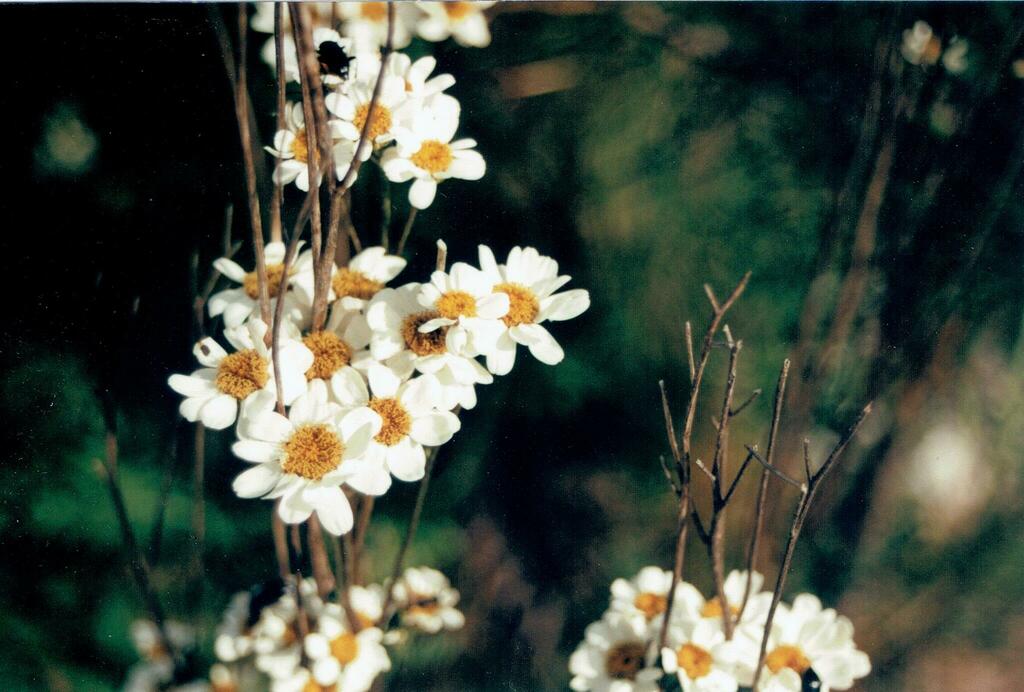
Feverfew is a charming, daisy-like perennial that has been used in gardens for centuries. It produces masses of small, white flowers with yellow centers that look lovely in borders. You will find it is quite hardy and often reseeds itself freely.
At a glance
- Care level
- Easy
- Plant type
- Perennial herb
- Light
- Full sun to partial shade
- Indoor light
- Bright indirect
- Water
- Every 3 to 7 days
- Mature size
- 2 to 3 feet
- Growth rate
- Medium
- Hardiness
- USDA 4 to 9
- Bloom time
- Mid summer to early autumn
Care
Plant this in well-draining soil and keep it consistently moist but not soggy. Watch for aphids on the flower buds and deadhead spent blooms to encourage a second flush of flowers. It thrives best when it gets plenty of light but appreciates some shade during the hottest part of the day.
- Watering
- Water when the top inch of soil feels dry to the touch.
- Feeding
- Apply a balanced liquid fertilizer during the active growing season.
- Pruning
- Trim back spent flowers to promote bushier growth and prevent unwanted self-seeding.
- Repotting
- Repot if the plant becomes root-bound or needs fresh soil to maintain vigor.
- Soil
- Well-draining, fertile soil
- Soil pH
- 6.0 to 7.5
- Temperature
- -20 to 35°C
- Humidity
- 40 to 70%
- Drought tolerance
- Moderate
- Lifespan
- Short lived perennial, typically 2 to 3 years.
- Fragrance
- Light
- Deer and rabbits
- High
Signs it needs repotting
- Roots growing out of the drainage holes.
- Water running straight through the pot without soaking in.
Safety
- People
- The plant is generally safe but the fresh leaves can cause contact dermatitis or mouth irritation in sensitive individuals.
- Pets
- This plant is toxic to cats and dogs. If eaten, it can cause vomiting, diarrhea and skin irritation, and eating it over a long period may lead to bleeding problems.
- Children
- Keep away from young children as the leaves can cause mouth irritation if ingested.
- Contact allergens
- The foliage can cause skin irritation or dermatitis in people sensitive to sesquiterpene lactones.
- Airborne allergens
- Pollen may cause allergic reactions in individuals sensitive to the Asteraceae family.
- Edibility
- Feverfew leaves can cause mouth ulcers or irritation if chewed raw.
How to identify it
- Daisy-like white flower heads
- Strongly aromatic fern-like leaves
- Clump forming growth habit
- Yellow central disc florets
- Height
- 0.3 to 0.9m
- Spread
- 0.3 to 0.6m
- Leaves
- bright green, yellow green, deciduous
- Flowers
- white, yellow, 1 to 2cm
Problems to watch for
- Aphids · Small insects that cluster on new growth and flower buds.
- Powdery mildew · A fungal infection that creates a white dusty coating on leaves.
Check your feverfew from a photo
Pocket Botanist looks at a photo of your plant and tells you what's wrong and what to try first.
Scan with your phone's camera to get the app
Or go to pocketbotanist.app/get on your phone
Growing it
- Propagation
- seed, cuttings, division
- When to plant
- spring, autumn
- Overwintering
- Cut back the foliage to the ground after the first hard frost. Apply a light layer of mulch if you live in a very cold climate to protect the crown.
- In containers
- It grows well in containers at least 25 cm deep with good drainage.
Seed
- 1. Sow seeds on the surface of moist soil in spring.
- 2. Press them down gently without covering.
- 3. Keep the soil consistently moist until germination.
Plant feverfew near roses to help deter aphids and other unwanted visitors.
Grows well with
Similar species
- Chamomile · It has similar daisy like flowers but is used primarily for tea.
Science
- Family
- Asteraceae
- Genus
- Tanacetum
- Order
- Asterales
- Class
- Magnoliopsida
- Native range
- Balkan Peninsula, Anatolia, and the Caucasus.
- Conservation
- Not of conservation concern.
This plant thrives in disturbed soils and sunny meadows where it competes well with other herbaceous species.
- Value to wildlife
- nectar source, attracts beneficial insects
- Pollinators
- bees, butterflies, beetles
- Uses
- medicinal herb, pollinator garden, border plant, cut flowers
Through the year
Ecological indicators
- Salinity
- 2/9
- Soil reaction
- 6/9
- Light
- 7/9
- Temperature
- 5/9
- Moisture
- 5/9
- Nutrients
- 5/9
Taxonomy resolved against GBIF.
Questions people ask
- Is feverfew a perennial?
- It is a short lived perennial that often acts like an annual or biennial.
- Does it need full sun?
- It thrives best in full sun but will tolerate partial shade.
Where the name comes from
The name Tanacetum is thought to derive from the Greek word athanatos, meaning immortal, while parthenium refers to its historical use as a medicinal herb.
Good to know
- Feverfew is a member of the daisy family.
- The name comes from the Latin word febrifugia, meaning fever reducer.
- It often self seeds readily in the garden.
- The flowers look like miniature daisies.
Also in
Keep your feverfew growing
This page is a general guide. Save your plant in Pocket Botanist and you get care reminders timed for this plant, plus a care history that shows what worked.
Scan with your phone's camera to get the app
Or go to pocketbotanist.app/get on your phone
This guide was generated with AI on and checked against GBIF taxonomy. It is general information, not horticultural or veterinary advice. Read about how we build these guides.