 Pocket Botanist
Pflanzenratgeber
Saw greenbrier.
Smilax bona-nox
Aussprache SMI-laks BO-nah NOKS
Auch bekannt als China brier, Green briar, Kidneyleaf greenbriar, bamboo brier, bullbrier, catbrier, chaney briar, greenbrier



This hardy, native vine is known for its tough, woody stems and persistent foliage. It often climbs over other plants using tendrils to reach sunlight. You will find it quite resilient in a variety of outdoor environments.
Auf einen Blick
- Pflegestufe
- Einfach
- Pflanzenart
- Perennial vine
- Licht
- Full sun to partial shade
- Licht im Innenraum
- Hell, indirekt
- Gießen
- Alle 7 bis 14 Tage
- Endgröße
- 20 to 30 feet
- Wachstum
- Schnell
- Winterhärte
- USDA 6 bis 10
- Blütezeit
- Late spring to early summer
Pflege
This plant is very self sufficient and rarely needs human intervention. Watch for it spreading too aggressively into areas where you do not want it. It thrives in most soil conditions without extra help.
- Gießen
- Water only during extended dry spells once the plant is established.
- Düngen
- Fertilizing is generally unnecessary for this vigorous native vine.
- Schneiden
- Prune back annually in late winter if you need to control its size or spread.
- Umtopfen
- If growing in a container, move to a larger pot every few years when roots become crowded.
- Boden
- Well draining loam or clay
- Boden-pH
- 6.0 to 7.5
- Temperatur
- -15 bis 35°C
- Luftfeuchtigkeit
- 40 bis 80%
Sicherheit
- Menschen
- The plant is generally considered non-toxic, though the thorns can cause significant mechanical injury.
- Kinder
- Keep children away from this plant because the sharp, woody thorns can easily scratch or pierce skin.
- Kontaktallergene
- The sharp thorns can cause skin punctures and irritation.
- Allergene in der Luft
- The pollen may cause mild seasonal allergies in sensitive individuals.
- Essbarkeit
- While the young shoots are edible, mature leaves and stems are tough and not recommended for consumption.
So erkennst du die Pflanze
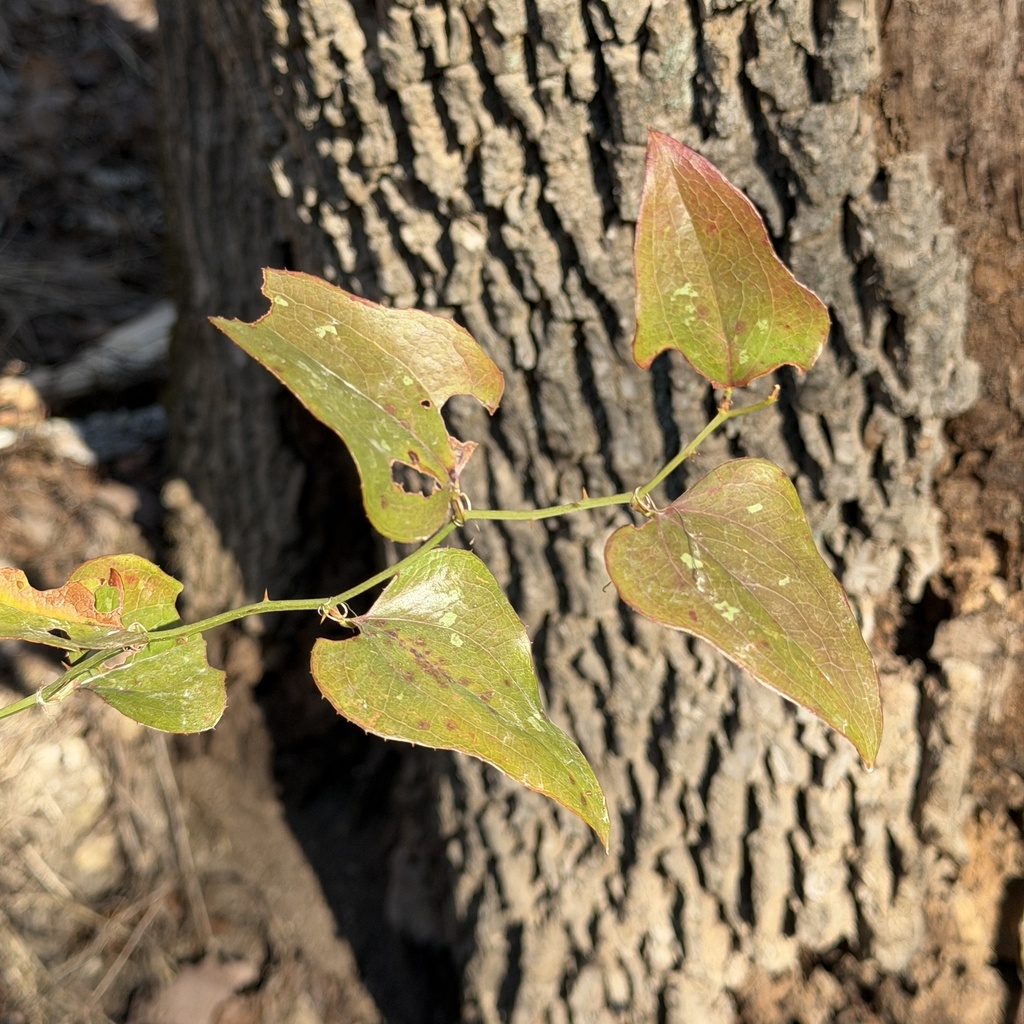
- Heart shaped leaves with white mottling
- Stems armed with sharp prickles
- Small greenish flowers in clusters
- Dark blue to black berries
- Strong tendrils for climbing
- Höhe
- 3 bis 6m
- Breite
- 2 bis 5m
- Blätter
- green, variegated, semi-evergreen
- Blüten
- greenish-yellow, 0,5 bis 1cm
- Früchte
- black, Autumn
Häufige Probleme
- Leaf spot — Fungal spots appear on leaves during periods of high humidity.
Standort und Pflege
- Vermehrung
- seed, division, cuttings
- Pflanzzeit
- spring, autumn
Plant this species only where you want a permanent, impenetrable thicket, as it is difficult to remove once established.
Gute Pflanzpartner
- Schönfrucht — They share similar woodland edge habitat requirements.
- Eastern red cedar — It provides a sturdy structure for the vine to climb.
Ähnliche Arten
- Smilax rotundifolia — It shares a similar growth habit and thorny stems.
Botanisches
- Familie
- Smilacaceae
- Gattung
- Smilax
- Ordnung
- Liliales
- Klasse
- Liliopsida
- Ursprüngliche Heimat
- Southeastern and south-central United States.
- Artenschutz
- This species is common and widespread throughout its native range and is not of conservation concern.
It thrives in disturbed areas and forest edges where it uses its tendrils to climb over other vegetation for sunlight.
- Nutzen für Wildtiere
- nectar source, nesting cover, bird food
- Bestäuber
- Bienen, Schmetterlinge
- Verwendung
- natural fencing, wildlife habitat, erosion control
Im Jahresverlauf
Ökologische Zeigerwerte
- Salzgehalt
- 2/9
- Bodenreaktion
- 5/9
- Licht
- 6/9
- Temperatur
- 6/9
- Feuchtigkeit
- 5/9
- Nährstoffe
- 4/9
Taxonomie abgeglichen mit GBIF.
Häufige Fragen
- Is this plant invasive?
- It can be aggressive in garden settings due to its rapid growth and thorny nature.
- How do I control it?
- Regular pruning and digging out the root crown are necessary to keep it in check.
Woher der Name kommt
The genus name Smilax comes from the Greek word for a climbing plant, while bona-nox is Latin for good night.
Gut zu wissen
- The stems are extremely tough and were historically used for basketry.
- It is a vigorous climber that uses tendrils to scale trees and fences.
- The berries provide a vital winter food source for many bird species.
- It is highly resilient and can regrow from its root system after being cut back.
Probleme mit Saw greenbrier?
Diese Seite bietet allgemeine Infos. Pocket Botanist erkennt Probleme anhand eines Fotos deiner echten Pflanze, passt das Gießen an dein Licht und deinen Standort an und erinnert dich an die Pflege.
Dieser Ratgeber wurde mit KI erstellt und mit der GBIF-Taxonomie abgeglichen. Er dient zur allgemeinen Information und ersetzt keine gärtnerische oder tierärztliche Beratung. Hier erfährst du, wie wir diese Ratgeber erstellen.