 Pocket Botanist
Guide botanique
Saw greenbrier.
Smilax bona-nox
Prononciation SMI-laks BO-nah NOKS
Aussi appelée China brier, Green briar, Kidneyleaf greenbriar, bamboo brier, bullbrier, catbrier, chaney briar, greenbrier



This hardy, native vine is known for its tough, woody stems and persistent foliage. It often climbs over other plants using tendrils to reach sunlight. You will find it quite resilient in a variety of outdoor environments.
En un coup d'œil
- Niveau d'entretien
- Facile
- Type de plante
- Perennial vine
- Lumière
- Full sun to partial shade
- Lumière en intérieur
- Lumière vive indirecte
- Arrosage
- Tous les 7 à 14 jours
- Taille adulte
- 20 to 30 feet
- Croissance
- Rapide
- Rusticité
- USDA 6 à 10
- Floraison
- Late spring to early summer
Entretien
This plant is very self sufficient and rarely needs human intervention. Watch for it spreading too aggressively into areas where you do not want it. It thrives in most soil conditions without extra help.
- Arrosage
- Water only during extended dry spells once the plant is established.
- Engrais
- Fertilizing is generally unnecessary for this vigorous native vine.
- Taille
- Prune back annually in late winter if you need to control its size or spread.
- Rempotage
- If growing in a container, move to a larger pot every few years when roots become crowded.
- Sol
- Well draining loam or clay
- pH du sol
- 6.0 to 7.5
- Température
- -15 à 35°C
- Humidité
- 40 à 80%
Sécurité
- Humains
- The plant is generally considered non-toxic, though the thorns can cause significant mechanical injury.
- Enfants
- Keep children away from this plant because the sharp, woody thorns can easily scratch or pierce skin.
- Allergènes de contact
- The sharp thorns can cause skin punctures and irritation.
- Allergènes aéroportés
- The pollen may cause mild seasonal allergies in sensitive individuals.
- Comestibilité
- While the young shoots are edible, mature leaves and stems are tough and not recommended for consumption.
Comment l'identifier
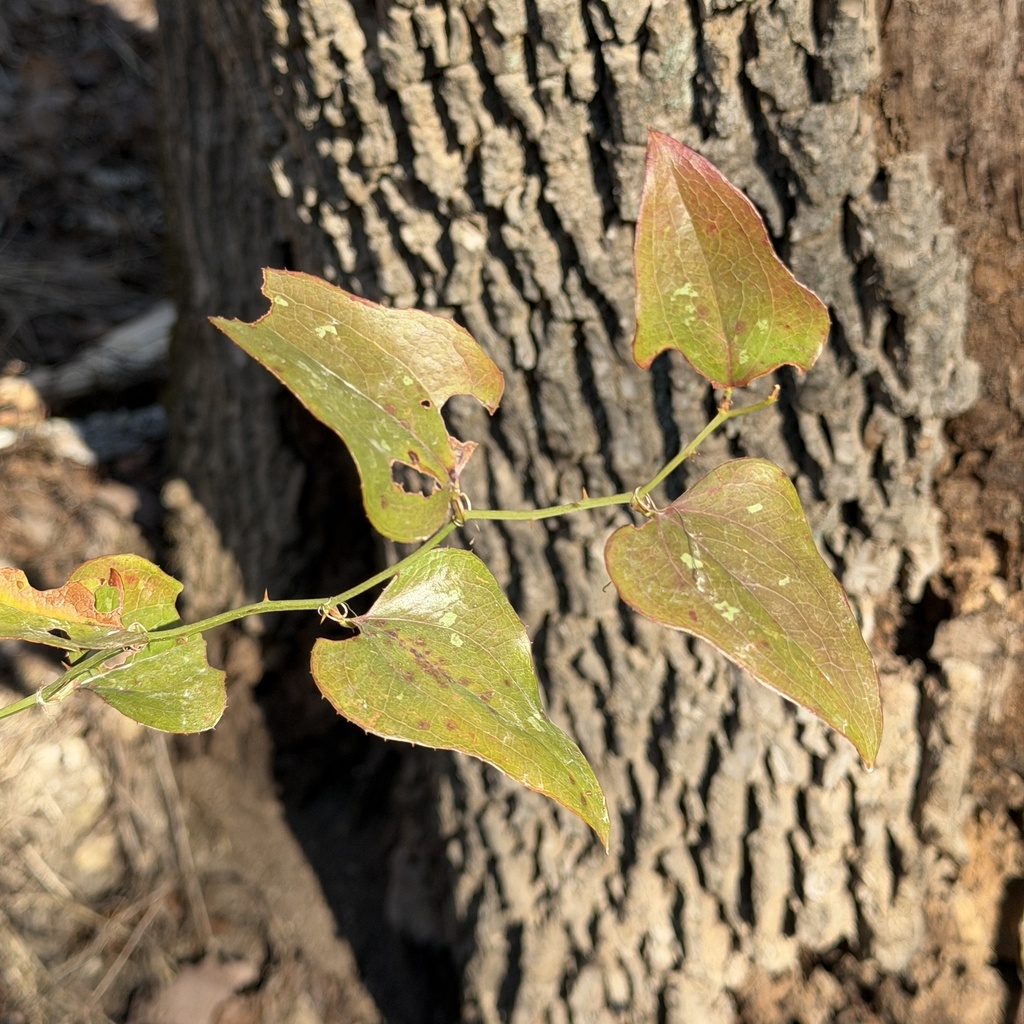
- Heart shaped leaves with white mottling
- Stems armed with sharp prickles
- Small greenish flowers in clusters
- Dark blue to black berries
- Strong tendrils for climbing
- Hauteur
- 3 à 6m
- Envergure
- 2 à 5m
- Feuilles
- green, variegated, semi-evergreen
- Fleurs
- greenish-yellow, 0,5 à 1cm
- Fruits
- black, Autumn
Problèmes courants
- Leaf spot — Fungal spots appear on leaves during periods of high humidity.
La cultiver
- Multiplication
- seed, division, cuttings
- Quand planter
- spring, autumn
Plant this species only where you want a permanent, impenetrable thicket, as it is difficult to remove once established.
Bonnes associations
- Callicarpe d'Amérique — They share similar woodland edge habitat requirements.
- Eastern red cedar — It provides a sturdy structure for the vine to climb.
Espèces similaires
- Smilax rotundifolia — It shares a similar growth habit and thorny stems.
Science
- Famille
- Smilacaceae
- Genre
- Smilax
- Ordre
- Liliales
- Classe
- Liliopsida
- Région d'origine
- Southeastern and south-central United States.
- Préservation
- This species is common and widespread throughout its native range and is not of conservation concern.
It thrives in disturbed areas and forest edges where it uses its tendrils to climb over other vegetation for sunlight.
- Intérêt pour la faune
- nectar source, nesting cover, bird food
- Pollinisateurs
- abeilles, papillons
- Utilisations
- natural fencing, wildlife habitat, erosion control
Au fil des saisons
Repères écologiques
- Salinité
- 2/9
- Réaction du sol
- 5/9
- Lumière
- 6/9
- Température
- 6/9
- Humidité
- 5/9
- Nutriments
- 4/9
Taxonomie vérifiée avec le GBIF.
Ce qu'on demande souvent
- Is this plant invasive?
- It can be aggressive in garden settings due to its rapid growth and thorny nature.
- How do I control it?
- Regular pruning and digging out the root crown are necessary to keep it in check.
D'où vient le nom
The genus name Smilax comes from the Greek word for a climbing plant, while bona-nox is Latin for good night.
Bon à savoir
- The stems are extremely tough and were historically used for basketry.
- It is a vigorous climber that uses tendrils to scale trees and fences.
- The berries provide a vital winter food source for many bird species.
- It is highly resilient and can regrow from its root system after being cut back.
Ta plante a mauvaise mine ?
Cette page est un guide général. Pocket Botanist diagnostique les problèmes directement à partir d'une photo de ta plante, adapte l'arrosage à sa luminosité et te prévient quand il faut t'en occuper.
Ce guide a été généré par IA et vérifié avec la taxonomie du GBIF. Il s'agit d'informations générales, et non de conseils horticoles ou vétérinaires. Découvre comment nous concevons ces guides.