 Pocket Botanist
Plant guide
Pork and Beans.
Sedum rubrotinctum
Pronounced SEE-dum roo-bro-TINK-tum
Also known as Christmas-cheer, Jelly-beans, pork-and-beans



Scan with your phone's camera to get the app
Or go to pocketbotanist.app/get on your phone
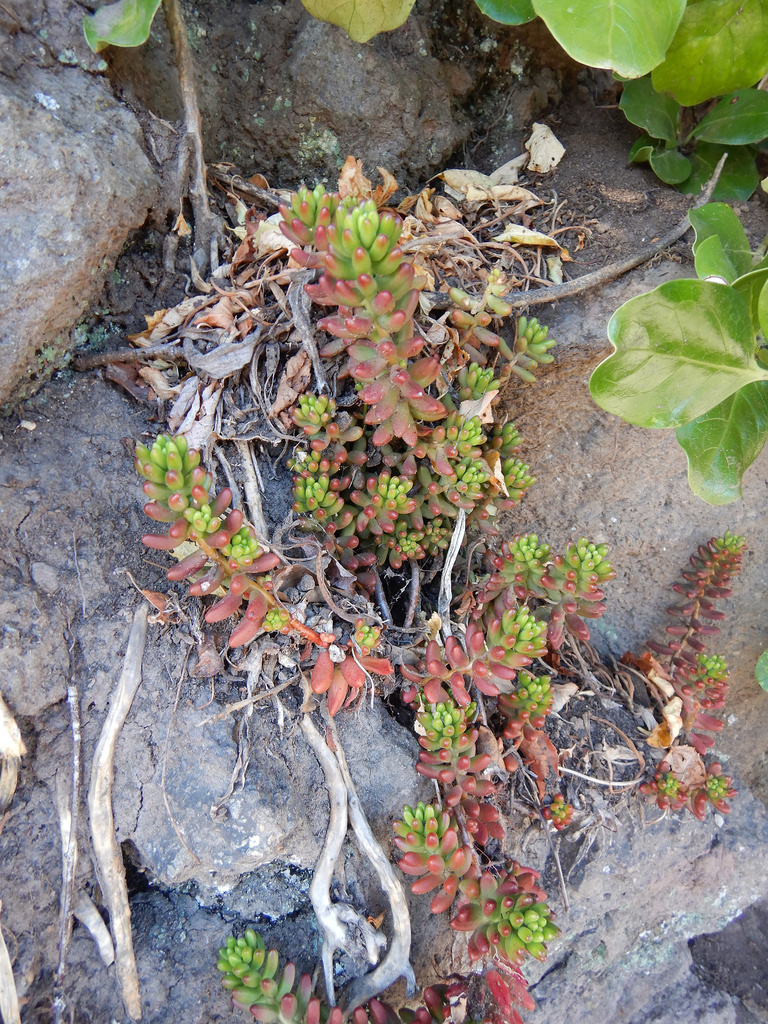
Pork and Beans is a charming succulent known for its jelly bean shaped leaves that turn bright red in the sun. It is a low growing plant that thrives in warm, sunny spots. You will love how easily it propagates from fallen leaves.
At a glance
- Care level
- Easy
- Plant type
- Succulent
- Light
- Full sun
- Indoor light
- Direct sun
- Water
- Every 14 to 21 days
- Mature size
- 20 cm tall and 30 cm wide
- Growth rate
- Medium
- Hardiness
- USDA 9 to 11
- Bloom time
- Late winter to spring
Care
Give this succulent plenty of direct sunlight to maintain its vibrant color and compact shape. Water only when the soil is completely dry to prevent root rot. Watch for shriveling leaves, which indicate the plant needs a drink.
- Watering
- Allow the soil to dry out entirely between waterings.
- Feeding
- Use a balanced liquid fertilizer diluted to half strength during the growing season.
- Pruning
- Trim back leggy stems in spring to encourage a bushier shape.
- Repotting
- Repot only when the plant has outgrown its container.
- Soil
- Well draining cactus and succulent mix
- Soil pH
- 6.0 to 7.5
- Temperature
- -4 to 38°C
- Humidity
- 10 to 40%
- Drought tolerance
- High
- Lifespan
- Perennial, typically 5 to 10 years
- Deer and rabbits
- Moderate
Signs it needs repotting
- Roots growing out of the drainage holes.
- The plant has become top heavy.
- Soil no longer drains well.
Safety
- People
- The sap can cause skin irritation upon contact.
- Pets
- This plant is toxic to cats and dogs if ingested.
- Children
- The small, jelly bean like leaves are a choking hazard and should be kept away from small children.
- Contact allergens
- The sap contains compounds that may cause contact dermatitis in sensitive individuals.
- Airborne allergens
- There are no notable airborne allergens associated with this plant.
- Edibility
- This plant is not intended for consumption and may cause digestive upset.
How to identify it
- Jelly bean shaped fleshy leaves
- Leaves turn red in sunlight
- Trailing or spreading growth habit
- Small yellow star shaped flowers
- Height
- 0.1 to 0.2m
- Spread
- 0.15 to 0.3m
- Leaves
- green, red, evergreen
- Flowers
- yellow, 0.5 to 1cm
Problems to watch for
- MealybugsCommon
- Root RotCommon
- Fungus GnatsUncommon
- Spider MitesUncommon
Check your pork and beans from a photo
Pocket Botanist looks at a photo of your plant and tells you what's wrong and what to try first.
Scan with your phone's camera to get the app
Or go to pocketbotanist.app/get on your phone
Growing it
- Propagation
- cuttings, leaf cuttings
- When to plant
- spring, summer
- Overwintering
- Keep the plant dry during winter to prevent rot. Move it indoors if temperatures drop below freezing.
- In containers
- It grows very well in containers, provided the pot has excellent drainage holes.
Stem Cuttings
- 1. Snip a healthy stem.
- 2. Let the cut end callous for two days.
- 3. Place the stem in well draining soil.
Group succulents together to ensure they all receive the same infrequent watering schedule.
Grows well with
Similar species
- Sedum album · It is another low growing succulent with similar care needs.
Science
- Family
- Crassulaceae
- Genus
- Sedum
- Order
- Saxifragales
- Class
- Magnoliopsida
- Native range
- Mexico
- Conservation
- This plant is not of conservation concern.
It grows in arid, rocky environments where it stores water in its succulent leaves to survive long dry spells.
- Value to wildlife
- nectar source
- Pollinators
- bees, butterflies
- Uses
- rock gardens, container gardening, ground cover
Through the year
Ecological indicators
- Salinity
- 2/9
- Soil reaction
- 6/9
- Light
- 8/9
- Temperature
- 7/9
- Moisture
- 2/9
- Nutrients
- 2/9
Taxonomy resolved against GBIF.
Questions people ask
- Why are my leaves falling off?
- This is a natural way for the plant to propagate itself, though it can also be a sign of overwatering.
- How much sun does it need?
- It prefers bright, direct sunlight to maintain its compact shape and red coloration.
Where the name comes from
The name Sedum comes from the Latin word sedere, meaning to sit, referring to how these plants sit on rocks. Rubrotinctum means red tinged, describing the leaf color.
Good to know
- It is commonly called the jelly bean plant because of its plump leaves.
- The leaves drop off easily and can grow into new plants.
- It thrives in poor, rocky soil.
Also in
Keep your pork and beans growing
This page is a general guide. Save your plant in Pocket Botanist and you get care reminders timed for this plant, plus a care history that shows what worked.
Scan with your phone's camera to get the app
Or go to pocketbotanist.app/get on your phone
This guide was generated with AI on and checked against GBIF taxonomy. It is general information, not horticultural or veterinary advice. Read about how we build these guides.