 Pocket Botanist
Plant guide
Sandalwood.
Santalum album
Pronounced SAN-tuh-lum AL-bum
Also known as East Indian Sandalwood, Indian Sandalwood, Sandalwood, Sandal, Sandal tree, White sandal tree, White sandalwood, Indian sandalwood, sandalwood, white sandalwood, white saunders, yellow sandalwood



Scan with your phone's camera to get the app
Or go to pocketbotanist.app/get on your phone
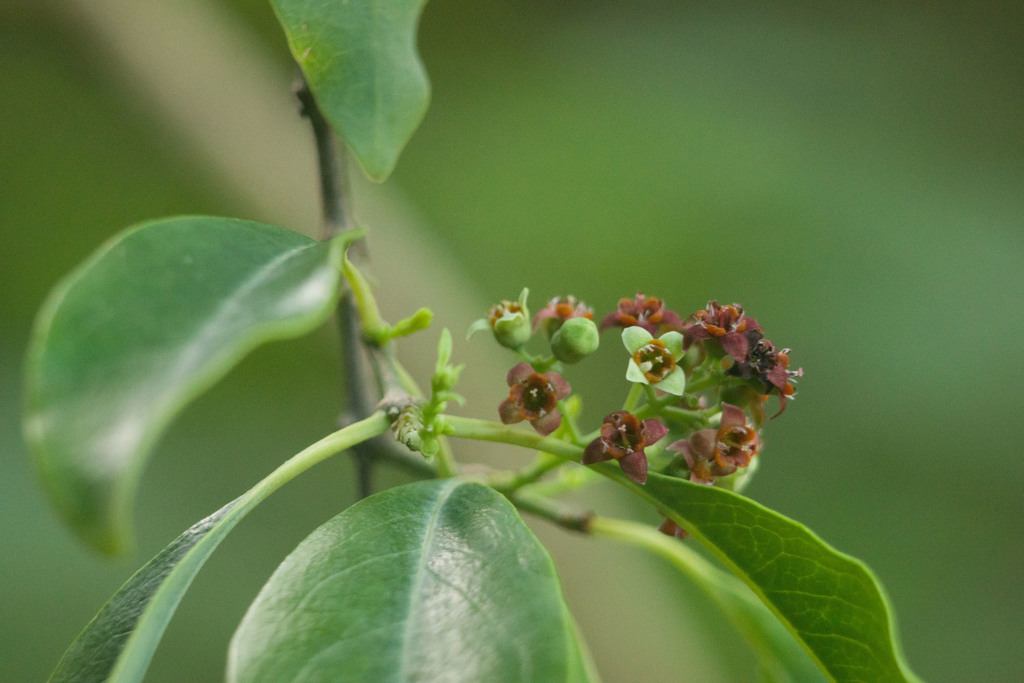
Sandalwood is a beautiful, slow growing tree prized for its fragrant heartwood and essential oils. It is a hemiparasitic plant that needs a host tree to thrive in its early stages. You will find it is quite unique because it draws nutrients from the roots of neighboring plants.

At a glance
- Care level
- Difficult
- Plant type
- Evergreen tree
- Light
- Full sun
- Indoor light
- Direct sun
- Water
- Every 7 to 14 days
- Mature size
- 30 to 50 feet
- Growth rate
- Slow
- Hardiness
- USDA 10 to 12
- Bloom time
- Throughout the year
Care
Provide plenty of direct sunlight and ensure the soil remains well drained to prevent root rot. Keep an eye out for yellowing leaves which may indicate poor drainage or a lack of a suitable host plant. It is essential to plant this near a host species for it to survive long term.
- Watering
- Water deeply when the top few inches of soil feel dry to the touch.
- Feeding
- Use a balanced slow release fertilizer during the active growing season.
- Pruning
- Prune lightly in late winter to maintain shape and remove any dead branches.
- Repotting
- Repot only when the tree has clearly outgrown its container and shows signs of being root bound.
- Soil
- Well drained sandy or loamy soil
- Soil pH
- 6.0 to 7.5
- Temperature
- 15 to 35°C
- Humidity
- 50 to 80%
Safety
- People
- The wood and oil are generally safe, but ingestion of plant parts is not recommended.
- Children
- The berries are not edible and should be kept away from small children to prevent choking.
- Contact allergens
- Essential oil from the heartwood may cause skin irritation in sensitive individuals.
- Airborne allergens
- Pollen may trigger mild allergic reactions in some people.
- Edibility
- The fruit is generally not consumed by humans and is not considered a food crop.
How to identify it
- Opposite, leathery, oval shaped leaves
- Small, fragrant, reddish brown flowers
- Smooth, greyish brown bark
- Hemiparasitic root system
- Height
- 4 to 15m
- Spread
- 2 to 6m
- Leaves
- green, evergreen
- Flowers
- yellow, red, purple, 0.5 to 1cm
- Fruit
- black, red, Year round
Problems to watch for
- Spike DiseaseCommon
- CankerUncommon
- ChlorosisUncommon
- Leaf SpotUncommon
- Root RotUncommon
- Scale InsectsUncommon
Check your sandalwood from a photo
Pocket Botanist looks at a photo of your plant and tells you what's wrong and what to try first.
Scan with your phone's camera to get the app
Or go to pocketbotanist.app/get on your phone
Growing it
- Propagation
- seed, cuttings
- When to plant
- spring, summer
Always plant a compatible host tree within a few feet to ensure the sandalwood receives proper nutrition.
Grows well with
- Acacia · Acts as a primary host plant for the sandalwood roots.
- She-oak · Provides excellent host support for nutrient uptake.
Similar species
- Red Sandalwood · Often confused due to the name, though it is a different species.
Science
- Family
- Santalaceae
- Genus
- Santalum
- Order
- Santalales
- Class
- Magnoliopsida
- Native range
- Tropical regions of India, Indonesia, and northern Australia.
- Conservation
- This species is vulnerable in the wild due to overharvesting for its fragrant heartwood.
It survives by attaching its roots to the roots of other trees to extract water and nutrients.
- Value to wildlife
- nectar source
- Pollinators
- bees, butterflies
- Uses
- fragrance production, medicinal oil, ornamental tree
Through the year
Ecological indicators
- Salinity
- 2/9
- Soil reaction
- 6/9
- Light
- 8/9
- Temperature
- 9/9
- Moisture
- 4/9
- Nutrients
- 3/9
Taxonomy resolved against GBIF.
Questions people ask
- Can I grow sandalwood in a pot?
- It is very difficult because it requires a host plant to survive.
- How do I provide a host plant?
- Plant it alongside a suitable host species like Acacia or Casuarina.
Where the name comes from
The genus name Santalum comes from the Persian word for the wood, while album refers to the white color of the wood.
Good to know
- Sandalwood oil is one of the most valuable essential oils in the world.
- The tree must be at least 30 years old to produce high quality heartwood.
- It is a hemiparasite, meaning it steals nutrients from nearby host plants.
- The wood is traditionally used for carvings and incense.
Keep your sandalwood growing
This page is a general guide. Save your plant in Pocket Botanist and you get care reminders timed for this plant, plus a care history that shows what worked.
Scan with your phone's camera to get the app
Or go to pocketbotanist.app/get on your phone
This guide was generated with AI on and checked against GBIF taxonomy. It is general information, not horticultural or veterinary advice. Read about how we build these guides.