 Pocket Botanist
Guía de plantas
Sandalwood.
Santalum album
Pronunciación SAN-tuh-lum AL-bum
También se conoce como East Indian Sandalwood, Indian Sandalwood, Sandalwood, Sandal, Sandal tree, White sandal tree, White sandalwood, Indian sandalwood, sandalwood, white sandalwood, white saunders, yellow sandalwood


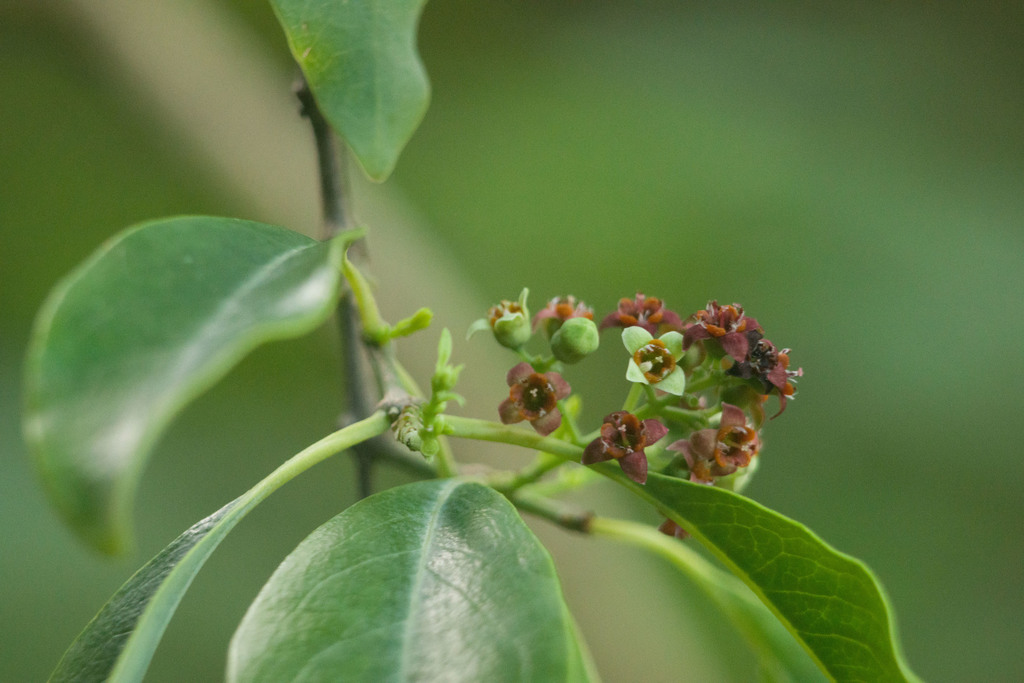
Sandalwood is a beautiful, slow growing tree prized for its fragrant heartwood and essential oils. It is a hemiparasitic plant that needs a host tree to thrive in its early stages. You will find it is quite unique because it draws nutrients from the roots of neighboring plants.

De un vistazo
- Nivel de cuidados
- Difícil
- Tipo de planta
- Evergreen tree
- Luz
- Full sun
- Luz en interior
- Sol directo
- Riego
- Cada 7 a 14 días
- Tamaño adulto
- 30 to 50 feet
- Ritmo de crecimiento
- Lento
- Rusticidad
- USDA 10 a 12
- Floración
- Throughout the year
Cuidados
Provide plenty of direct sunlight and ensure the soil remains well drained to prevent root rot. Keep an eye out for yellowing leaves which may indicate poor drainage or a lack of a suitable host plant. It is essential to plant this near a host species for it to survive long term.
- Riego
- Water deeply when the top few inches of soil feel dry to the touch.
- Abonado
- Use a balanced slow release fertilizer during the active growing season.
- Poda
- Prune lightly in late winter to maintain shape and remove any dead branches.
- Trasplante
- Repot only when the tree has clearly outgrown its container and shows signs of being root bound.
- Suelo
- Well drained sandy or loamy soil
- pH del suelo
- 6.0 to 7.5
- Temperatura
- 15 a 35°C
- Humedad
- 50 a 80%
Seguridad
- Personas
- The wood and oil are generally safe, but ingestion of plant parts is not recommended.
- Niños
- The berries are not edible and should be kept away from small children to prevent choking.
- Alérgenos por contacto
- Essential oil from the heartwood may cause skin irritation in sensitive individuals.
- Alérgenos en el aire
- Pollen may trigger mild allergic reactions in some people.
- Comestibilidad
- The fruit is generally not consumed by humans and is not considered a food crop.
Cómo identificarla
- Opposite, leathery, oval shaped leaves
- Small, fragrant, reddish brown flowers
- Smooth, greyish brown bark
- Hemiparasitic root system
- Altura
- 4 a 15m
- Anchura
- 2 a 6m
- Hojas
- green, evergreen
- Flores
- yellow, red, purple, 0,5 a 1cm
- Frutos
- black, red, Year round
Problemas frecuentes
- Spike disease — A phytoplasma infection that causes stunted growth and leaf yellowing.
Cómo cultivarla
- Propagación
- seed, cuttings
- Cuándo plantar
- spring, summer
Always plant a compatible host tree within a few feet to ensure the sandalwood receives proper nutrition.
Buenas compañeras
- Acacia — Acts as a primary host plant for the sandalwood roots.
- Coastal she oak — Provides excellent host support for nutrient uptake.
Especies parecidas
- Pterocarpus santalinus — Often confused due to the name, though it is a different species.
Ciencia
- Familia
- Santalaceae
- Género
- Santalum
- Orden
- Santalales
- Clase
- Magnoliopsida
- Distribución natural
- Tropical regions of India, Indonesia, and northern Australia.
- Conservación
- This species is vulnerable in the wild due to overharvesting for its fragrant heartwood.
It survives by attaching its roots to the roots of other trees to extract water and nutrients.
- Valor para la fauna
- nectar source
- Polinizadores
- abejas, mariposas
- Usos
- fragrance production, medicinal oil, ornamental tree
A lo largo del año
Indicadores ecológicos
- Salinidad
- 2/9
- Reacción del suelo
- 6/9
- Luz
- 8/9
- Temperatura
- 9/9
- Humedad
- 4/9
- Nutrientes
- 3/9
Taxonomía cotejada con GBIF.
Lo que más preguntan
- Can I grow sandalwood in a pot?
- It is very difficult because it requires a host plant to survive.
- How do I provide a host plant?
- Plant it alongside a suitable host species like Acacia or Casuarina.
De dónde viene el nombre
The genus name Santalum comes from the Persian word for the wood, while album refers to the white color of the wood.
Bueno saberlo
- Sandalwood oil is one of the most valuable essential oils in the world.
- The tree must be at least 30 years old to produce high quality heartwood.
- It is a hemiparasite, meaning it steals nutrients from nearby host plants.
- The wood is traditionally used for carvings and incense.
¿Tu sandalwood tiene mal aspecto?
Esta página es una guía general. Pocket Botanist diagnostica problemas a partir de una foto de tu propia planta, calcula el riego según tu luz y tus condiciones, y te avisa cuando toca cuidarla.
Esta guía se ha generado con IA y se ha cotejado con la taxonomía de GBIF. Es información general, no asesoramiento botánico ni veterinario. Descubre cómo elaboramos estas guías.