 Pocket Botanist
Plant guide
Coastal she oak.
Casuarina equisetifolia
Pronounced kas-yoo-uh-RYE-nuh ek-wih-sih-foh-LEE-uh
Also known as Asutralian Pine, Australian beefwood, Australian pine, Australian pine tree, Australian-pine, Beach Sheoak, Casuarine, Coastal Beefwood



Scan with your phone's camera to get the app
Or go to pocketbotanist.app/get on your phone
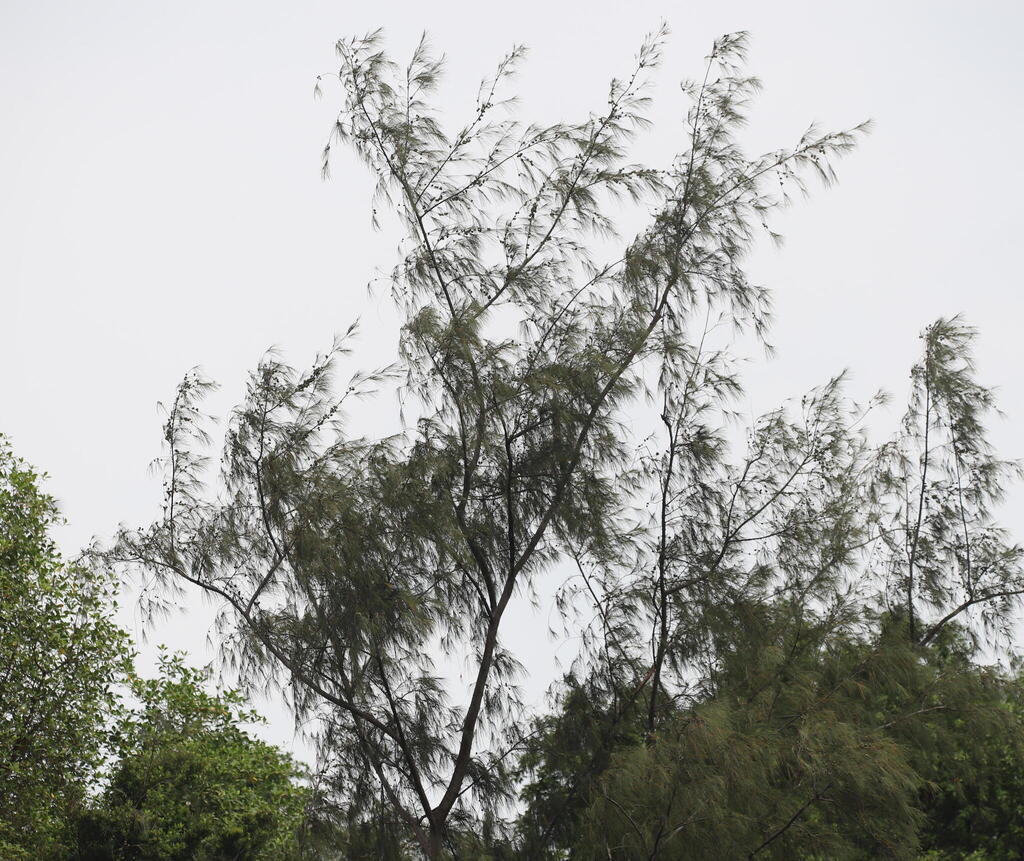
The coastal she oak is a hardy, pine like tree that thrives in sandy, salty environments. It is well known for its needle like branchlets and its ability to act as an effective windbreak. You will often see it growing near beaches where it handles harsh conditions with ease.

At a glance
- Care level
- Easy
- Plant type
- Evergreen tree
- Light
- Full sun
- Indoor light
- Direct sun
- Water
- Every 7 to 14 days
- Mature size
- 6 to 35 meters
- Growth rate
- Fast
- Hardiness
- USDA 9 to 11
- Bloom time
- Spring to summer
Care
Plant this tree in a spot with plenty of sun and well draining soil. Watch for yellowing branchlets, which can indicate poor drainage or nutrient issues. It is quite drought tolerant once established, so you do not need to fuss over it much.
- Watering
- Water deeply while young, but mature trees are very drought tolerant.
- Feeding
- Apply a balanced fertilizer once or twice a year if growth seems sluggish.
- Pruning
- Prune only to remove dead wood or to shape the tree during its dormant season.
- Repotting
- If kept in a container, move to a larger pot every few years to accommodate root growth.
- Soil
- Sandy, well draining soil
- Soil pH
- Neutral to alkaline
- Temperature
- 0 to 40°C
- Humidity
- 40 to 90%
- Drought tolerance
- High
- Lifespan
- Perennial, typically 30 to 50 years.
- Deer and rabbits
- High
Signs it needs repotting
- Roots growing out of the drainage holes.
- Water running straight through the pot without soaking in.
Safety
- People
- The plant is generally non-toxic, but the needle-like branchlets can be sharp and irritating to sensitive skin.
- Children
- The small, woody cones are a choking hazard for small children if ingested.
- Contact allergens
- The stiff, needle-like branchlets can cause minor skin abrasions or contact dermatitis in sensitive individuals.
- Airborne allergens
- The wind-dispersed pollen can be a significant trigger for seasonal hay fever sufferers.
- Edibility
- The cones and foliage are not considered edible and may cause digestive distress.
How to identify it
- Needle like green branchlets
- Small woody cone like fruits
- Rough, greyish brown bark
- Drooping, wispy growth habit
- Height
- 6 to 35m
- Spread
- 3 to 10m
- Leaves
- green, gray-green, evergreen
- Flowers
- brown, red, 0.5 to 1cm
- Fruit
- brown, Autumn
Problems to watch for
- Blister MiteCommon
- Root RotCommon
- CankerUncommon
- Scale InsectsUncommon
Check your coastal she oak from a photo
Pocket Botanist looks at a photo of your plant and tells you what's wrong and what to try first.
Scan with your phone's camera to get the app
Or go to pocketbotanist.app/get on your phone
Growing it
- Propagation
- seed, cuttings
- When to plant
- spring, autumn
- Overwintering
- In cooler climates, protect young trees from frost with burlap wraps. Ensure the soil remains well-drained to prevent root rot during wet winters.
- In containers
- It is not well-suited for long-term container growth due to its massive size and extensive root system.
Seed
- 1. Collect mature brown cones.
- 2. Dry cones until they release small winged seeds.
- 3. Sow seeds in sandy, well-draining soil.
- 4. Keep moist until germination.
Plant species that also enjoy full sun and well-draining, sandy soil to ensure they do not compete for resources.
Grows well with
- Sea Grape · Both plants thrive in similar sandy, coastal environments.
- Beach Sunflower · These low-growing flowers provide a nice color contrast beneath the trees.
Similar species
- Cunningham's Casuarina · A related species that is slightly more cold-tolerant.
Science
- Family
- Casuarinaceae
- Genus
- Casuarina
- Order
- Fagales
- Class
- Magnoliopsida
- Native range
- Coastal regions of Australia, Southeast Asia, and the Pacific Islands.
- Conservation
- It is considered invasive in many tropical regions outside its native range, so check local regulations before planting.
It fixes atmospheric nitrogen through root nodules, allowing it to colonize barren, sandy coastal dunes.
- Value to wildlife
- nesting site for birds, windbreak habitat
- Pollinators
- bees, butterflies
- Uses
- windbreak, coastal erosion control, ornamental shade tree, timber
Through the year
Ecological indicators
- Salinity
- 8/9
- Soil reaction
- 7/9
- Light
- 8/9
- Temperature
- 8/9
- Moisture
- 3/9
- Nutrients
- 2/9
Taxonomy resolved against GBIF.
Questions people ask
- Is this a true pine tree?
- No, it is a flowering plant in the Casuarinaceae family, not a conifer.
- How fast does it grow?
- It is a very fast-growing tree, often adding several feet per year in ideal conditions.
Where the name comes from
The name Casuarina comes from the resemblance of its drooping branchlets to the feathers of a cassowary bird.
Good to know
- It is often mistaken for a pine tree because of its needle-like foliage.
- The tree has a symbiotic relationship with nitrogen-fixing bacteria in its roots.
- Its wood is extremely hard and was historically used for shingles and fence posts.
- It can tolerate high levels of salt spray and sandy, nutrient-poor soils.
Also in
Keep your coastal she oak growing
This page is a general guide. Save your plant in Pocket Botanist and you get care reminders timed for this plant, plus a care history that shows what worked.
Scan with your phone's camera to get the app
Or go to pocketbotanist.app/get on your phone
This guide was generated with AI on and checked against GBIF taxonomy. It is general information, not horticultural or veterinary advice. Read about how we build these guides.