 Pocket Botanist
Plant guide
Mexican bush sage.
Salvia leucantha
Pronounced SAL-vee-uh loo-KAN-thuh
Also known as Curacao Sage, Mexican bush sage, mexican-bush-sage



Scan with your phone's camera to get the app
Or go to pocketbotanist.app/get on your phone

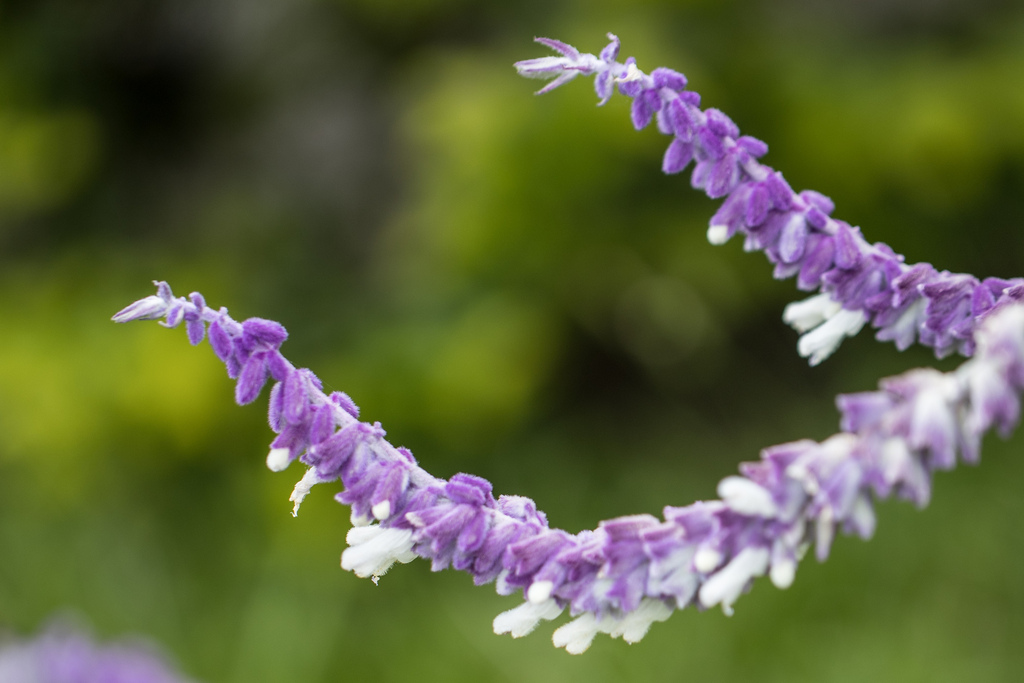
This stunning perennial is a favorite for its velvety, purple flower spikes that bloom in late summer and fall. It is a drought tolerant plant that loves the sun and adds a wonderful texture to any garden. You will love how it attracts bees and butterflies to your outdoor space.
At a glance
- Care level
- Easy
- Plant type
- Perennial shrub
- Light
- Full sun
- Indoor light
- Direct sun
- Water
- Every 7 to 14 days
- Mature size
- 3 to 4 feet tall
- Growth rate
- Fast
- Hardiness
- USDA 8 to 11
- Bloom time
- Late summer to late autumn
Care
Plant this sage in well draining soil to prevent root rot. Watch for yellowing leaves, which often signal that the plant is getting too much water. Cut it back hard in late winter or early spring, once the danger of frost has passed, to encourage healthy growth for the next season.
- Watering
- Water deeply once the top few inches of soil feel dry to the touch.
- Feeding
- Apply a balanced liquid fertilizer during the active growing season.
- Pruning
- Cut the plant back hard in late winter or early spring to keep it tidy.
- Repotting
- Repot only if the plant becomes root bound in its container.
- Soil
- Well draining sandy or loamy soil
- Soil pH
- 6.0 to 7.5
- Temperature
- -4 to 35°C
- Humidity
- 40 to 60%
- Drought tolerance
- High
- Lifespan
- Perennial, typically 5 to 10 years.
- Deer and rabbits
- High
Signs it needs repotting
- Roots growing out of the drainage holes
- Water running straight through the pot without soaking in
Safety
- People
- It is generally considered non-toxic to humans.
- Pets
- This plant is generally considered non toxic to cats and dogs.
- Children
- The stems are somewhat brittle and may break if handled roughly by small children.
- Contact allergens
- The fine hairs on the foliage and stems can cause mild skin irritation in sensitive individuals.
- Airborne allergens
- The pollen may trigger mild reactions in those with severe seasonal allergies.
- Edibility
- This plant is not intended for human consumption.
How to identify it
- Velvety purple flower spikes
- Narrow lance shaped green leaves
- White woolly hairs on stems
- Arching habit of growth
- Height
- 0.9 to 1.2m
- Spread
- 0.9 to 1.5m
- Leaves
- green, gray-green, semi-evergreen
- Flowers
- purple, white, 1 to 2cm
Problems to watch for
- Root rot · Occurs when the soil stays too wet for too long.
- Whiteflies · Small insects that congregate on the undersides of leaves.
Check your mexican bush sage from a photo
Pocket Botanist looks at a photo of your plant and tells you what's wrong and what to try first.
Scan with your phone's camera to get the app
Or go to pocketbotanist.app/get on your phone
Growing it
- Propagation
- cuttings, division
- When to plant
- spring, early autumn
- Overwintering
- In colder climates, apply a thick layer of mulch around the base to protect the roots from freezing. If the plant dies back to the ground, wait until the danger of frost has passed to prune away the dead stems.
- In containers
- It grows well in large containers of at least 40 liters to accommodate its wide root system.
Stem Cuttings
- Take a 10 cm cutting from a non-flowering stem.
- Remove the lower leaves, leaving only a few at the top.
- Place the cutting in moist, well-draining potting mix.
- Keep in bright, indirect light until roots form.
Pair this sage with other sun-loving, drought-tolerant perennials to create a low-maintenance, water-wise garden bed.
Grows well with
- Lantana · They share similar water and light requirements while providing a nice color contrast.
- Russian Sage · Both plants thrive in full sun and dry conditions.
Similar species
- Autumn Sage · A smaller, woody shrub that also attracts hummingbirds.
- Mealycup Sage · Offers a similar spike-like flower habit but with a more compact growth form.
Science
- Family
- Lamiaceae
- Genus
- Salvia
- Order
- Lamiales
- Class
- Magnoliopsida
- Native range
- Subtropical and tropical regions of Mexico.
- Conservation
- This plant is not currently listed as endangered or threatened.
It grows in dry, open habitats where its drought tolerance allows it to persist through long dry seasons.
- Value to wildlife
- nectar source
- Pollinators
- bees, butterflies, hummingbirds
- Uses
- ornamental border, pollinator garden, cut flowers, xeriscaping
Through the year
Ecological indicators
- Salinity
- 2/9
- Soil reaction
- 6/9
- Light
- 8/9
- Temperature
- 7/9
- Moisture
- 3/9
- Nutrients
- 3/9
Taxonomy resolved against GBIF.
Questions people ask
- When should I prune it?
- Cut it back hard in late winter or early spring before new growth begins.
- Does it need fertilizer?
- It prefers lean soil and rarely needs supplemental feeding.
Where the name comes from
The name Salvia comes from the Latin word for to save, referring to the historical medicinal use of some species, while leucantha means white-flowered.
Good to know
- It is commonly known as Mexican bush sage.
- The flowers are technically small, but the colorful calyxes provide the showy display.
- It thrives in poor soil conditions where many other plants struggle.
- The plant is highly drought tolerant once established in the garden.
Also in
Keep your mexican bush sage growing
This page is a general guide. Save your plant in Pocket Botanist and you get care reminders timed for this plant, plus a care history that shows what worked.
Scan with your phone's camera to get the app
Or go to pocketbotanist.app/get on your phone
This guide was generated with AI on and checked against GBIF taxonomy. It is general information, not horticultural or veterinary advice. Read about how we build these guides.