 Pocket Botanist
Plant guide
Arrowhead.
Sagittaria sagittifolia
Pronounced saj-ih-TARE-ee-uh saj-ih-tih-FOE-lee-uh
Also known as Arrowhead, Giant Sag, Giant Sagittaria, Hawaii Arrowhead, Old World arrowhead



Scan with your phone's camera to get the app
Or go to pocketbotanist.app/get on your phone
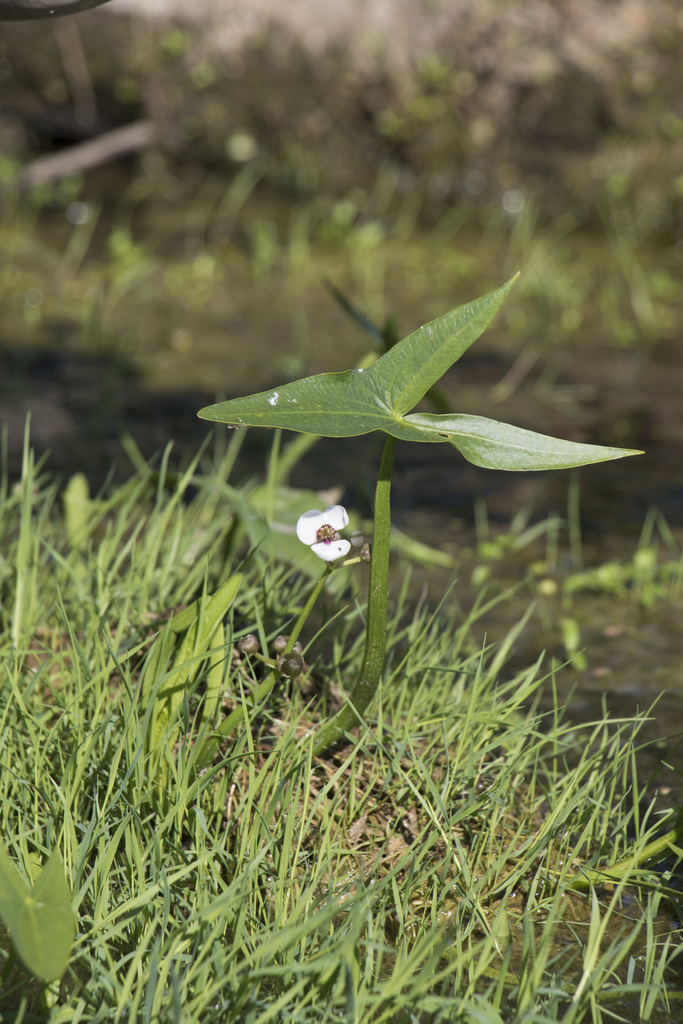
The arrowhead is a charming aquatic plant that thrives in shallow water or boggy soil. It is well known for its distinct, arrow shaped leaves that rise above the water surface. You will find it adds a nice touch to pond edges or water gardens.

At a glance
- Care level
- Easy
- Plant type
- Aquatic perennial
- Light
- Full sun to partial shade
- Indoor light
- Direct sun
- Water
- Every day
- Mature size
- 1 to 3 feet
- Growth rate
- Fast
- Hardiness
- USDA 5 to 10
- Bloom time
- Mid to late summer
Care
Keep the soil or growing medium constantly saturated as this plant loves being submerged. Watch for yellowing leaves which often signal that the water level has dropped too low. It is a vigorous grower so keep an eye on it to make sure it does not crowd out other plants.
- Watering
- The soil must remain completely waterlogged or submerged at all times.
- Feeding
- Use an aquatic plant fertilizer tablet pushed into the soil once a month during the growing season.
- Pruning
- Trim away any dead or decaying foliage to keep the water clean and prevent rot.
- Repotting
- Repot when the plant becomes root bound in its container, typically every year or two.
- Soil
- Heavy clay or aquatic soil
- Soil pH
- 6.0 to 8.0
- Temperature
- -29 to 30°C
- Humidity
- 70 to 100%
- Drought tolerance
- Low
- Lifespan
- Perennial, typically 3 to 5 years.
- Deer and rabbits
- Moderate
Signs it needs repotting
- Roots growing through the drainage holes
- Reduced flowering
- Plant becoming overcrowded in the container
Safety
- People
- This plant is generally considered non toxic to humans when prepared correctly.
- Pets
- This plant is generally considered non toxic to cats and dogs.
- Children
- The plant is not inherently dangerous, but children should be supervised around water features to prevent accidental drowning.
- Contact allergens
- The sap may cause mild skin irritation in sensitive individuals.
- Airborne allergens
- There are no significant reports of respiratory allergies associated with this plant.
- Edibility
- The tubers are edible when cooked thoroughly, but raw consumption is not recommended due to potential bitterness and digestive irritation.
How to identify it
- Distinctive arrow shaped leaves
- White flowers with purple centers
- Grows in shallow water
- Fibrous root system
- Stems are triangular in cross section
- Height
- 0.3 to 0.9m
- Spread
- 0.3 to 0.6m
- Leaves
- bright green, deciduous
- Flowers
- white, purple, 2 to 3cm
- Fruit
- green, brown, Autumn
Problems to watch for
- Algae OvergrowthCommon
- AphidsCommon
- Root RotUncommon
- Slugs and SnailsUncommon
Check your arrowhead from a photo
Pocket Botanist looks at a photo of your plant and tells you what's wrong and what to try first.
Scan with your phone's camera to get the app
Or go to pocketbotanist.app/get on your phone
Growing it
- Propagation
- division, seed
- When to plant
- spring
- Overwintering
- In cold climates, ensure the crown remains submerged below the ice line to prevent freezing. If the pond is shallow, move the container to a deeper area or a frost free garage.
- In containers
- It grows well in containers placed in a pond, provided the pot is submerged at the correct depth.
Division
- 1. Carefully lift the plant from the mud in early spring.
- 2. Separate the rhizomes or tubers using a sharp, clean knife.
- 3. Replant the divisions immediately into fresh aquatic soil.
Group these with other marginal aquatic plants to create a layered look that mimics a natural wetland edge.
Grows well with
- Pickerelweed · It shares similar water depth requirements and offers a nice contrast in leaf shape.
- Cattail · It provides a vertical structural element that complements the low growing arrowhead.
Similar species
- Broadleaf Arrowhead · It is a North American native that looks very similar but is often more vigorous.
Science
- Family
- Alismataceae
- Genus
- Sagittaria
- Order
- Alismatales
- Class
- Liliopsida
- Native range
- Europe and temperate Asia.
- Conservation
- It is common in its native range and not currently of conservation concern.
It thrives in nutrient rich, slow moving or stagnant freshwater habitats where it can root in soft mud.
- Value to wildlife
- nectar source, provides cover for aquatic life
- Pollinators
- bees, butterflies
- Uses
- ornamental pond plant, edible tubers, water garden accent
Through the year
Ecological indicators
- Salinity
- 1/9
- Soil reaction
- 6/9
- Light
- 7/9
- Temperature
- 5/9
- Moisture
- 9/9
- Nutrients
- 6/9
Taxonomy resolved against GBIF.
Questions people ask
- Can I grow this in a standard garden bed?
- No, it requires constant moisture and is best suited for pond margins or bog gardens.
- How deep should I plant it?
- Place the crown in shallow water, ideally 5 to 15 centimeters deep.
Where the name comes from
The genus name Sagittaria comes from the Latin word for arrow, referring to the leaf shape, while the species name sagittifolia means arrow leaved.
Good to know
- The tubers were historically cultivated as a food source in parts of Asia.
- The plant is a prolific grower and can quickly colonize shallow water areas.
- It is often called arrowhead due to the distinct shape of its aerial leaves.
Keep your arrowhead growing
This page is a general guide. Save your plant in Pocket Botanist and you get care reminders timed for this plant, plus a care history that shows what worked.
Scan with your phone's camera to get the app
Or go to pocketbotanist.app/get on your phone
This guide was generated with AI on and checked against GBIF taxonomy. It is general information, not horticultural or veterinary advice. Read about how we build these guides.