 Pocket Botanist
Plant guide
Mexican petunia.
Ruellia simplex
Pronounced roo-EL-ee-uh SIM-pleks
Also known as Britton's Wild Petunia, Mexican Ruellia, Mexican blue-bells, Mexican bluebell, Mexican petunia, Softseed wild petunia, Spanish-ladies



Scan with your phone's camera to get the app
Or go to pocketbotanist.app/get on your phone
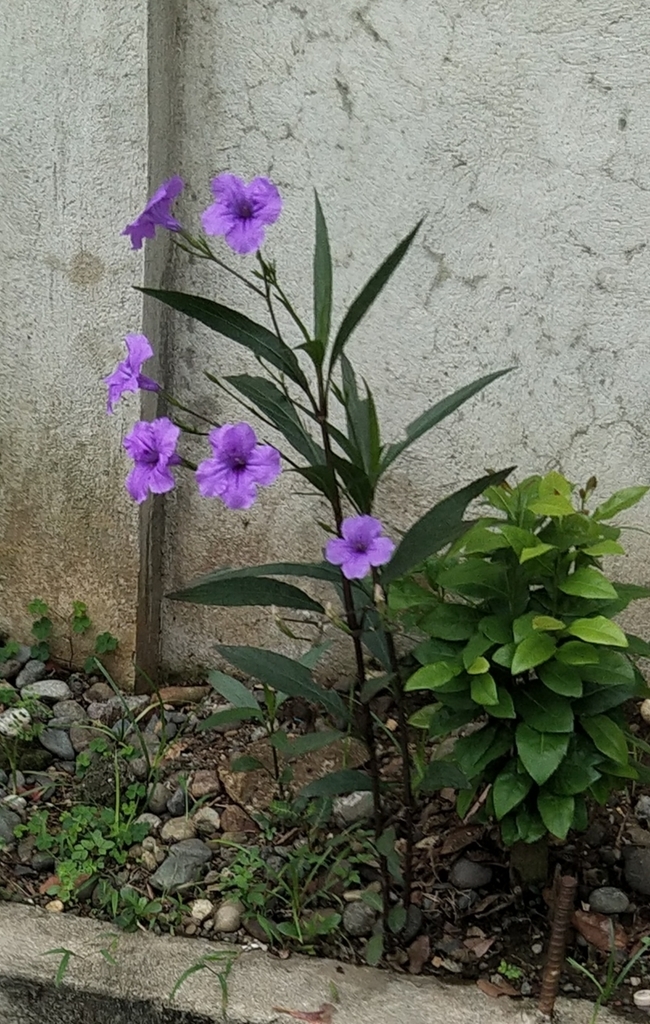
The Mexican petunia is a tough, fast growing perennial that brings a splash of color to your garden. It is quite adaptable and thrives in many different conditions. You will love how easily it spreads to fill in empty spots.
At a glance
- Care level
- Easy
- Plant type
- Perennial
- Light
- Full sun to partial shade
- Indoor light
- Direct sun
- Water
- Every 3 to 7 days
- Mature size
- 3 to 4 feet
- Growth rate
- Fast
- Hardiness
- USDA 8 to 11
- Bloom time
- Late spring to early fall
Care
Keep the soil consistently moist to help this plant bloom its best. Watch for wilting leaves, which indicate the plant needs a drink. It is a vigorous grower, so keep an eye on it if you are planting it in the ground.
- Watering
- Water whenever the top inch of soil feels dry to the touch.
- Feeding
- Apply a balanced liquid fertilizer every two months during the growing season.
- Pruning
- Trim back the stems after flowering to encourage a bushier shape and more blooms.
- Repotting
- Move to a larger container once the roots begin to circle the bottom of the pot.
- Soil
- Well draining loamy soil
- Soil pH
- 6.0 to 8.0
- Temperature
- -7 to 38°C
- Humidity
- 40 to 80%
- Drought tolerance
- High
- Lifespan
- Perennial, typically 3 to 5 years.
- Deer and rabbits
- High
Signs it needs repotting
- Roots growing out of drainage holes
- Water running straight through the soil
- Stunted growth
Safety
- People
- It is generally considered non-toxic, but ingestion is not recommended.
- Pets
- This plant is generally considered non toxic to cats and dogs.
- Children
- The small, dry seed pods could pose a minor choking hazard if ingested by small children.
- Contact allergens
- No notable skin irritation is associated with this plant.
- Airborne allergens
- Pollen may cause mild reactions in sensitive individuals during peak bloom.
- Edibility
- This plant is not considered edible and should not be consumed.
How to identify it
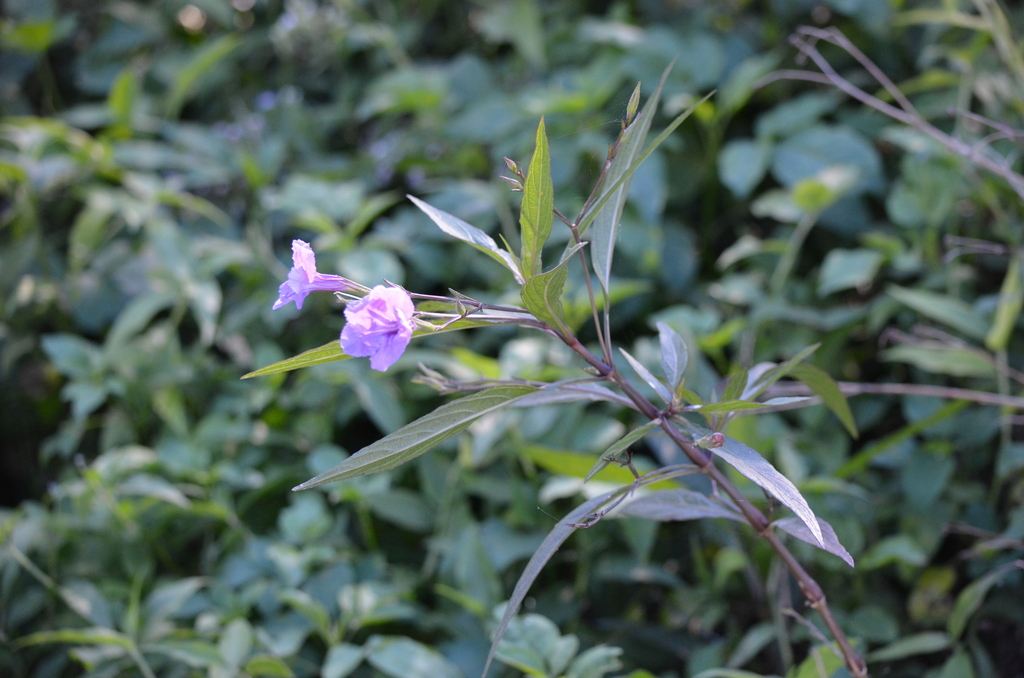
- Lance shaped dark green leaves
- Trumpet shaped purple or blue flowers
- Slender upright stems
- Veined foliage texture
- Height
- 0.6 to 1.2m
- Spread
- 0.6 to 0.9m
- Leaves
- dark green, purple-tinged, evergreen
- Flowers
- violet, blue, white, pink, 3 to 5cm
- Fruit
- brown, late summer
Problems to watch for
- Spider MitesCommon
- ChlorosisUncommon
- Leaf SpotUncommon
- Root RotUncommon
Check your mexican petunia from a photo
Pocket Botanist looks at a photo of your plant and tells you what's wrong and what to try first.
Scan with your phone's camera to get the app
Or go to pocketbotanist.app/get on your phone
Growing it
- Propagation
- seed, division, cuttings
- When to plant
- spring, early summer
- Overwintering
- In colder areas, cut the foliage back to the ground after the first frost. Mulch the base to protect the roots from deep freezes.
- In containers
- It is excellent for containers, but use a pot at least 30 centimeters wide to accommodate its root system.
Stem cuttings
- Take a 10 centimeter cutting in summer.
- Remove the lower leaves.
- Place in moist soil until rooted.
Plant in containers if you want to prevent it from taking over your garden beds.
Grows well with
Similar species
- Wild Petunia · A smaller, native alternative that is less aggressive.
Science
- Family
- Acanthaceae
- Genus
- Ruellia
- Order
- Lamiales
- Class
- Magnoliopsida
- Native range
- Mexico, the Caribbean, and South America.
- Conservation
- It is considered invasive in several southern states due to its aggressive self-seeding nature.
It colonizes wetlands and disturbed areas by rapidly dispersing seeds through explosive dehiscence.
- Value to wildlife
- nectar source, larval host plant
- Pollinators
- bees, butterflies, moths
- Uses
- pollinator gardens, border plantings, container gardening
Through the year
Ecological indicators
- Salinity
- 2/9
- Soil reaction
- 6/9
- Light
- 7/9
- Temperature
- 8/9
- Moisture
- 6/9
- Nutrients
- 5/9
Taxonomy resolved against GBIF.
Questions people ask
- Is it invasive?
- Yes, it spreads rapidly by seed and rhizomes in warm climates.
- Can I grow it in a pot?
- It grows very well in containers, which also helps contain its spread.
Where the name comes from
The genus honors French botanist Jean de la Ruelle, while simplex refers to its simple, unbranched stems.
Good to know
- It is often called Mexican petunia despite not being a true petunia.
- The flowers typically last only one day before dropping.
- It thrives in both standing water and dry soil.
Also in
Keep your mexican petunia growing
This page is a general guide. Save your plant in Pocket Botanist and you get care reminders timed for this plant, plus a care history that shows what worked.
Scan with your phone's camera to get the app
Or go to pocketbotanist.app/get on your phone
This guide was generated with AI on and checked against GBIF taxonomy. It is general information, not horticultural or veterinary advice. Read about how we build these guides.