 Pocket Botanist
Plant guide
Travellers palm.
Ravenala madagascariensis
Pronounced rav-en-AH-la mad-a-gas-kar-ee-EN-sis
Also known as Traveller's Palm, Traveller's tree, Traveller's palm, Travellers Palm, traveler's tree, traveler's-palm, traveler's-tree



Scan with your phone's camera to get the app
Or go to pocketbotanist.app/get on your phone

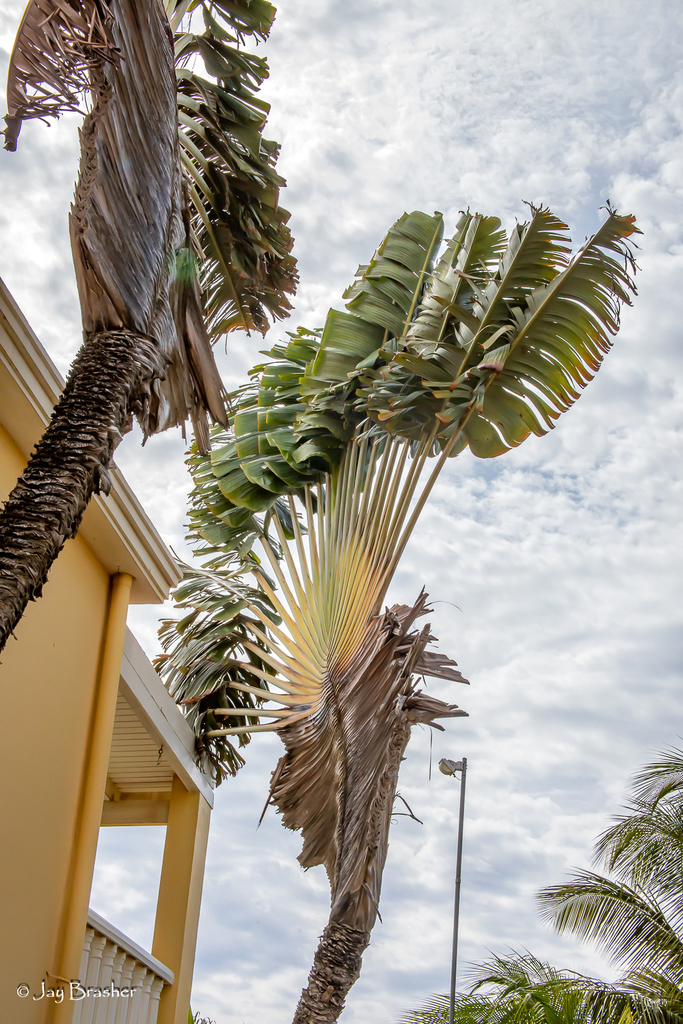
This iconic plant is not a true palm but a member of the bird of paradise family. It is famous for its massive, fan shaped arrangement of leaves that grow in a single plane. It makes a bold statement in tropical landscapes where it has plenty of room to spread out.
At a glance
- Care level
- Moderate
- Plant type
- Perennial
- Light
- Full sun to partial shade
- Indoor light
- Bright indirect
- Water
- Every 3 to 7 days
- Mature size
- 30 to 50 feet
- Growth rate
- Fast
- Hardiness
- USDA 10 to 12
- Bloom time
- Sporadically throughout the year
Care
Keep the soil consistently moist but never soggy to prevent root rot. Watch for browning leaf edges which often signal low humidity or underwatering. Provide plenty of space as this plant grows quite large over time.
- Watering
- Water when the top inch of soil feels dry to the touch.
- Feeding
- Apply a balanced liquid fertilizer during the active growing season.
- Pruning
- Trim away dead or damaged leaves to keep the plant looking tidy.
- Repotting
- Move to a larger container once the roots begin to crowd the pot.
- Soil
- Rich, well draining soil
- Soil pH
- 5.5 to 7.0
- Temperature
- 10 to 35°C
- Humidity
- 60 to 90%
- Drought tolerance
- Low
- Lifespan
- Perennial, typically 20 to 50 years
- Deer and rabbits
- Moderate
Signs it needs repotting
- Roots growing out of the drainage holes.
- Stunted growth despite proper care.
- Water running straight through the pot without soaking in.
Safety
- People
- The plant is not considered toxic, but the fibrous leaves can be irritating if handled roughly.
- Pets
- The plant is generally considered non toxic to cats and dogs.
- Children
- The large, heavy leaves and sharp petioles pose a physical hazard to small children if they climb or play near the base.
- Contact allergens
- The stiff, fibrous leaf edges can cause minor skin abrasions.
- Airborne allergens
- There are no significant reports of airborne allergens associated with this plant.
- Edibility
- The seeds are technically edible but are generally considered unpalatable and not a standard food source.
How to identify it
- Fan shaped leaf arrangement
- Large paddle shaped leaves
- Sturdy palm like trunk
- Grows in a single plane
- Height
- 6 to 12m
- Spread
- 3 to 6m
- Leaves
- green, evergreen
- Flowers
- white, green, 15 to 20cm
- Fruit
- blue, Year round
Problems to watch for
- Leaf SpotCommon
- Scale InsectsCommon
- Root RotUncommon
- Sooty MoldUncommon
Check your travellers palm from a photo
Pocket Botanist looks at a photo of your plant and tells you what's wrong and what to try first.
Scan with your phone's camera to get the app
Or go to pocketbotanist.app/get on your phone
Growing it
- Propagation
- seed, division
- When to plant
- spring, summer
- Overwintering
- Move to a frost free location if temperatures drop below 10 degrees Celsius. Ensure the plant stays in a bright spot and reduce watering slightly during the cooler months.
- In containers
- It is generally too large for containers unless you have a commercial atrium or very large conservatory.
Seed
- 1. Soak seeds in warm water for 24 hours.
- 2. Plant in well draining, sterile potting mix.
- 3. Keep consistently warm and moist until germination.
Division
- 1. Carefully remove offsets from the base of the parent plant.
- 2. Ensure each offset has a portion of the root system.
- 3. Pot into individual containers and keep in high humidity.
Group this plant with other moisture loving tropicals to create a microclimate that maintains high ambient humidity.
Grows well with
- Bird of Paradise · They share similar cultural requirements and aesthetic themes.
- Ginger · They thrive in the same humid, tropical conditions.
Similar species
- White Bird of Paradise · It has a similar architectural form but is slightly more cold tolerant.
Science
- Family
- Strelitziaceae
- Genus
- Ravenala
- Order
- Zingiberales
- Class
- Liliopsida
- Native range
- Madagascar
- Conservation
- It is not currently listed as endangered, but habitat loss in Madagascar remains a concern for wild populations.
It thrives in sunny, moist forest clearings where its large leaves can capture maximum sunlight.
- Value to wildlife
- nectar source
- Pollinators
- lemurs, bees
- Uses
- ornamental focal point, tropical landscaping
Through the year
Ecological indicators
- Salinity
- 2/9
- Soil reaction
- 6/9
- Light
- 8/9
- Temperature
- 9/9
- Moisture
- 7/9
- Nutrients
- 6/9
Taxonomy resolved against GBIF.
Questions people ask
- Does it really point north?
- Not exactly, but the fan shape often aligns with the suns path, which can help with orientation.
- Can I grow this indoors?
- Only if you have a massive greenhouse with high ceilings and intense light.
Where the name comes from
The genus name Ravenala comes from the Malagasy word ravinala, meaning forest leaf. The specific epithet madagascariensis denotes its origin.
Good to know
- The leaves grow in a distinct fan shape that typically aligns east to west.
- Travelers often used the water collected in the leaf bases as a source of emergency drinking water.
- It is the national symbol of Madagascar and appears on the tail fin of Air Madagascar planes.
Keep your travellers palm growing
This page is a general guide. Save your plant in Pocket Botanist and you get care reminders timed for this plant, plus a care history that shows what worked.
Scan with your phone's camera to get the app
Or go to pocketbotanist.app/get on your phone
This guide was generated with AI on and checked against GBIF taxonomy. It is general information, not horticultural or veterinary advice. Read about how we build these guides.