 Pocket Botanist
Plant guide
Giant white bird of paradise.
Strelitzia nicolai
Pronounced streh-LIT-zee-uh nih-KOH-lay-eye
Also known as Bird-Of-Paradise Tree, Coastal Strelitzia, Natal Mock Banana, Natal Strelitzia, Natal Wild Banana, Natal Wild-Banana, bird-of-paradise-tree, giant bird-of-paradise flower



Scan with your phone's camera to get the app
Or go to pocketbotanist.app/get on your phone
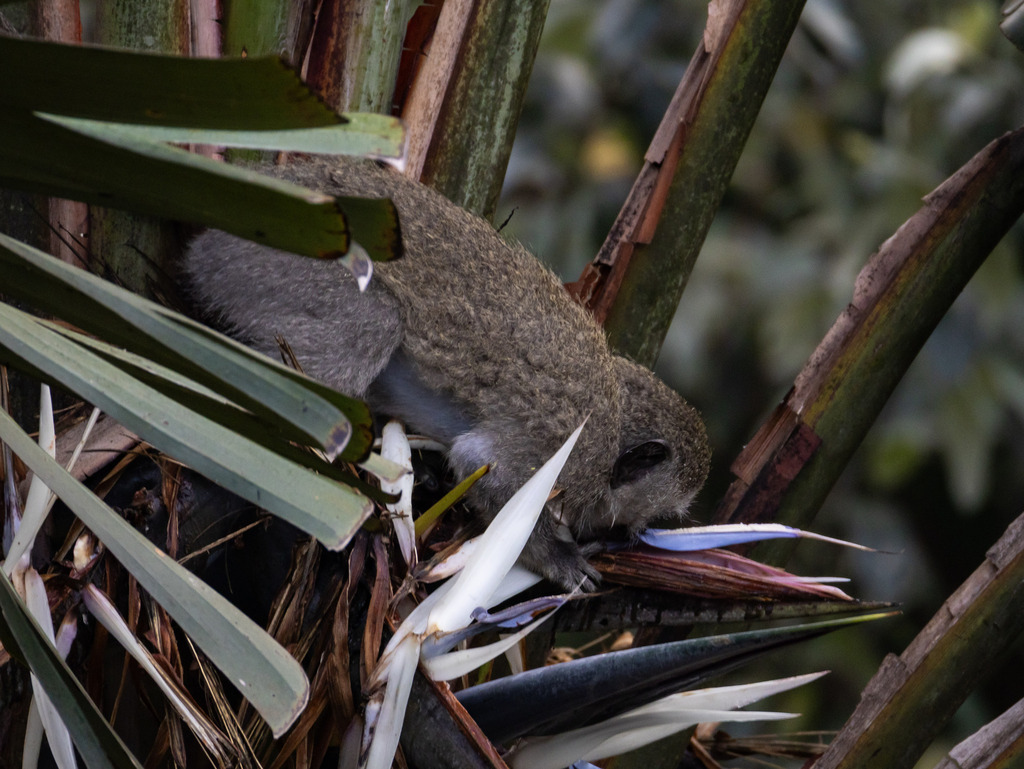
This impressive plant brings a tropical feel to any room with its massive, paddle shaped leaves. It thrives in large spaces where it can reach toward the ceiling. You will love how it makes a bold statement in your home.

At a glance
- Care level
- Moderate
- Plant type
- Tropical perennial
- Light
- Bright, indirect light is best for healthy growth.
- Indoor light
- Bright indirect
- Water
- Every 7 to 14 days
- Mature size
- Up to 20 feet in nature, 6 to 10 feet indoors.
- Growth rate
- Fast
- Hardiness
- USDA 10 to 12
- Bloom time
- Late winter to spring
Care
Let the top two inches of soil dry out between waterings and never let the pot sit in water, to prevent root rot. Watch for yellowing leaves, which often signal that the plant is getting too much water or not enough light. Wipe the leaves down occasionally to keep them dust free and healthy.
- Watering
- Water when the top two inches of soil feel dry to the touch.
- Feeding
- Feed with a balanced liquid fertilizer during the active growing season.
- Pruning
- Remove any damaged or yellowing lower leaves to keep the plant looking tidy.
- Repotting
- Move to a larger container once the roots begin to circle the bottom of the pot.
- Soil
- Well draining, nutrient rich potting mix.
- Soil pH
- 6.0 to 7.0
- Temperature
- 10 to 30°C
- Humidity
- 50 to 70%
- Drought tolerance
- Moderate
- Lifespan
- Perennial, typically 20 plus years with proper care.
- Deer and rabbits
- Moderate
Signs it needs repotting
- Roots growing out of the drainage holes
- Water running straight through the pot without soaking in
- Plant becoming top heavy and unstable
Safety
- People
- All parts of the plant are considered mildly toxic if ingested.
- Pets
- This plant is considered mildly toxic to cats and dogs if ingested.
- Children
- Keep away from small children as the large, tough leaves can be a tripping hazard and the seeds are a potential choking risk.
- Contact allergens
- The sap can cause mild skin irritation in sensitive individuals.
- Airborne allergens
- There are no significant airborne allergen risks associated with this plant.
- Edibility
- The plant is not considered edible and ingestion can cause significant digestive distress.
How to identify it
- Large, banana like evergreen leaves
- Sturdy, tree like woody stems
- Leaves split naturally as they age
- Can grow very tall indoors
- Height
- 4 to 9m
- Spread
- 2 to 4m
- Leaves
- dark green, evergreen
- Flowers
- white, blue, 15 to 20cm
- Fruit
- black, orange, summer
Problems to watch for
- Scale insects · Small sap sucking insects that appear as brown bumps on leaves.
- Root rot · Fungal decay caused by consistently waterlogged soil.
- Leaf browning · Crispy edges often caused by low humidity or inconsistent watering.
Check your giant white bird of paradise from a photo
Pocket Botanist looks at a photo of your plant and tells you what's wrong and what to try first.
Scan with your phone's camera to get the app
Or go to pocketbotanist.app/get on your phone
Growing it
- Propagation
- seed, division
- When to plant
- spring, summer
- Overwintering
- Move to a frost free location before temperatures drop. Reduce watering significantly during the cooler months to prevent root rot.
- In containers
- It grows well in large containers, but ensure the pot is heavy enough to prevent tipping as the plant grows tall.
Division
- 1. Carefully remove the plant from its pot.
- 2. Use a sharp, sterilized knife to separate a healthy offset with roots.
- 3. Replant the division into a well draining potting mix.
Group plants with similar water needs together to maintain a consistent microclimate.
Grows well with
- Philodendron · They share similar requirements for high humidity and indirect light.
- Croton · The colorful foliage provides a nice contrast to the large green leaves of the bird of paradise.
Similar species
- Bird of Paradise · It is a much smaller relative with iconic orange and blue flowers.
Science
- Family
- Strelitziaceae
- Genus
- Strelitzia
- Order
- Zingiberales
- Class
- Liliopsida
- Native range
- Coastal regions of South Africa.
- Conservation
- Not currently of conservation concern.
It grows in dense coastal thickets where it thrives in high humidity and rich, moist soil.
- Value to wildlife
- nectar source
- Pollinators
- birds
- Uses
- ornamental focal point, indoor statement plant, tropical landscape design
Through the year
Ecological indicators
- Salinity
- 3/9
- Soil reaction
- 6/9
- Light
- 7/9
- Temperature
- 8/9
- Moisture
- 6/9
- Nutrients
- 6/9
Taxonomy resolved against GBIF.
Questions people ask
- Why are my leaves splitting?
- Leaf splitting is a natural adaptation to allow wind to pass through without damaging the massive foliage.
- Will it bloom indoors?
- It rarely blooms indoors because it requires intense light and significant maturity to produce flowers.
Where the name comes from
The genus honors Queen Charlotte of Mecklenburg Strelitz, while the species name nicolai honors Tsar Nicholas I of Russia.
Good to know
- It is commonly called the giant white bird of paradise.
- The leaves can grow up to 2 meters long in ideal conditions.
- It is a member of the Strelitziaceae family.
- It is much larger than its cousin, the orange bird of paradise.
Also in
Keep your giant white bird of paradise growing
This page is a general guide. Save your plant in Pocket Botanist and you get care reminders timed for this plant, plus a care history that shows what worked.
Scan with your phone's camera to get the app
Or go to pocketbotanist.app/get on your phone
This guide was generated with AI on and checked against GBIF taxonomy. It is general information, not horticultural or veterinary advice. Read about how we build these guides.