 Pocket Botanist
Plant guide
Bird of paradise.
Strelitzia reginae Aiton
Pronounced strel-IT-zee-uh reh-JIN-ee
Also known as Bird-Of-Paradise, common bird-of-paradise flower, craneflower, bird of paradise



The bird of paradise is a stunning tropical plant famous for its unique, crane-like flowers. It brings a bold, architectural look to any sunny spot in your home. With the right conditions, it can be a long-lived centerpiece for years.
At a glance
- Care level
- Moderate
- Plant type
- Herbaceous perennial
- Light
- Bright light with some direct sun
- Indoor light
- Bright indirect
- Water
- Every 7 to 10 days
- Mature size
- 5 to 6 feet tall indoors
- Growth rate
- Medium
- Hardiness
- USDA 10 to 12
- Bloom time
- Late winter to late spring
Care
Give this plant plenty of bright light to encourage blooming. Keep the soil consistently moist but never soggy, and watch for yellowing leaves which often signal overwatering. Wipe the leaves down occasionally to keep them free of dust.
- Watering
- Water when the top inch of soil feels dry to the touch.
- Feeding
- Feed with a balanced liquid fertilizer during the active growing season.
- Pruning
- Remove any dead or damaged lower leaves to keep the plant tidy.
- Repotting
- Repot only when the roots become very crowded in the current container.
- Soil
- Well-draining, nutrient-rich potting mix
- Soil pH
- 6.0 to 7.0
- Temperature
- 10 to 30°C
- Humidity
- 50 to 70%
- Drought tolerance
- Moderate
- Lifespan
- Perennial, can live for several decades with proper care.
- Deer and rabbits
- Moderate
Signs it needs repotting
- Roots growing out of the drainage holes.
- The plant pushes itself up out of the pot.
- Water runs straight through the soil without soaking in.
Safety
- People
- All parts of the plant are considered toxic if ingested, potentially causing nausea and vomiting.
- Pets
- This plant is toxic to cats and dogs if ingested.
- Children
- Keep this plant away from small children as the seeds and plant tissues are toxic if chewed or swallowed.
- Contact allergens
- The leaves and stems can cause mild skin irritation in sensitive individuals.
- Airborne allergens
- There is no significant evidence that this plant causes respiratory allergies.
- Edibility
- This plant is not intended for consumption and can cause significant digestive distress if ingested.
How to identify it
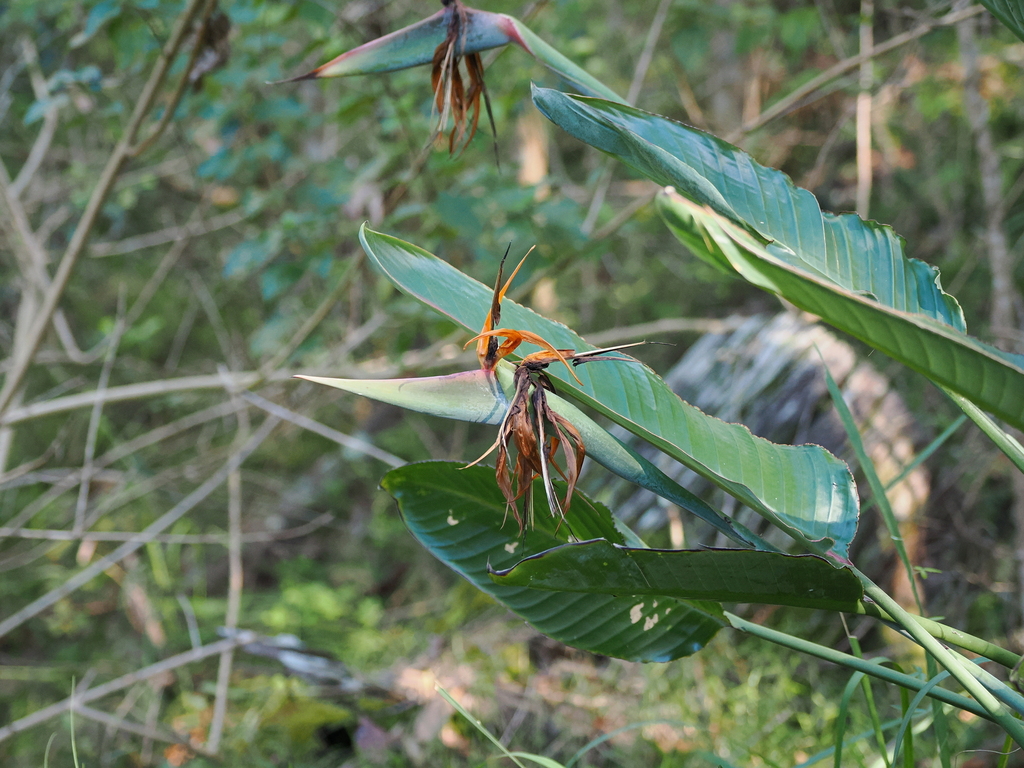
- Large, paddle-shaped, leathery green leaves
- Bright orange and blue petal structures
- Flowers resemble a bird's head
- Sturdy, upright, clumping growth habit
- Height
- 1.2 to 1.8m
- Spread
- 0.9 to 1.2m
- Leaves
- blue-green, grey-green, evergreen
- Flowers
- orange, blue, 10 to 15cm
- Fruit
- orange, black, late summer
Problems to watch for
- Brown Leaf EdgesCommon
- Root RotCommon
- Scale InsectsCommon
- Spider MitesUncommon
By symptom
Check your bird of paradise from a photo
Pocket Botanist looks at a photo of your plant and tells you what's wrong and what to try first.
Growing it
- Propagation
- division, seed
- When to plant
- spring, early summer
- Overwintering
- Move containers indoors before the first frost. Keep in a bright, cool location and reduce watering significantly during the winter months.
- In containers
- It grows very well in large containers, provided the pot has excellent drainage and is heavy enough to prevent tipping.
Division
- Carefully remove the plant from its pot.
- Gently tease the root ball apart into smaller sections.
- Ensure each section has healthy roots and foliage.
- Replant in fresh, well draining potting mix.
Pair with other sun loving tropicals that appreciate consistent moisture but well drained soil.
Grows well with
- Agapanthus — They share similar water and light requirements and provide a nice color contrast.
- Canna Lily — Both plants thrive in warm, sunny conditions and offer a bold tropical aesthetic.
Similar species
- Giant Bird of Paradise — It is a much larger relative with white and blue flowers.
Science
- Family
- Strelitziaceae
- Genus
- Strelitzia
- Order
- Zingiberales
- Class
- Liliopsida
- Native range
- South Africa
- Conservation
- It is not currently listed as endangered, but wild populations are protected in parts of South Africa.
It grows in coastal thickets and river banks where it receives plenty of light and consistent moisture.
- Value to wildlife
- nectar source
- Pollinators
- birds
- Uses
- ornamental specimen, cut flower, container plant
Through the year
Ecological indicators
- Salinity
- 3/9
- Temperature
- 8/9
- Nutrients
- 6/9
- Soil reaction
- 6/9
- Light
- 8/9
- Moisture
- 5/9
Taxonomy resolved against GBIF.
Questions people ask
- Why is my plant not flowering?
- It likely needs more direct sunlight or is not yet mature enough to bloom.
- How often should I water it?
- Water thoroughly when the top few centimeters of soil feel dry to the touch.
Where the name comes from
The genus honors Queen Charlotte of Mecklenburg Strelitz, while the species name reginae means of the queen.
Good to know
- The flowers resemble the head of a crane, which is why it is commonly called the Bird of Paradise.
- It is the floral emblem of Los Angeles.
- The plant can take up to 5 years to bloom when grown from seed.
Also in
Keep your bird of paradise growing
This page is a general guide. Save your plant in Pocket Botanist and you get care reminders timed for this plant, plus a care history that shows what worked.
This guide was generated with AI and checked against GBIF taxonomy. It is general information, not horticultural or veterinary advice. Read about how we build these guides.