 Pocket Botanist
Pflanzenratgeber
Pomegranate.
Punica granatum
Aussprache POO-ni-ka gra-NA-tum
Auch bekannt als Pomegranate, Pomegranate Tree


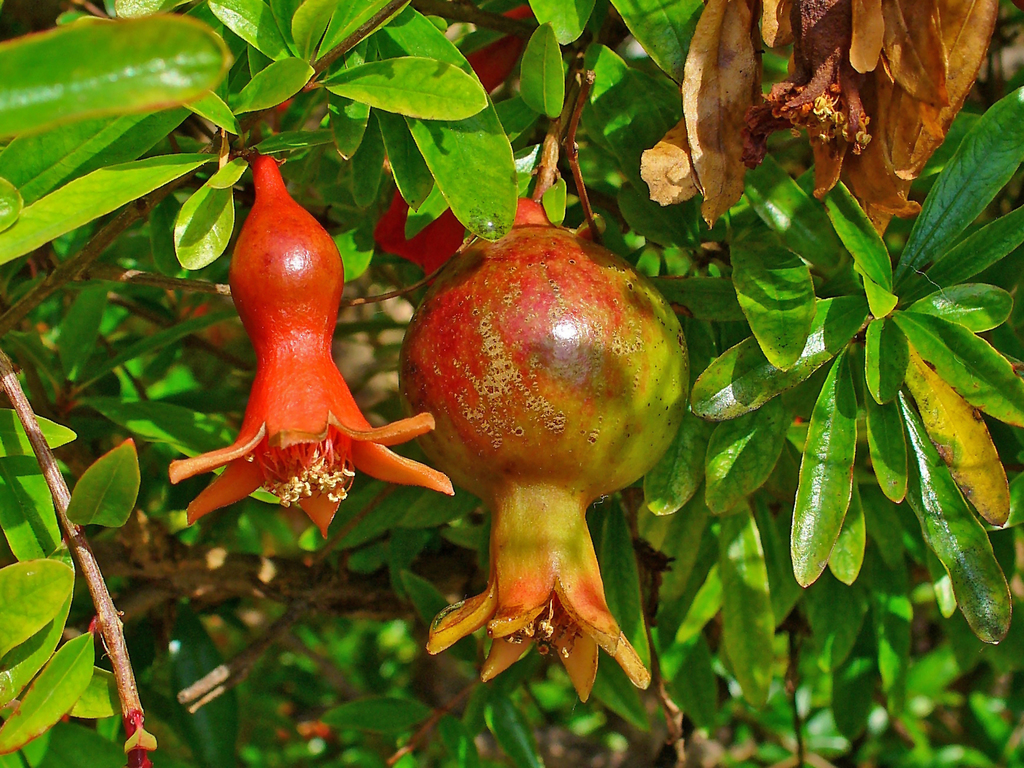
The pomegranate is a beautiful, long lived shrub or small tree known for its vibrant flowers and delicious fruit. It thrives in warm climates and makes a stunning focal point in a sunny garden. You will love how its glossy leaves and bright red blossoms add a Mediterranean feel to your space.
Auf einen Blick
- Pflegestufe
- Mittel
- Pflanzenart
- Deciduous shrub or tree
- Licht
- Full sun
- Licht im Innenraum
- Direkte Sonne
- Gießen
- Alle 7 bis 14 Tage
- Endgröße
- 15 to 20 feet
- Wachstum
- Mittel
- Winterhärte
- USDA 7 bis 10
- Blütezeit
- Late spring to early summer
Pflege
Plant your pomegranate in a spot that gets plenty of sun to ensure good fruit production. Keep an eye out for aphids or whiteflies on the new growth. Consistent moisture is key while the tree is young, but it becomes quite drought tolerant once established.
- Gießen
- Water deeply once the top few inches of soil feel dry to the touch.
- Düngen
- Feed with a balanced fertilizer during the active growing season.
- Schneiden
- Prune in late winter to remove suckers and shape the canopy.
- Umtopfen
- Move to a slightly larger container only when the roots become crowded.
- Boden
- Well draining loam
- Boden-pH
- 5.5 to 7.0
- Temperatur
- -10 bis 45°C
- Luftfeuchtigkeit
- 20 bis 50%
- Trockenheitstoleranz
- Hoch
- Lebensdauer
- Perennial, often living for decades.
- Wildverbiss-Resistenz
- Mittel
Anzeichen fürs Umtopfen
- Roots growing out of drainage holes.
- Water running straight through the soil.
- Stunted growth during the active season.
Sicherheit
- Menschen
- The plant is generally safe, but the roots and bark contain compounds that are medically active and potentially harmful.
- Kinder
- The fruit is safe, but the woody stems can have sharp thorns that may scratch small children.
- Kontaktallergene
- The sap can cause mild skin irritation in sensitive individuals.
- Allergene in der Luft
- Pollen may cause mild reactions in those with severe hay fever.
- Essbarkeit
- The rind and roots contain alkaloids that can be toxic if consumed in large quantities.
So erkennst du die Pflanze
- Glossy, lance shaped green leaves
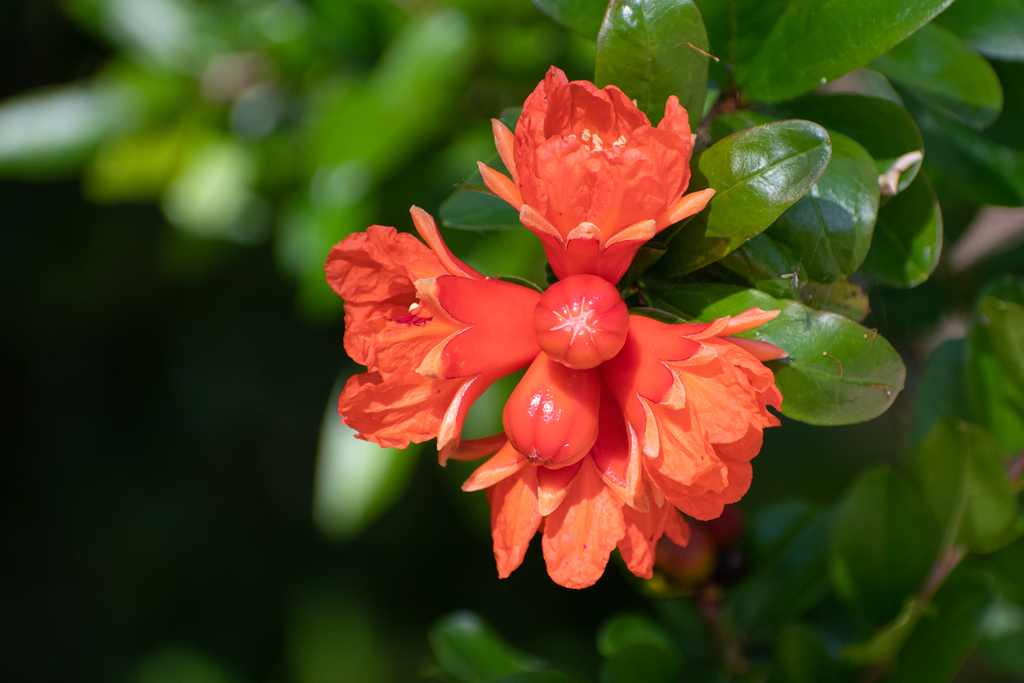
- Bright orange red trumpet flowers
- Round fruit with leathery skin
- Spiny branches on many varieties
- Höhe
- 2 bis 5m
- Breite
- 2 bis 4m
- Blätter
- green, bronze-tinged, deciduous
- Blüten
- orange, red, 3 bis 5cm
- Früchte
- red, yellow, Autumn
Häufige Probleme
- Aphids — Small insects that cluster on new growth and suck sap.
- Fruit rot — Fungal issues often caused by excessive humidity or poor airflow.
Standort und Pflege
- Vermehrung
- cuttings, seed, layering
- Pflanzzeit
- Spring, Autumn
- Überwinterung
- In cold regions, move container plants to a frost free shed or garage. For garden plants, apply a thick layer of mulch around the base to protect roots from deep freezes.
- Im Kübel
- They grow very well in containers, provided the pot is at least 40 liters and has excellent drainage.
Hardwood cuttings
- 1. Take 20cm cuttings in late winter.
- 2. Dip the base in rooting hormone.
- 3. Place in a pot with moist sand.
- 4. Keep in a bright, cool spot until spring.
Plant with other Mediterranean shrubs that prefer lean soil and full sun.
Gute Pflanzpartner
Ähnliche Arten
- Lagerstroemia — Shares a similar growth habit and heat tolerance.
Botanisches
- Familie
- Lythraceae
- Gattung
- Punica
- Ordnung
- Myrtales
- Klasse
- Magnoliopsida
- Ursprüngliche Heimat
- Central Asia to the Mediterranean region.
- Artenschutz
- Not of conservation concern.
It thrives in hot, dry climates with long, sunny summers.
- Nutzen für Wildtiere
- nectar source, fruit provides food for birds
- Bestäuber
- Bienen, Schmetterlinge, Kolibris
- Verwendung
- ornamental shrub, edible fruit, hedging, container plant
Im Jahresverlauf
Ökologische Zeigerwerte
- Salzgehalt
- 4/9
- Bodenreaktion
- 6/9
- Licht
- 8/9
- Temperatur
- 7/9
- Feuchtigkeit
- 3/9
- Nährstoffe
- 5/9
Taxonomie abgeglichen mit GBIF.
Häufige Fragen
- Do I need two trees for fruit?
- No, they are self fertile, but a second tree can increase yield.
- Can I grow them in pots?
- Yes, dwarf varieties are excellent for containers.
Woher der Name kommt
Punica refers to the Phoenicians who spread the plant, and granatum refers to the many seeds inside.
Gut zu wissen
- Pomegranates are one of the oldest known cultivated fruits.
- The fruit can contain hundreds of seeds.
- They are highly drought tolerant once established.
- The name comes from Latin meaning seeded apple.
Auch in
Probleme mit Pomegranate?
Diese Seite bietet allgemeine Infos. Pocket Botanist erkennt Probleme anhand eines Fotos deiner echten Pflanze, passt das Gießen an dein Licht und deinen Standort an und erinnert dich an die Pflege.
Dieser Ratgeber wurde mit KI erstellt und mit der GBIF-Taxonomie abgeglichen. Er dient zur allgemeinen Information und ersetzt keine gärtnerische oder tierärztliche Beratung. Hier erfährst du, wie wir diese Ratgeber erstellen.