 Pocket Botanist
Guide botanique
Douglas fir.
Pseudotsuga menziesii
Prononciation soo-doh-TSOO-guh men-ZEE-zee-eye
Aussi appelée Dougie, Douglas Fir, Douglas spruce, Douglas-fir, Dugie, North American Douglas-fir, Oregon Pine, Oregon-pine



This iconic evergreen is a staple of the Pacific Northwest landscape. It is a massive conifer that provides excellent shelter for local wildlife. You will find it thrives best in large outdoor spaces where it has room to stretch its branches.
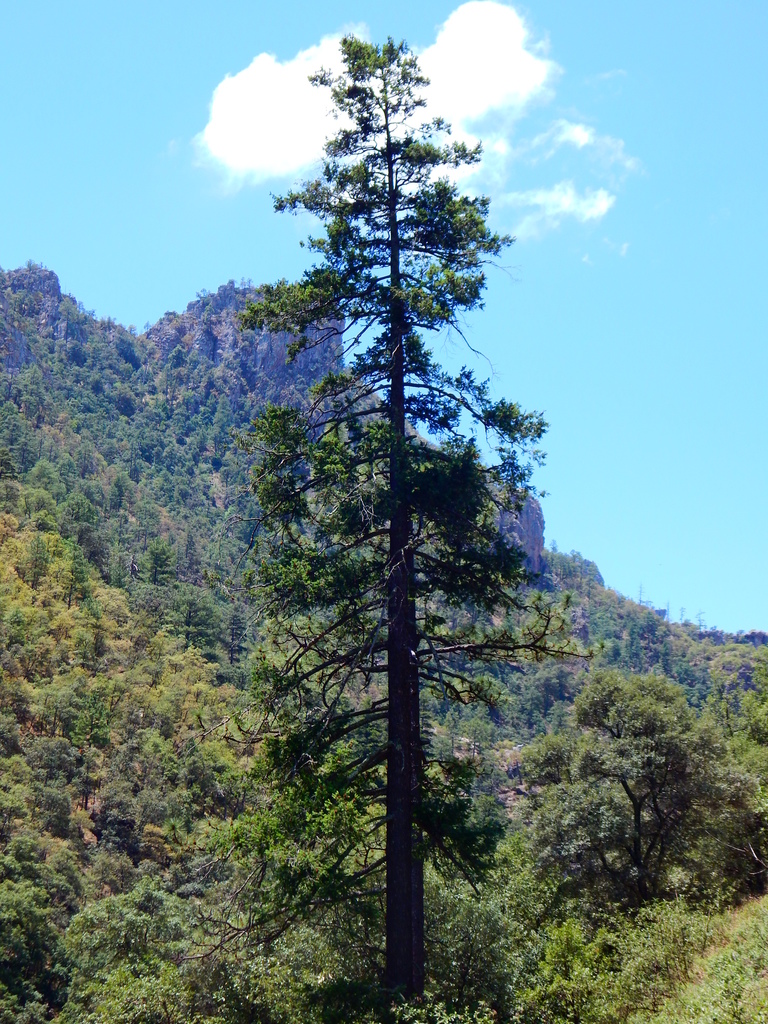
En un coup d'œil
- Niveau d'entretien
- Facile
- Type de plante
- Conifer
- Lumière
- Full sun
- Lumière en intérieur
- Soleil direct
- Arrosage
- Tous les 7 à 14 jours
- Taille adulte
- 200 feet
- Croissance
- Moyenne
- Rusticité
- USDA 4 à 7
- Floraison
- Mid to late spring
Entretien
Plant this tree in a spot with plenty of space for its eventual size. Keep an eye out for needle drop or yellowing which might suggest poor drainage. It is quite hardy once established in the ground.
- Arrosage
- Water deeply during the first few years until the root system is well established.
- Engrais
- Apply a balanced fertilizer once in early spring to support healthy growth.
- Taille
- Remove dead or damaged branches in late winter while the tree is dormant.
- Rempotage
- This tree is not suitable for container growth long term.
- Sol
- Well drained acidic soil
- pH du sol
- 5.0 to 6.0
- Température
- -35 à 35°C
- Humidité
- 40 à 80%
- Résistance à la sécheresse
- Moyenne
- Durée de vie
- Long lived, often 500 plus years
- Parfum
- Léger
- Résistance aux chevreuils et lapins
- Moyenne
Sécurité
- Humains
- The plant is generally non toxic, though ingestion of large quantities of needles may cause mild digestive upset.
- Enfants
- The sharp needles can poke small children, so keep them away from low hanging branches.
- Allergènes de contact
- Handling the needles may cause mild skin irritation in sensitive individuals.
- Allergènes aéroportés
- The pollen is a common airborne allergen during the spring release period.
- Comestibilité
- The needles are sometimes used for tea, but ensure you have correctly identified the species as some conifers are toxic.
Comment l'identifier
- Soft needles with two white underside bands
- Cones have distinct three pointed bracts
- Dark gray bark with deep fissures
- Pyramidal shape when young
- Hauteur
- 20 à 70m
- Envergure
- 6 à 10m
- Feuilles
- dark green, blue green, evergreen
- Fleurs
- yellow, red, 1 à 3cm
- Fruits
- brown, Autumn
Problèmes courants
- Swiss needle cast — A fungal infection that causes yellowing and premature dropping of needles.
- Douglas fir beetle — A bark beetle that can cause significant damage to stressed or weakened trees.
La cultiver
- Multiplication
- seed
- Quand planter
- Spring, Autumn
- Hivernage
- No special winter care is required as it is fully hardy in its native range.
- En pot
- It is not suitable for long term container growth due to its massive size.
Seed propagation
- Collect mature cones in autumn.
- Dry cones to release the seeds.
- Cold stratify seeds for 30 to 60 days before sowing in spring.
Plant shade tolerant shrubs underneath to take advantage of the dappled light provided by the canopy.
Bonnes associations
- Cèdre rouge de l'Ouest — They often grow together in native forest ecosystems.
- Gaultheria shallon — This shrub thrives in the acidic soil conditions found beneath these trees.
Espèces similaires
- Tsuga heterophylla — It shares a similar native range and forest habitat.
Science
- Famille
- Pinaceae
- Genre
- Pseudotsuga
- Ordre
- Pinales
- Classe
- Pinopsida
- Région d'origine
- Western North America
- Préservation
- This species is widely distributed and not currently of conservation concern.
It thrives in cool, moist climates and often dominates forests by outcompeting other species for light.
- Intérêt pour la faune
- nesting site, seed source for birds, larval host plant
- Pollinisateurs
- abeilles
- Utilisations
- timber production, ornamental specimen, windbreak, christmas tree
Au fil des saisons
Repères écologiques
- Salinité
- 1/9
- Réaction du sol
- 5/9
- Lumière
- 7/9
- Température
- 4/9
- Humidité
- 6/9
- Nutriments
- 5/9
Taxonomie vérifiée avec le GBIF.
Ce qu'on demande souvent
- How fast does it grow?
- It grows moderately fast, often adding 30 to 60 centimeters per year in good conditions.
- Can I grow this in a small yard?
- It is generally too large for small residential gardens and is better suited for large landscapes.
D'où vient le nom
The genus name Pseudotsuga means false hemlock, while the species epithet honors the Scottish botanist Archibald Menzies.
Bon à savoir
- It is one of the tallest tree species in the world.
- The cones have unique three pointed bracts sticking out from under the scales.
- It is the state tree of Oregon.
- The wood is highly valued for construction due to its strength.
- It can live for over 500 years in ideal conditions.
Ta plante a mauvaise mine ?
Cette page est un guide général. Pocket Botanist diagnostique les problèmes directement à partir d'une photo de ta plante, adapte l'arrosage à sa luminosité et te prévient quand il faut t'en occuper.
Ce guide a été généré par IA et vérifié avec la taxonomie du GBIF. Il s'agit d'informations générales, et non de conseils horticoles ou vétérinaires. Découvre comment nous concevons ces guides.