 Pocket Botanist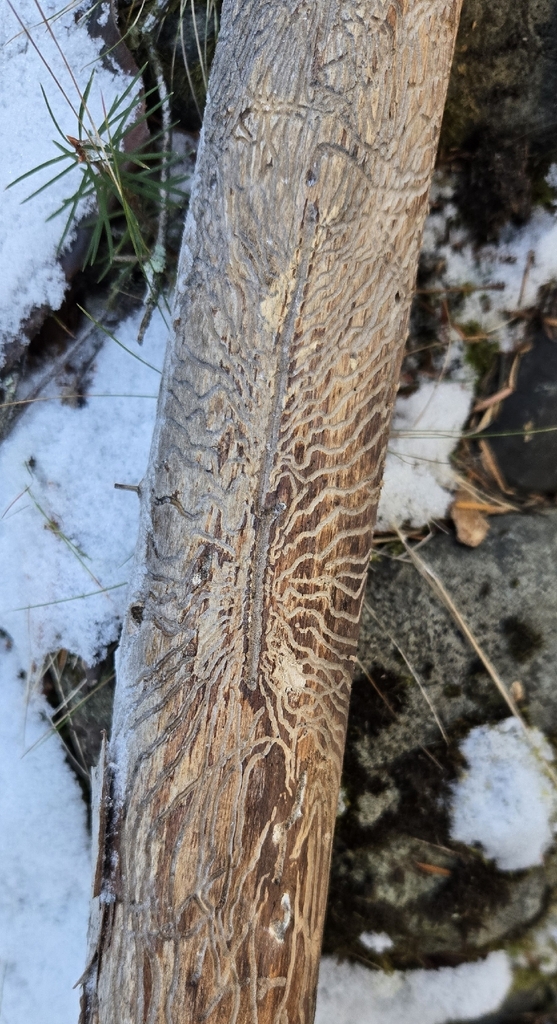
Symptoms by part
Stems
You will see small piles of reddish brown boring dust, known as frass, collecting in bark crevices or at the base of the tree. Look for tiny circular exit holes on the trunk and patches of fading needles that turn from green to yellow and eventually reddish brown.
Causes
- Trees weakened by drought or root disease
- Physical damage from storms or construction
- Overcrowded stands that limit tree vigor
- Recent fire damage that stresses the tree's defense systems
Could be confused with
- Flatheaded Fir Borer · This borer creates oval shaped exit holes rather than the perfectly round ones made by the Douglas Fir Beetle.
- Root Disease · Root disease often causes thinning crowns and slow decline over several years, whereas beetle attacks lead to rapid color changes in the needles.
Treatment
- Remove and destroy infested trees immediately to prevent the beetles from emerging and attacking nearby healthy trees.
- Debark the logs of infested trees to expose the larvae to predators and drying conditions.
- Apply a protective spray to the trunk of high value trees before the beetles begin their flight period, follow the label.
Without chemicals
- Thin out overcrowded tree stands to improve individual tree health.
- Remove downed or storm damaged wood from the area to eliminate breeding sites.
- Water trees during dry spells to maintain their natural resistance.
Chemical options
- Lambda-cyhalothrin, apply as a trunk spray to prevent adult beetle entry, follow the label.
Preventing it
- Keep trees vigorous through proper spacing and irrigation during dry periods.
- Promptly remove any fresh windthrow or logging slash that could attract beetles.
- Avoid wounding the trunk during landscaping or construction work.
Season
The warm growing season.
Spread risk
High
Severity
High
When to act
Act as soon as you spot boring dust or fading needles to protect the rest of your trees. If a tree is heavily infested or poses a safety risk, hire a professional tree surgeon for removal.
Think it's Douglas Fir Beetle?
This guide covers the general picture. Pocket Botanist looks at your actual plant from a photo and tells you what's really going on, how serious it is, and what to try first. Identification and a health check are free.


Questions people ask
- Can I save a tree once the needles turn red?
- Usually no, because by the time the needles change color, the beetles have already completed their life cycle and moved on to other trees.
- Do these beetles attack healthy trees?
- They prefer stressed trees, but if the beetle population is high enough, they can overwhelm and kill even healthy, vigorous trees.
This guide was generated with AI and is general information, not horticultural advice. Read about how we build these guides.