 Pocket Botanist
Plant guide
Salal.
Gaultheria shallon
Pronounced gawl-THEER-ee-uh SHAL-lon
Also known as Shallon, salal, shallal



Scan with your phone's camera to get the app
Or go to pocketbotanist.app/get on your phone
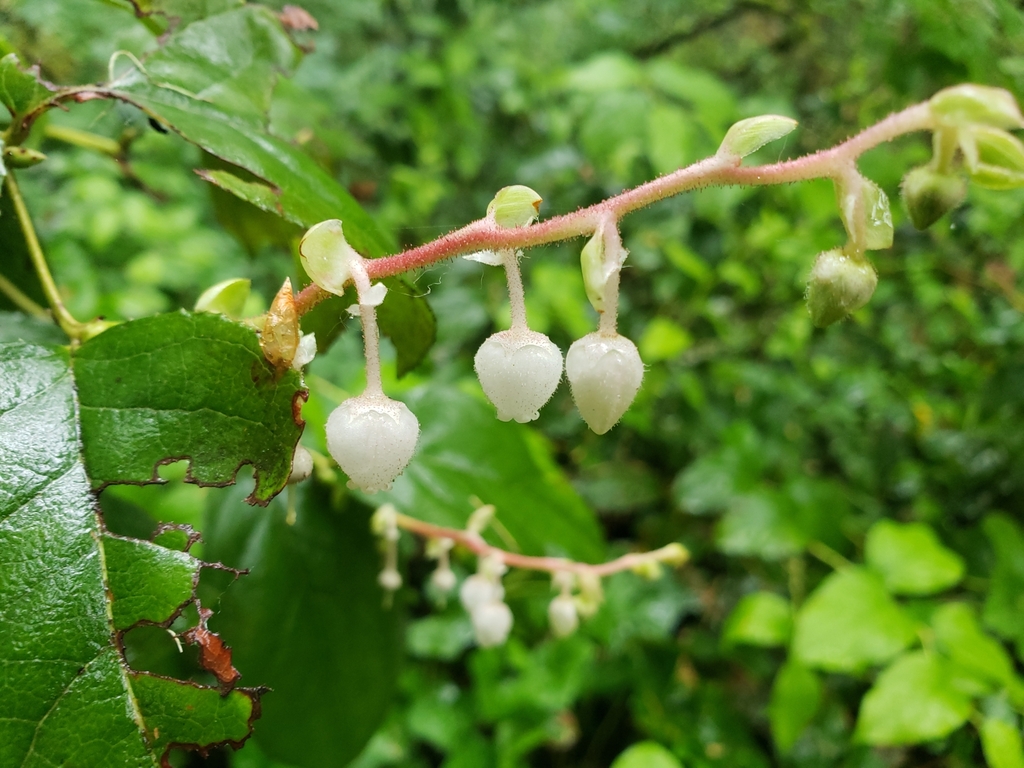
Salal is a hardy, evergreen shrub native to the Pacific Northwest. It produces lovely white, bell shaped flowers followed by dark, edible berries. You will find it thrives in cool, moist, and shaded woodland settings.

At a glance
- Care level
- Easy
- Plant type
- Evergreen shrub
- Light
- Partial shade to full shade
- Indoor light
- Medium light
- Water
- Every 7 to 14 days
- Mature size
- 3 to 10 feet
- Growth rate
- Medium
- Hardiness
- USDA 6 to 9
- Bloom time
- Late spring to early summer
Care
Keep the soil consistently moist but never soggy to mimic its natural forest floor habitat. Watch for yellowing leaves, which often signal that the soil has dried out too much or lacks acidity. Provide a layer of organic mulch to help retain moisture and keep the roots cool.
- Watering
- Water deeply whenever the top inch of soil feels dry to the touch.
- Feeding
- Apply an acidic fertilizer once in early spring to support healthy growth.
- Pruning
- Trim back any dead or crossing branches in late winter to maintain shape.
- Repotting
- Repot only if the plant becomes rootbound, as it prefers to stay settled.
- Soil
- Acidic, well draining, organic rich soil
- Soil pH
- 4.5 to 6.0
- Temperature
- -15 to 30°C
- Humidity
- 60 to 90%
- Drought tolerance
- Moderate
- Lifespan
- Perennial, typically 10 to 20 years.
- Deer and rabbits
- Moderate
Signs it needs repotting
- Roots growing out of the drainage holes
- Water running straight through the pot without soaking in
Safety
- People
- The plant is not considered toxic to humans.
- Children
- The berries are safe, but keep an eye on small children to ensure they do not consume other parts of the plant.
- Contact allergens
- Some individuals may experience mild skin irritation from handling the foliage.
- Airborne allergens
- The pollen is not typically a significant allergen.
- Edibility
- Always verify identification before consuming wild berries, as some lookalikes can be harmful.
How to identify it
- Leathery, egg shaped evergreen leaves
- Small, white, urn shaped flowers
- Dark purple, edible berries
- Stiff, woody, spreading stems
- Height
- 0.3 to 1.5m
- Spread
- 0.6 to 2m
- Leaves
- dark green, bronze, evergreen
- Flowers
- white, pink, 0.5 to 1cm
- Fruit
- dark purple, black, Late summer to autumn
Problems to watch for
- Leaf spot · Fungal spots appear on leaves during periods of high humidity and poor air circulation.
Check your salal from a photo
Pocket Botanist looks at a photo of your plant and tells you what's wrong and what to try first.
Scan with your phone's camera to get the app
Or go to pocketbotanist.app/get on your phone
Growing it
- Propagation
- cuttings, division, seed
- When to plant
- spring, autumn
- Overwintering
- It is evergreen and requires no special protection in its hardiness range. Ensure the soil does not dry out completely during dry winter spells.
- In containers
- It grows well in containers at least 30 centimeters wide, provided you use an acidic potting mix.
Stem Cuttings
- Take a 10 centimeter cutting from new growth in late summer.
- Remove the lower leaves and dip the end in rooting hormone.
- Place in a moist, sandy potting mix and keep in a shaded spot until rooted.
Group this plant with other acid-loving woodland species to ensure they all thrive in the same soil conditions.
Grows well with
- Western Sword Fern · They share similar woodland habitat requirements and look beautiful together.
- Red Huckleberry · Both thrive in acidic, forest-floor conditions.
Similar species
- Creeping Snowberry · A smaller, creeping relative that also prefers moist, acidic environments.
Science
- Family
- Ericaceae
- Genus
- Gaultheria
- Order
- Ericales
- Class
- Magnoliopsida
- Native range
- Western North America, from Alaska to California.
- Conservation
- This plant is abundant in its native range and is not of conservation concern.
It forms dense thickets in forest understories, helping to stabilize soil and provide habitat for forest creatures.
- Value to wildlife
- nectar source, provides cover for small birds, fruit for songbirds
- Pollinators
- bees, butterflies, hummingbirds
- Uses
- groundcover, edible landscaping, wildlife garden, floral arrangements
Through the year
Ecological indicators
- Salinity
- 1/9
- Soil reaction
- 3/9
- Light
- 3/9
- Temperature
- 5/9
- Moisture
- 6/9
- Nutrients
- 3/9
Taxonomy resolved against GBIF.
Questions people ask
- Does it need sun?
- It prefers partial shade but can tolerate full sun if the soil stays consistently moist.
- Can I grow it in a pot?
- Yes, it grows well in containers if you provide acidic, well-draining soil.
Where the name comes from
The genus name honors Jean-François Gaultier, a French physician and botanist, while the species name comes from the plant's Indigenous Chinookan name, which is also the source of the common name salal.
Good to know
- Salal is the common name for this plant.
- It is a member of the heath family, related to blueberries and cranberries.
- The leaves are often used by florists as a long-lasting greenery filler.
- It thrives in the acidic soils of coniferous forests.
Also in
Keep your salal growing
This page is a general guide. Save your plant in Pocket Botanist and you get care reminders timed for this plant, plus a care history that shows what worked.
Scan with your phone's camera to get the app
Or go to pocketbotanist.app/get on your phone
This guide was generated with AI on and checked against GBIF taxonomy. It is general information, not horticultural or veterinary advice. Read about how we build these guides.