 Pocket Botanist
Plant guide
Cherry laurel.
Prunus laurocerasus
Pronounced PROO-nus law-ro-ser-AY-sus
Also known as Cherry Laurel, Cherry-laurel, Common Laurel, English Laurel



Scan with your phone's camera to get the app
Or go to pocketbotanist.app/get on your phone
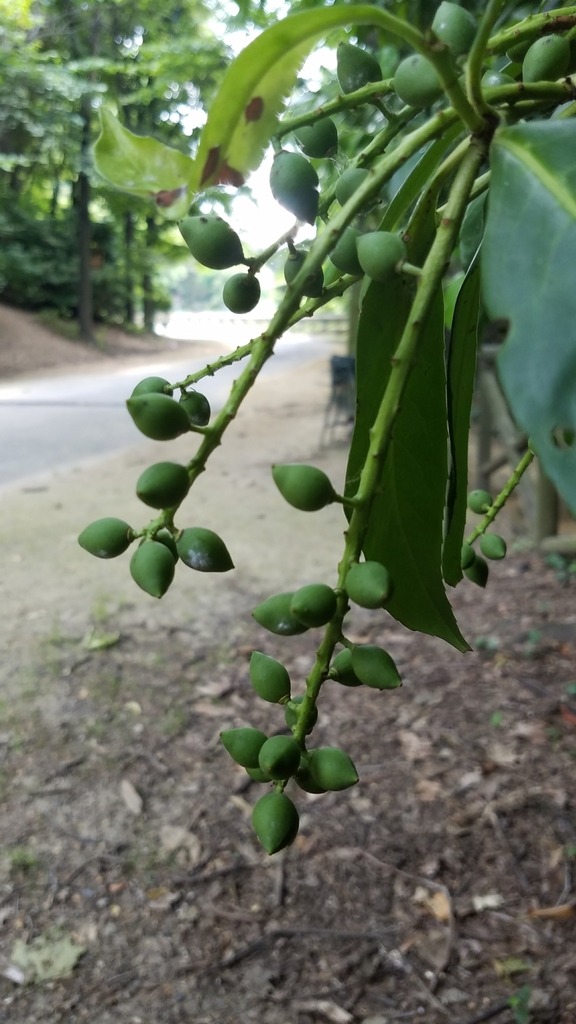
The cherry laurel is a versatile evergreen shrub known for its glossy, dark green foliage. It makes a fantastic hedge or privacy screen because it grows quite dense. You will love its fragrant white flower spikes that appear in the spring.

At a glance
- Care level
- Easy
- Plant type
- Evergreen shrub
- Light
- Full sun to partial shade
- Indoor light
- Bright indirect
- Water
- Every 7 to 14 days
- Mature size
- 15 to 30 feet
- Growth rate
- Fast
- Hardiness
- USDA 6 to 9
- Bloom time
- Mid to late spring
Care
Plant this shrub in well draining soil and keep it consistently moist while it gets established. Watch for yellowing leaves which might signal poor drainage or nutrient issues. Prune it back after flowering to keep its shape tidy and encourage new growth.
- Watering
- Water deeply whenever the top few inches of soil feel dry to the touch.
- Feeding
- Apply a balanced slow release fertilizer once in early spring.
- Pruning
- Trim back the branches in late spring or early summer after the flowers fade.
- Repotting
- Repot only if the plant becomes rootbound or needs a larger container for stability.
- Soil
- Well draining loamy soil
- Soil pH
- 6.0 to 7.5
- Temperature
- -15 to 35°C
- Humidity
- 40 to 70%
- Drought tolerance
- Moderate
- Lifespan
- Perennial, typically 20 to 50 years.
- Fragrance
- Light
- Deer and rabbits
- Moderate
Signs it needs repotting
- Roots growing out of the drainage holes.
- Water running straight through the pot without soaking in.
- Stunted growth during the active season.
Safety
- People
- The foliage and seeds are highly toxic to humans and pets if consumed.
- Pets
- This plant is toxic to cats and dogs if ingested due to cyanogenic glycosides.
- Children
- Keep children away from the berries as they are poisonous and look tempting to eat.
- Contact allergens
- Contact with sap or crushed leaves may cause skin irritation in sensitive individuals.
- Airborne allergens
- The pollen can be a minor respiratory irritant for some people during the spring bloom.
- Edibility
- All parts of this plant contain cyanogenic glycosides and are toxic if ingested.
How to identify it
- Glossy dark green leathery leaves
- Oblong leaves with serrated edges
- Fragrant white upright flower spikes
- Small dark purple cherry like fruits
- Height
- 2 to 6m
- Spread
- 2 to 5m
- Leaves
- dark green, glossy, evergreen
- Flowers
- white, cream, 0.5 to 1cm
- Fruit
- black, dark purple, Late summer to autumn
Problems to watch for
- Powdery MildewCommon
- Shot Hole DiseaseCommon
- PhytophthoraUncommon
- Root RotUncommon
- Scale InsectsUncommon
- Vine WeevilUncommon
Check your cherry laurel from a photo
Pocket Botanist looks at a photo of your plant and tells you what's wrong and what to try first.
Scan with your phone's camera to get the app
Or go to pocketbotanist.app/get on your phone
Growing it
- Propagation
- cuttings, seed
- When to plant
- spring, autumn
- Overwintering
- Ensure the soil remains moist but not waterlogged during winter. Apply a layer of mulch around the base to protect roots from extreme temperature fluctuations.
- In containers
- It can be grown in large containers, but it will eventually require a very large pot to sustain its size.
Semi-ripe cuttings
- Take 10 to 15 centimeter cuttings in late summer.
- Remove lower leaves and dip the base in rooting hormone.
- Plant in a well draining potting mix.
- Cover with a plastic bag to maintain humidity.
- Keep in bright, indirect light until rooted.
Plant in groups to create a dense hedge that blocks wind and noise.
Grows well with
- English Ivy · Both thrive in similar shady conditions.
- Hosta · They provide a nice textural contrast in shaded borders.
Similar species
- Portuguese Laurel · It has smaller leaves and is slightly more refined in appearance.
Science
- Family
- Rosaceae
- Genus
- Prunus
- Order
- Rosales
- Class
- Magnoliopsida
- Native range
- Southeastern Europe and Southwestern Asia.
- Conservation
- This species is considered invasive in some regions outside its native range.
It thrives in the understory of forests where it outcompetes native flora due to its dense evergreen canopy.
- Value to wildlife
- nectar source, provides cover for birds
- Pollinators
- bees, butterflies
- Uses
- hedging, privacy screen, topiary, evergreen backdrop
Through the year
Ecological indicators
- Salinity
- 2/9
- Soil reaction
- 5/9
- Light
- 4/9
- Temperature
- 6/9
- Moisture
- 5/9
- Nutrients
- 5/9
Taxonomy resolved against GBIF.
Questions people ask
- Is it safe for dogs?
- No, it is toxic to dogs and cats if ingested.
- How fast does it grow?
- It is a vigorous grower, often adding 30 to 60 centimeters per year.
Where the name comes from
The name Prunus refers to the plum genus, while laurocerasus describes the laurel like appearance of the leaves.
Good to know
- It is often called cherry laurel despite not being a true laurel.
- The plant is extremely shade tolerant.
- It was introduced to Europe from the Caucasus region in the 16th century.
- It is frequently used for formal hedges in English gardens.
Also in
Keep your cherry laurel growing
This page is a general guide. Save your plant in Pocket Botanist and you get care reminders timed for this plant, plus a care history that shows what worked.
Scan with your phone's camera to get the app
Or go to pocketbotanist.app/get on your phone
This guide was generated with AI on and checked against GBIF taxonomy. It is general information, not horticultural or veterinary advice. Read about how we build these guides.