 Pocket Botanist
Plant guide
Princess tree.
Paulownia tomentosa
Pronounced paw-LOH-nee-uh toh-men-TOH-suh
Also known as Foxglove-Tree, Karri tree, Princess tree, Royal Paulownia, chinese empress tree, empresstree


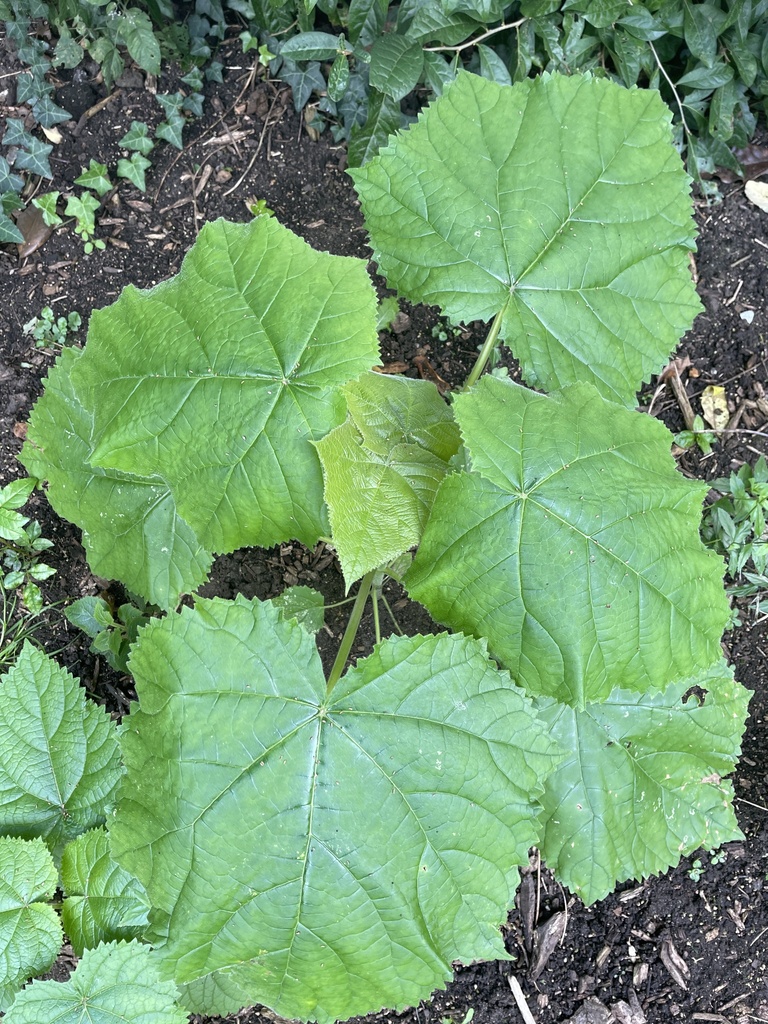
The princess tree is a fast growing deciduous tree known for its massive, heart shaped leaves and fragrant, trumpet shaped flowers. It produces beautiful clusters of violet blooms in the spring before the foliage fully emerges. This tree is quite adaptable but can be invasive in certain regions.

At a glance
- Care level
- Easy
- Plant type
- Deciduous tree
- Light
- Full sun
- Indoor light
- Direct sun
- Water
- Every 7 to 14 days
- Mature size
- 30 to 50 feet
- Growth rate
- Fast
- Hardiness
- USDA 5 to 9
- Bloom time
- Mid to late spring
Care
Plant your tree in a spot with plenty of room to accommodate its rapid growth. Keep an eye out for yellowing leaves which can indicate poor drainage or nutrient issues. Pruning helps maintain a tidy shape and encourages better flowering.
- Watering
- Water deeply during dry spells to keep the soil consistently moist but not waterlogged.
- Feeding
- Apply a balanced fertilizer once in early spring to support vigorous growth.
- Pruning
- Prune in late winter or early spring to remove dead wood and shape the canopy.
- Repotting
- Repot young trees only if they become root bound in their containers.
- Soil
- Well draining, fertile soil
- Soil pH
- 6.0 to 8.0
- Temperature
- -20 to 35°C
- Humidity
- 40 to 70%
- Drought tolerance
- Moderate
- Lifespan
- Perennial, typically 30 to 50 years.
- Fragrance
- Light
- Deer and rabbits
- Moderate
Signs it needs repotting
- Roots growing out of the drainage holes.
- Water running straight through the soil without soaking in.
Safety
- People
- The leaves and fruit are generally considered non-toxic, but ingestion is not recommended.
- Pets
- This plant is generally considered non-toxic to cats and dogs.
- Children
- The large, brittle branches can break easily, posing a risk to children climbing the tree.
- Contact allergens
- The fuzzy hairs on the leaves and stems can cause mild skin irritation in sensitive individuals.
- Airborne allergens
- The abundant pollen produced in spring can trigger allergic reactions in some people.
- Edibility
- The plant is not considered edible and should be avoided for consumption.
How to identify it
- Large, fuzzy heart shaped leaves
- Clusters of fragrant violet flowers
- Woody, egg shaped seed capsules
- Stout, hairy young branches
- Height
- 8 to 15m
- Spread
- 6 to 10m
- Leaves
- green, deciduous
- Flowers
- lavender, violet, 4 to 6cm
- Fruit
- brown, Autumn
Problems to watch for
- Leaf SpotCommon
- Powdery MildewCommon
- CankerUncommon
- Root RotUncommon
- Verticillium WiltRare
By symptom
Check your princess tree from a photo
Pocket Botanist looks at a photo of your plant and tells you what's wrong and what to try first.
Growing it
- Propagation
- seed, root cuttings
- When to plant
- spring, autumn
- Overwintering
- Young trees may need protection from severe frost, but mature specimens are generally hardy.
- In containers
- It is not suitable for containers due to its massive size and aggressive root system.
Seed
- 1. Collect dry seed pods in autumn.
- 2. Sow seeds on the surface of moist, well-draining soil.
- 3. Keep in a warm, bright spot until germination occurs.
Plant shade-loving perennials beneath the canopy to make use of the space created by its large leaves.
Grows well with
Similar species
- Catalpa — It has similar large leaves and showy flowers but a different growth habit.
Science
- Family
- Paulowniaceae
- Genus
- Paulownia
- Order
- Lamiales
- Class
- Magnoliopsida
- Native range
- Central and western China.
- Conservation
- It is considered an invasive species in many parts of North America and should be planted with extreme caution.
It is a pioneer species that quickly colonizes disturbed soil and open areas.
- Value to wildlife
- nectar source
- Pollinators
- bees
- Uses
- ornamental, timber production, shade tree
Through the year
Ecological indicators
- Salinity
- 2/9
- Soil reaction
- 6/9
- Moisture
- 5/9
- Nutrients
- 6/9
- Light
- 8/9
- Temperature
- 6/9
Taxonomy resolved against GBIF.
Questions people ask
- Is it a good tree for a small garden?
- No, it grows far too large and fast for most residential spaces.
- Does it need a lot of water?
- It prefers consistent moisture but is quite adaptable once established.
Where the name comes from
The genus honors Anna Pavlovna, a Russian princess, while the species name refers to the dense, woolly hairs on the leaves.
Good to know
- The wood is highly prized in Japan for making traditional musical instruments.
- It is often called the Empress tree in honor of a Dutch princess.
- The seeds are tiny and winged, allowing them to travel long distances on the wind.
- It can resprout vigorously from the roots even after being cut down.
Keep your princess tree growing
This page is a general guide. Save your plant in Pocket Botanist and you get care reminders timed for this plant, plus a care history that shows what worked.
This guide was generated with AI and checked against GBIF taxonomy. It is general information, not horticultural or veterinary advice. Read about how we build these guides.