 Pocket Botanist
Guide botanique
Paulownia.
Paulownia tomentosa
Prononciation paw-LOH-nee-uh toh-men-TOH-suh
Aussi appelée Foxglove-Tree, Karri tree, Royal Paulownia, Paulownia, Arbre impérial chinois, Arbre impératrice


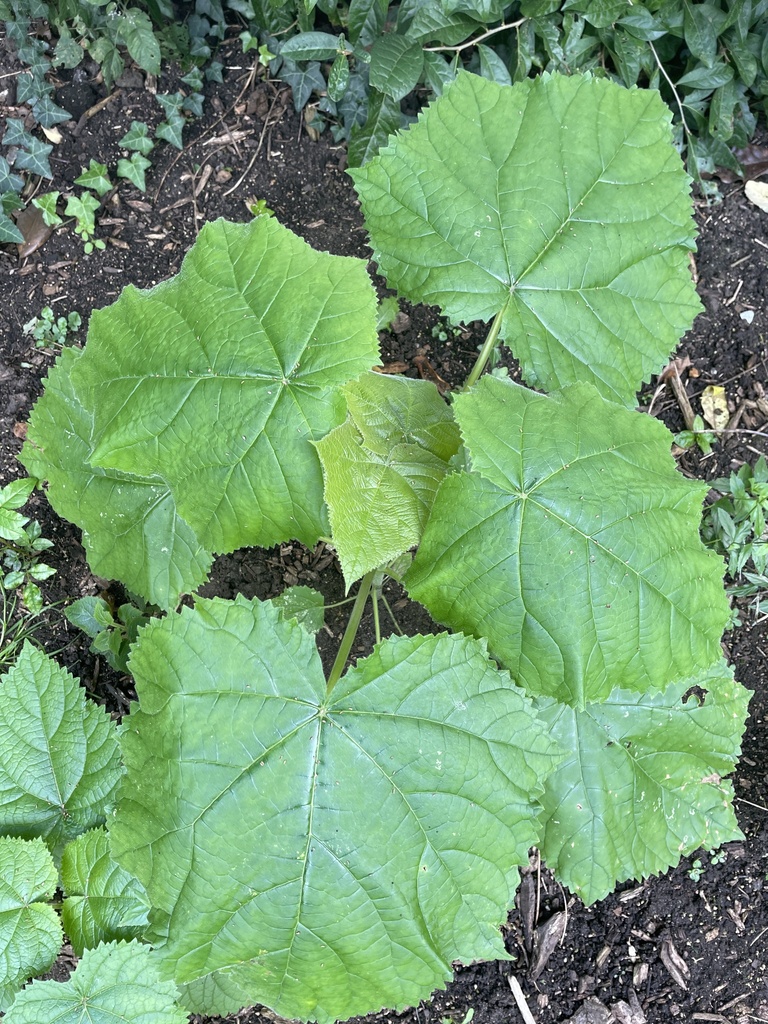
Le Paulownia est un arbre à feuilles caduques à croissance rapide, connu pour ses feuilles massives en forme de cœur et ses fleurs parfumées en forme de trompette. Il produit de beaux bouquets de fleurs violettes au printemps, avant que le feuillage n'émerge complètement. Cet arbre est assez adaptable, mais peut être envahissant dans certaines régions.

En un coup d'œil
- Niveau d'entretien
- Facile
- Type de plante
- Arbre à feuilles caduques
- Lumière
- Plein soleil
- Lumière en intérieur
- Soleil direct
- Arrosage
- Tous les 7 à 14 jours
- Taille adulte
- 15 à 45 mètres
- Croissance
- Rapide
- Rusticité
- USDA 5 à 9
- Floraison
- Mi à fin du printemps
Entretien
Plantez votre arbre dans un endroit avec beaucoup d'espace pour accommoder sa croissance rapide. Gardez un œil sur les feuilles jaunissantes qui peuvent indiquer un mauvais drainage ou des problèmes de nutriments. La taille aide à maintenir une forme soignée et encourage une meilleure floraison.
- Arrosage
- Arrosez abondamment pendant les périodes sèches pour garder le sol constamment humide, mais pas détrempé.
- Engrais
- Appliquez un engrais équilibré une fois au début du printemps pour soutenir une croissance vigoureuse.
- Taille
- Taillez à la fin de l'hiver ou au début du printemps pour enlever le bois mort et façonner la canopée.
- Rempotage
- Rempotez les jeunes arbres uniquement s'ils deviennent à l'étroit dans leurs conteneurs.
- Sol
- Sol bien drainé et fertile
- pH du sol
- 6,0 à 8,0
- Température
- -20 à 35°C
- Humidité
- 40 à 70%
- Résistance à la sécheresse
- Moyenne
- Durée de vie
- Vivace, généralement 30 à 50 ans.
- Parfum
- Léger
- Résistance aux chevreuils et lapins
- Moyenne
Signes qu'il faut rempoter
- Les racines sortent des trous de drainage.
- L'eau traverse le sol sans s'infiltrer.
Sécurité
- Humains
- Les feuilles et les fruits sont généralement considérés comme non toxiques, mais leur ingestion n'est pas recommandée.
- Animaux
- Cette plante est généralement considérée comme non toxique pour les chats et les chiens.
- Enfants
- Les grandes branches cassantes peuvent se briser facilement, présentant un risque pour les enfants qui grimpent à l'arbre.
- Allergènes de contact
- Les poils duveteux sur les feuilles et les tiges peuvent provoquer une légère irritation cutanée chez les personnes sensibles.
- Allergènes aéroportés
- Le pollen abondant produit au printemps peut déclencher des réactions allergiques chez certaines personnes.
- Comestibilité
- La plante n'est pas considérée comme comestible et doit être évitée pour la consommation.
Comment l'identifier
- Grandes feuilles duveteuses en forme de cœur
- Grappes de fleurs violettes parfumées
- Capsules de graines ligneuses en forme d'œuf
- Jeunes branches robustes et poilues
- Hauteur
- 8 à 15m
- Envergure
- 6 à 10m
- Feuilles
- vert, caduque
- Fleurs
- lavande, violet, 4 à 6cm
- Fruits
- brun, Automne
Problèmes à surveiller
- OïdiumCourant
- Taches foliairesCourant
- ChancrePeu courant
- Pourriture des racinesPeu courant
- VerticillioseRare
- Mildiou poudreux — Croissance fongique blanche sur les feuilles pendant les périodes de forte humidité.
Par symptôme
Vérifie la santé de ta plante en photo
Pocket Botanist analyse une photo de ta plante et te dit ce qui ne va pas et quoi essayer en premier.
La cultiver
- Multiplication
- semis, boutures de racines
- Quand planter
- printemps, automne
- Hivernage
- Les jeunes arbres peuvent avoir besoin d'une protection contre le gel sévère, mais les spécimens matures sont généralement rustiques.
- En pot
- Il ne convient pas aux conteneurs en raison de sa taille massive et de son système racinaire agressif.
Semis
- 1. Récoltez les gousses de graines sèches en automne.
- 2. Semez les graines à la surface d'un sol humide et bien drainé.
- 3. Gardez dans un endroit chaud et lumineux jusqu'à la germination.
Plantez des vivaces aimant l'ombre sous la canopée pour profiter de l'espace créé par ses grandes feuilles.
Bonnes associations
- Hosta — Ils prospèrent à l'ombre mouchetée fournie par la grande canopée.
- Polystic à feuilles de sabre — Elles apprécient les conditions humides et abritées sous l'arbre.
Espèces similaires
- Catalpa bignonioides — Il a des feuilles larges similaires et des fleurs voyantes, mais un port différent.
Science
- Famille
- Paulowniaceae
- Genre
- Paulownia
- Ordre
- Lamiales
- Classe
- Magnoliopsida
- Région d'origine
- Centre et ouest de la Chine.
- Préservation
- Elle est considérée comme une espèce envahissante dans de nombreuses régions d'Amérique du Nord et doit être plantée avec une extrême prudence.
C'est une espèce pionnière qui colonise rapidement les sols perturbés et les zones ouvertes.
- Intérêt pour la faune
- source de nectar
- Pollinisateurs
- abeilles
- Utilisations
- ornemental, production de bois d'œuvre, arbre d'ombrage
Au fil des saisons
Repères écologiques
- Salinité
- 2/9
- Réaction du sol
- 6/9
- Humidité
- 5/9
- Nutriments
- 6/9
- Lumière
- 8/9
- Température
- 6/9
Taxonomie vérifiée avec le GBIF.
Ce qu'on demande souvent
- Est-ce un bon arbre pour un petit jardin ?
- Non, il devient beaucoup trop grand et pousse trop vite pour la plupart des espaces résidentiels.
- A-t-il besoin de beaucoup d'eau ?
- Il préfère une humidité constante mais est tout à fait adaptable une fois établi.
D'où vient le nom
Le genre honore Anna Pavlovna, une princesse russe, tandis que le nom de l'espèce fait référence aux poils denses et laineux sur les feuilles.
Bon à savoir
- Le bois est très recherché au Japon pour la fabrication d'instruments de musique traditionnels.
- Elle est souvent appelée l'arbre Impératrice en l'honneur d'une princesse néerlandaise.
- Les graines sont minuscules et ailées, leur permettant de parcourir de longues distances avec le vent.
- Elle peut repousser vigoureusement à partir des racines même après avoir été coupée.
Garde ta plante en pleine forme
Cette page est un guide général. Enregistre ta plante dans Pocket Botanist et tu reçois des rappels d'entretien adaptés à cette plante, ainsi qu'un historique d'entretien qui montre ce qui a marché.
Ce guide a été généré par IA et vérifié avec la taxonomie du GBIF. Il s'agit d'informations générales, et non de conseils horticoles ou vétérinaires. Découvre comment nous concevons ces guides.