 Pocket Botanist
Plant guide
Passion Flower.
Passiflora
Pronounced pass-ih-FLOR-uh
Also known as Passionflower, Passionflowers


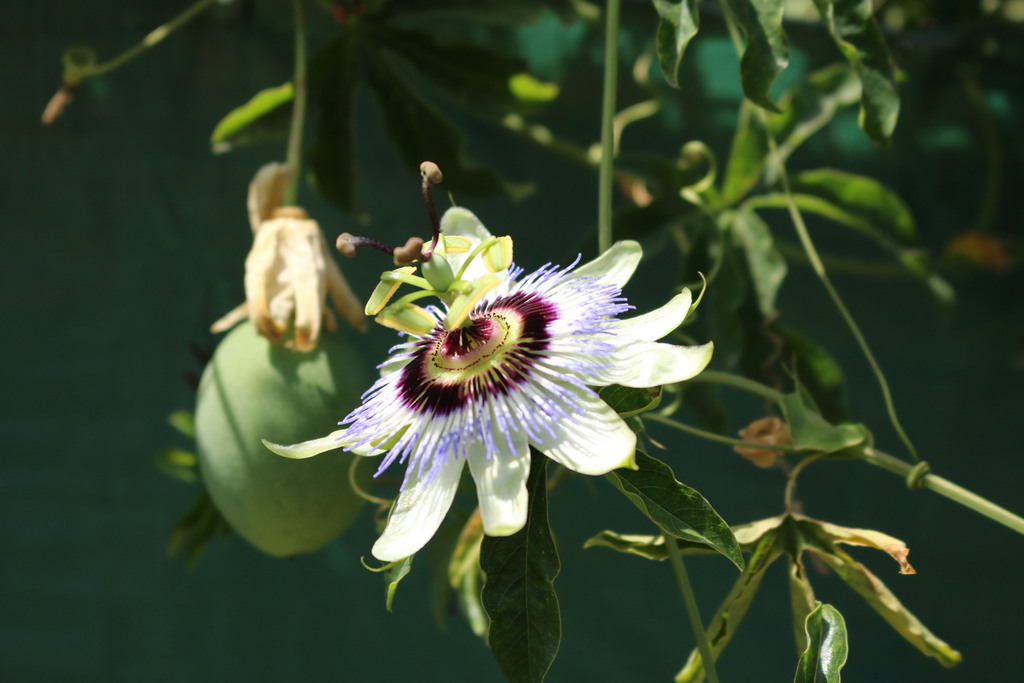
Passion flowers are stunning, exotic climbers known for their intricate, complex blooms. They grow quickly and love to scramble up trellises or fences in warm climates. These vines bring a tropical feel to any garden space.
At a glance
- Care level
- Moderate
- Plant type
- Vine
- Light
- Full sun to partial shade
- Indoor light
- bright-indirect
- Water
- Every 3 to 7 days
- Mature size
- 3 to 9 meters
- Growth rate
- fast
- Hardiness
- USDA 5 to 10
- Bloom time
- Mid summer to early autumn
Care
Provide a sturdy support structure for the vines to climb. Keep the soil consistently moist but not soggy, and watch for yellowing leaves which often signal overwatering. Ensure they get plenty of bright light to encourage those beautiful blooms.
- Watering
- Water when the top inch of soil feels dry to the touch.
- Feeding
- Use a balanced liquid fertilizer during the active growing season.
- Pruning
- Prune back long, unruly stems in late winter to maintain shape.
- Repotting
- Repot when the roots fill the container or become root bound.
- Soil
- Well draining, fertile loam
- Soil pH
- 6.1 to 7.5
- Temperature
- 5 to 30°C
- Humidity
- 40 to 60%
- Drought tolerance
- moderate
- Lifespan
- Perennial, typically 5 to 10 years
- Fragrance
- strong
- Deer and rabbits
- moderate
Signs it needs repotting
- Roots growing out of the drainage holes.
- Water running straight through the pot without soaking in.
- The plant stops growing even during the active season.
Safety
- People
- Many species contain cyanogenic glycosides in their leaves and stems which can be harmful if ingested in large quantities.
- Pets
- The foliage and stems can be toxic to cats and dogs if ingested.
- Children
- The fruit can be a choking hazard for small children, and the plant should be kept out of reach to prevent accidental ingestion of leaves.
- Contact allergens
- Some people may experience skin irritation from handling the foliage or sap of certain species.
- Airborne allergens
- There is no significant evidence that this plant causes airborne respiratory allergies.
- Edibility
- While some species produce edible fruit, never consume parts of a passionflower unless you have positively identified the specific variety as safe.
How to identify it
- intricate, fringed corona filaments
- three lobed, alternate leaves
- tendrils for climbing support
- distinctive central reproductive structures
- Height
- 3 to 9m
- Spread
- 1 to 3m
- Leaves
- green, evergreen
- Flowers
- purple, white, blue, 5 to 12cm
- Fruit
- yellow, orange, purple, Late summer to autumn
Common problems
- Aphids — Small insects that cluster on new growth and suck plant sap.
- Root rot — Fungal decay caused by consistently waterlogged soil conditions.
Growing it
- Propagation
- cuttings, seed, layering
- When to plant
- spring
- Overwintering
- In colder areas, cut the vine back to the ground after the first frost and apply a thick layer of mulch over the roots. If in a pot, move it to a sheltered, unheated space like a garage.
- In containers
- They grow well in large containers, but you will need at least a 5 gallon pot with a sturdy trellis for support.
Stem cuttings
- Take a 4 to 6 inch cutting from a healthy, non flowering stem.
- Remove the lower leaves and dip the cut end in rooting hormone.
- Place the cutting in a moist potting mix and keep it in bright, indirect light until roots form.
Pair passionflowers with sturdy shrubs or trellises that can support their vigorous, climbing growth habit.
Grows well with
Similar species
- Blue Passionflower — It is a very hardy relative often used in cooler climates.
- Maypop — This is a native North American species that is quite cold tolerant.
Science
- Family
- Passifloraceae
- Genus
- Passiflora
- Order
- Malpighiales
- Class
- Magnoliopsida
- Native range
- Primarily tropical and subtropical regions of the Americas.
- Conservation
- Most common garden varieties are not of conservation concern, but some rare wild species are protected in their native habitats.
This vine uses specialized tendrils to scramble over other vegetation to reach sunlight in forest edges.
- Value to wildlife
- nectar source, larval host plant
- Pollinators
- bees, butterflies, hummingbirds
- Uses
- ornamental vine, edible fruit, pollinator garden
Through the year
Ecological indicators
- Salinity
- 2/9
- Soil reaction
- 6/9
- Light
- 7/9
- Temperature
- 7/9
- Moisture
- 6/9
- Nutrients
- 5/9
Taxonomy resolved against GBIF.
Questions people ask
- Do I need to prune my passionflower?
- Yes, pruning in late winter or early spring helps keep the vine tidy and encourages more blooms.
- Why is my vine not flowering?
- It likely needs more direct sunlight or has been given too much nitrogen fertilizer.
Where the name comes from
The name Passiflora comes from the Latin passio meaning passion and flos meaning flower. It refers to the religious symbolism missionaries saw in the flower parts.
Good to know
- Passionflowers are famous for their unique, complex flower structure.
- The fruit of some species is commonly known as passion fruit.
- These vines use tendrils to climb and support themselves on structures.
- They are fast growers that can cover a fence in a single season.
Is your passion flower looking unwell?
This page is a general guide. Pocket Botanist diagnoses problems from a photo of your actual plant, works out watering for your light and conditions, and reminds you when care is due.
This guide was generated with AI and checked against GBIF taxonomy. It is general information, not horticultural or veterinary advice. Read about how we build these guides.