 Pocket Botanist
Plant guide
Opium poppy.
Papaver somniferum
Pronounced puh-PAY-ver som-NIF-er-um
Also known as Opium Poppy



Scan with your phone's camera to get the app
Or go to pocketbotanist.app/get on your phone

The opium poppy is a stunning annual known for its papery, delicate petals and attractive seed pods. It thrives in cool weather and adds a touch of elegance to any cottage garden. You will love how easily these reseed themselves once established.
At a glance
- Care level
- Easy
- Plant type
- Annual
- Light
- Full sun
- Indoor light
- Direct sun
- Water
- Every 3 to 7 days
- Mature size
- 3 to 4 feet
- Growth rate
- Fast
- Hardiness
- USDA 3 to 9
- Bloom time
- Late spring to early summer
Care
Sow seeds directly into the garden as they dislike being moved. Keep the soil consistently moist until germination, then let it dry out slightly between waterings. Watch for aphids on the flower buds during the spring.
- Watering
- Water when the top inch of soil feels dry to the touch.
- Feeding
- Feed with a balanced liquid fertilizer once a month during the growing season.
- Pruning
- Deadhead spent flowers to encourage more blooms or leave them to develop seed pods.
- Repotting
- These plants do not transplant well and should be grown directly in the garden.
- Soil
- Well draining loamy soil
- Soil pH
- 6.5 to 7.5
- Temperature
- -15 to 30°C
- Humidity
- 40 to 60%
- Drought tolerance
- Moderate
- Lifespan
- Annual, completes its life cycle in one season.
- Deer and rabbits
- High
Safety
- People
- All parts of this plant contain toxic alkaloids that pose a severe health risk if consumed.
- Pets
- This plant is toxic to cats and dogs if ingested.
- Children
- Keep this plant away from children as all parts are toxic if ingested.
- Contact allergens
- The milky sap can cause skin irritation in sensitive individuals.
- Airborne allergens
- Pollen may trigger mild reactions in those with seasonal allergies.
- Edibility
- The plant contains potent alkaloids that can be fatal if ingested, and its cultivation is strictly regulated or illegal in many jurisdictions.
How to identify it
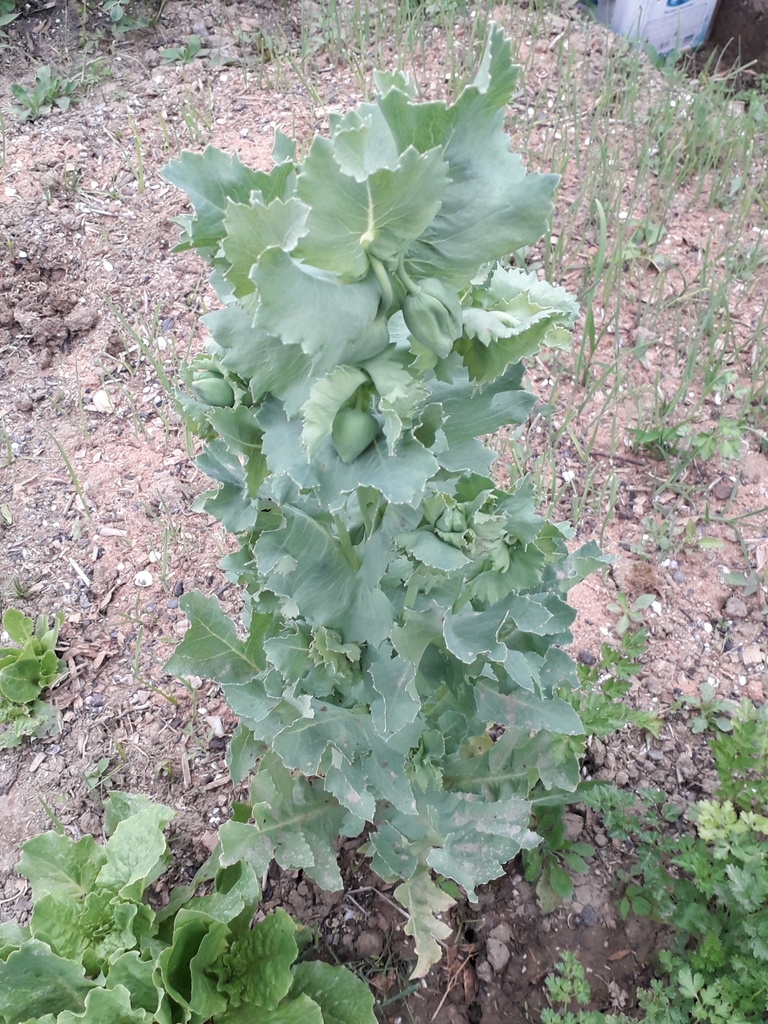
- Glaucous blue green foliage
- Large papery crinkled petals
- Prominent central seed capsule
- Milky white sap when cut
- Height
- 0.6 to 1.2m
- Spread
- 0.2 to 0.45m
- Leaves
- blue-green, glaucous, deciduous
- Flowers
- white, pink, red, purple, 5 to 15cm
- Fruit
- brown, Late summer
Problems to watch for
- Downy mildew · Causes yellowing and stunted growth in damp conditions.
- Aphids · Small insects that cluster on flower buds and stems.
Check your opium poppy from a photo
Pocket Botanist looks at a photo of your plant and tells you what's wrong and what to try first.
Scan with your phone's camera to get the app
Or go to pocketbotanist.app/get on your phone
Growing it
- Propagation
- seed
- When to plant
- early spring, late autumn
- Overwintering
- In mild climates, autumn sown seeds will overwinter as small rosettes. Ensure the soil is well drained to prevent crown rot during wet winter months.
- In containers
- Not recommended for containers due to their deep taproot and dislike of root disturbance.
Direct Sowing
- 1. Clear a patch of soil in a sunny spot.
- 2. Scatter seeds thinly over the surface in early spring or late autumn.
- 3. Press them into the soil without covering, as they need light to germinate.
Plant these in drifts to create a naturalistic look that benefits from the support of neighboring taller flowers.
Grows well with
- Cornflower · They share similar light and soil requirements for a classic meadow look.
- Larkspur · These provide a nice vertical contrast to the rounded poppy blooms.
Similar species
- Oriental Poppy · A perennial relative that returns year after year unlike the annual somniferum.
- California Poppy · Another popular annual poppy that thrives in similar sunny conditions.
Science
- Family
- Papaveraceae
- Genus
- Papaver
- Order
- Ranunculales
- Class
- Magnoliopsida
- Native range
- Mediterranean and parts of Western Asia.
- Conservation
- Not endangered, but cultivation is subject to strict legal controls in many countries due to its narcotic content.
It thrives in disturbed soil and open sunny areas where it can outcompete other annuals.
- Value to wildlife
- nectar source
- Pollinators
- bees
- Uses
- ornamental gardening, dried seed pod arrangements
Through the year
Ecological indicators
- Salinity
- 2/9
- Soil reaction
- 6/9
- Light
- 8/9
- Temperature
- 5/9
- Moisture
- 4/9
- Nutrients
- 6/9
Taxonomy resolved against GBIF.
Questions people ask
- Can I grow these in pots?
- They have a long taproot and do not like being moved, so they are best grown directly in the garden.
- When should I sow the seeds?
- Sow them directly in early spring or late autumn as they need a period of cold to germinate.
Where the name comes from
Papaver is the ancient Latin name for poppy, while somniferum refers to its historical use as a sedative.
Good to know
- The seeds are commonly used in baking and contain negligible amounts of alkaloids.
- These poppies have been cultivated for thousands of years.
- They are classic cottage garden plants that self seed readily.
Also in
Keep your opium poppy growing
This page is a general guide. Save your plant in Pocket Botanist and you get care reminders timed for this plant, plus a care history that shows what worked.
Scan with your phone's camera to get the app
Or go to pocketbotanist.app/get on your phone
This guide was generated with AI on and checked against GBIF taxonomy. It is general information, not horticultural or veterinary advice. Read about how we build these guides.