 Pocket Botanist
Plant guide
Money Tree.
Pachira aquatica
Pronounced pah-KEE-ruh ah-KWA-ti-kuh
Also known as Guiana-Chestnut, Malabar Chestnut, Malabar chestnut, French peanut, Guiana chestnut, Provision tree, Saba nut, Malabar-chestnut



The money tree is a popular indoor plant known for its braided trunk and palm like leaves. It thrives in warm, humid conditions and is often associated with good luck. You will find it makes a great statement piece for your home or office.
At a glance
- Care level
- Easy
- Plant type
- Tropical evergreen tree
- Light
- Bright indirect light is best.
- Indoor light
- Bright indirect
- Water
- Every 7 to 14 days
- Mature size
- Up to 2 meters indoors.
- Growth rate
- Medium
- Hardiness
- USDA 10 to 12
- Bloom time
- Late spring to summer
Care
Keep the soil consistently moist but never soggy to prevent root rot. Watch for yellowing leaves as a sign of overwatering or drooping leaves if it needs more hydration. It prefers stable temperatures away from cold drafts or heating vents.
- Watering
- Water when the top few centimeters of soil feel dry.
- Feeding
- Use a balanced liquid fertilizer during the growing season.
- Pruning
- Trim back long stems in early spring to encourage bushier growth.
- Repotting
- Repot every few years when the plant becomes root bound.
- Soil
- Well-draining peat-based potting mix.
- Soil pH
- 6.0 to 7.5
- Temperature
- 15 to 30°C
- Humidity
- 50 to 80%
- Drought tolerance
- Low
- Lifespan
- Perennial, can live for many decades in ideal conditions.
- Fragrance
- Strong
- Deer and rabbits
- Moderate
Signs it needs repotting
- Roots growing out of the drainage holes.
- Water running straight through the soil without soaking in.
- Stunted growth during the active season.
Safety
- People
- The plant is generally considered non-toxic to humans, though ingestion of large quantities of plant material is not recommended.
- Pets
- This plant is generally considered non-toxic to cats and dogs.
- Children
- The plant is safe for children, but the large, heavy pots can be a tipping hazard if not secured.
- Contact allergens
- The sap may cause mild skin irritation in sensitive individuals.
- Airborne allergens
- There are no notable airborne allergens associated with this plant.
- Edibility
- The seeds are edible when roasted or fried but should not be consumed raw due to potential anti-nutritional factors.
How to identify it
- Braided trunk often with multiple stems
- Palmately compound leaves with five leaflets
- Shiny, dark green foliage
- Large, showy flowers with long stamens
- Height
- 1.8 to 6m
- Spread
- 1.5 to 3m
- Leaves
- dark green, evergreen
- Flowers
- white, yellowish, 15 to 25cm
- Fruit
- brown, Autumn
Problems to watch for
- Root RotCommon
- Spider MitesCommon
- Fungus GnatsUncommon
- Leaf DropUncommon
- MealybugsUncommon
- Scale InsectsUncommon
Check your money tree from a photo
Pocket Botanist looks at a photo of your plant and tells you what's wrong and what to try first.
Growing it
- Propagation
- cuttings, seed
- When to plant
- spring, summer
- Overwintering
- Bring the plant indoors before temperatures drop below 15 degrees Celsius. Reduce watering during the cooler months when growth slows down.
- In containers
- It is excellent for containers, but ensure the pot has drainage holes and is large enough to support the root system.
Stem Cuttings
- 1. Take a 15 centimeter cutting from a healthy, non-flowering stem.
- 2. Remove the lower leaves and dip the cut end in rooting hormone.
- 3. Place the cutting in a moist, well-draining potting mix.
- 4. Cover with a plastic bag to maintain high humidity.
- 5. Keep in bright, indirect light until roots form.
Group plants with similar water needs to make managing soil moisture easier.
Grows well with
- Peace Lily — They share similar requirements for high humidity and indirect light.
- Ferns — Ferns provide a lush, tropical understory that complements the tree's structure.
Similar species
- Guiana Chestnut — It is very similar in appearance but has slightly different fruit characteristics.
Science
- Family
- Malvaceae
- Genus
- Pachira
- Order
- Malvales
- Class
- Magnoliopsida
- Native range
- Central and South America
- Conservation
- This species is widespread and not currently of conservation concern.
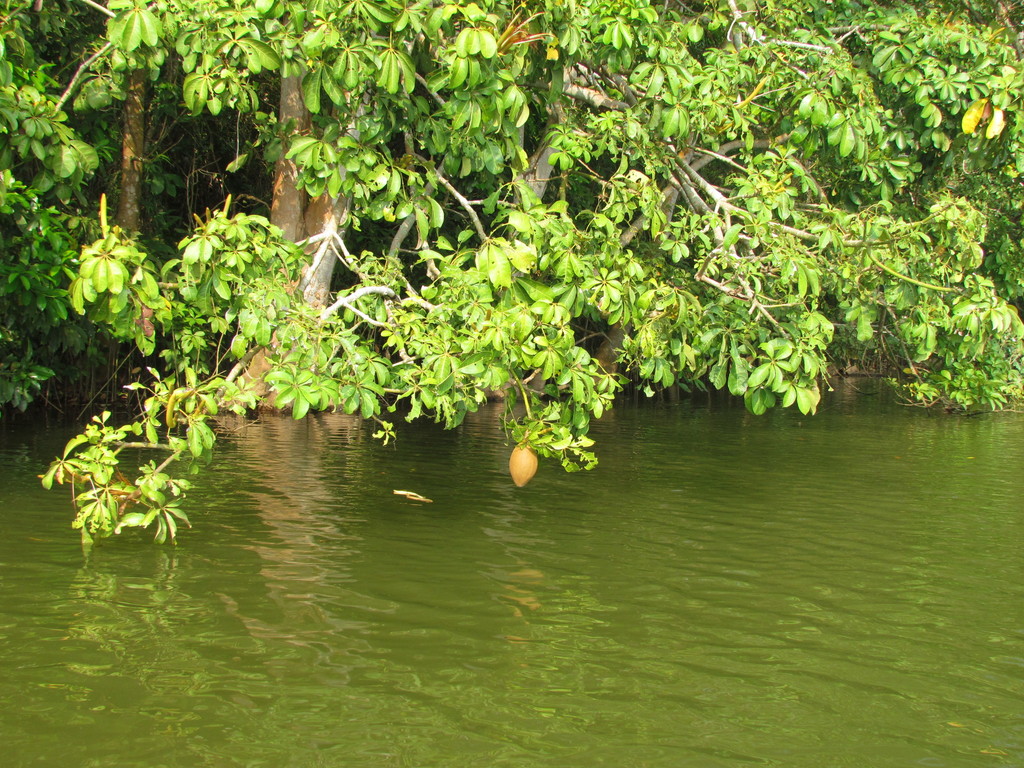
It thrives in swampy, riparian environments where it can tolerate periodic flooding.
- Value to wildlife
- nectar source
- Pollinators
- bees, moths, bats
- Uses
- ornamental houseplant, edible seeds, bonsai subject
Through the year
Ecological indicators
- Salinity
- 2/9
- Temperature
- 8/9
- Soil reaction
- 6/9
- Light
- 6/9
- Moisture
- 7/9
- Nutrients
- 5/9
Taxonomy resolved against GBIF.
Questions people ask
- Why are the leaves turning yellow?
- Yellowing leaves often indicate overwatering or poor drainage.
- Does it need direct sunlight?
- It prefers bright, indirect light to maintain its lush green foliage.
Where the name comes from
The genus name Pachira comes from a local Guyanese name, while aquatica refers to its natural habitat in wetlands.
Good to know
- It is commonly called the money tree because of a legend about a poor man who became wealthy after growing it.
- In its native habitat, it grows in swamps and can reach heights of 18 meters.
- The flowers are quite spectacular, featuring long, thread-like stamens that look like a shaving brush.
Keep your money tree growing
This page is a general guide. Save your plant in Pocket Botanist and you get care reminders timed for this plant, plus a care history that shows what worked.
This guide was generated with AI and checked against GBIF taxonomy. It is general information, not horticultural or veterinary advice. Read about how we build these guides.