 Pocket Botanist
Plant guide
Love in a Mist.
Nigella damascena L.
Pronounced ny-JEL-uh dam-uh-SKEE-nuh
Also known as Damascus hellebore, Devil In The Bush, Jack-in-the-green, Love In A Mist, Love-in-a-mist



Love in a Mist is a charming annual that brings a whimsical touch to any cottage garden. It is well loved for its unique, ferny foliage and intricate flowers that seem to float in a cloud of green bracts. You will find it is a delightful choice for adding texture to borders and cut flower arrangements.
At a glance
- Care level
- Easy
- Plant type
- Annual
- Light
- Full sun
- Indoor light
- Direct sun
- Water
- Every 3 to 7 days
- Mature size
- 18 to 24 inches
- Growth rate
- Fast
- Hardiness
- USDA 2 to 11
- Bloom time
- Late spring to mid summer
Care
Sow seeds directly into your garden beds once the soil warms up in spring. Keep the soil consistently moist until germination, and watch for yellowing leaves which may signal overwatering. Deadhead spent blooms if you want to encourage more flowers, or leave them to develop those fascinating seed pods.
- Watering
- Keep the soil evenly moist but not waterlogged to support steady growth.
- Feeding
- Apply a balanced liquid fertilizer once a month during the active growing season.
- Pruning
- Regularly remove faded flowers to prolong the blooming period.
- Repotting
- As an annual, this plant completes its life cycle in one season and does not require repotting.
- Soil
- Well draining, fertile soil
- Soil pH
- 6.0 to 7.5
- Temperature
- -15 to 30°C
- Humidity
- 40 to 70%
- Drought tolerance
- Moderate
- Lifespan
- Annual, completes its life cycle in one season.
- Deer and rabbits
- Moderate
Signs it needs repotting
- Roots growing out of the drainage holes.
- Stunted growth despite regular watering.
Safety
- People
- The plant contains compounds that can cause mild irritation if ingested in large quantities.
- Pets
- This plant is generally considered non toxic to cats and dogs.
- Children
- The seeds are small and could pose a choking hazard to young children if ingested.
- Contact allergens
- Handling the foliage may cause mild skin irritation in sensitive individuals.
- Airborne allergens
- The pollen is generally not considered a significant allergen.
- Edibility
- The seeds are sometimes used as a spice, but they contain alkaloids and should be consumed with caution.
How to identify it
- Finely divided, threadlike foliage
- Intricate, star shaped flowers
- Feathery, lace like green bracts
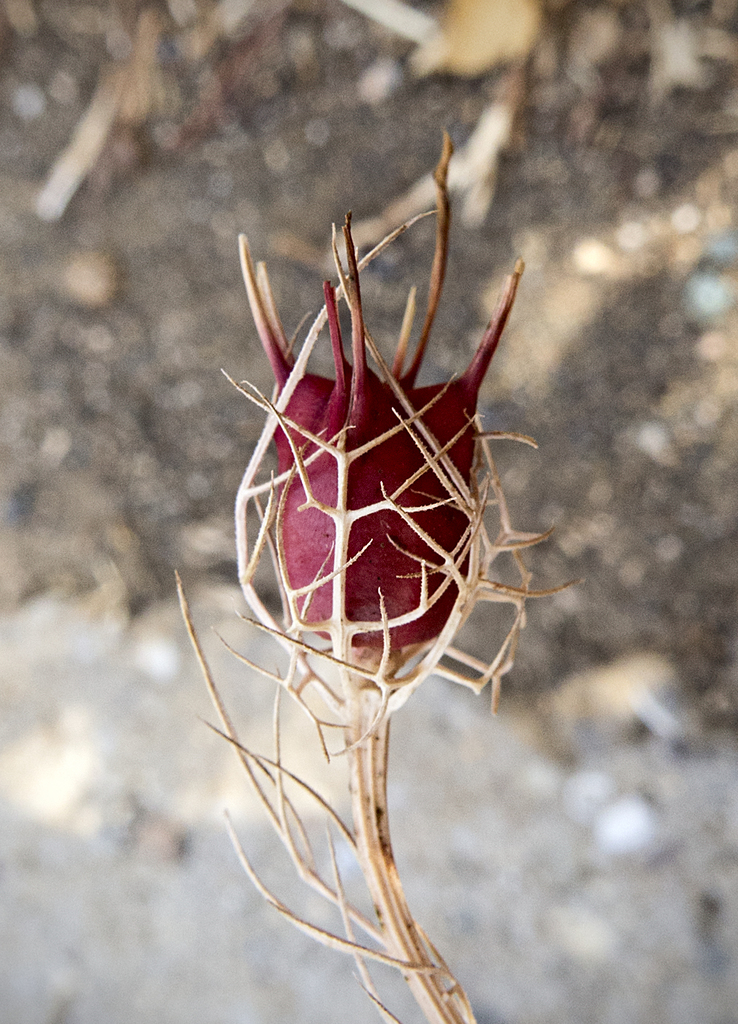
- Large, decorative, inflated seed pods
- Height
- 0.3 to 0.6m
- Spread
- 0.15 to 0.3m
- Leaves
- bright green, deciduous
- Flowers
- blue, white, pink, 3 to 5cm
- Fruit
- tan, brown, Late summer
Problems to watch for
- AphidsCommon
- Powdery MildewCommon
- Root RotUncommon
- Slugs and SnailsUncommon
Check your love in a mist from a photo
Pocket Botanist looks at a photo of your plant and tells you what's wrong and what to try first.
Growing it
- Propagation
- seed
- When to plant
- spring, autumn
- Overwintering
- As an annual, it will die back completely after setting seed. You can leave the seed pods for winter interest or remove them to prevent excessive self seeding.
- In containers
- It grows well in containers at least 20 cm deep, provided the soil is well drained.
Direct Sowing
- Prepare a sunny spot with well drained soil.
- Scatter seeds thinly over the surface.
- Lightly cover with soil as they need some light to germinate.
- Keep the soil moist until seedlings appear.
Sow these seeds directly into the garden in early spring for the best results, as they dislike being transplanted.
Grows well with
- Cornflower — They share similar growing requirements and look lovely together in a meadow style planting.
- California Poppy — Both are easy to grow from seed and provide a long season of color.
Similar species
- Nigella hispanica — It has larger flowers and a more upright habit.
Science
- Family
- Ranunculaceae
- Genus
- Nigella
- Order
- Ranunculales
- Class
- Magnoliopsida
- Native range
- Southern Europe and Northern Africa
- Conservation
- This plant is not of conservation concern and is widely naturalized.
It thrives in open, sunny sites and disturbed soil where it can easily self sow.
- Value to wildlife
- nectar source
- Pollinators
- bees, butterflies
- Uses
- cottage gardens, cut flowers, dried arrangements, pollinator borders
Through the year
Ecological indicators
- Salinity
- 2/9
- Nutrients
- 5/9
- Light
- 8/9
- Soil reaction
- 6/9
- Temperature
- 5/9
- Moisture
- 5/9
Taxonomy resolved against GBIF.
Questions people ask
- Does it need staking?
- Usually not, as it stays relatively compact.
- Can I grow it in a pot?
- Yes, it grows well in containers if they have good drainage.
Where the name comes from
The genus name Nigella comes from the Latin word niger, meaning black, referring to the color of the seeds. The specific epithet damascena refers to Damascus, Syria, where it was once thought to originate.
Good to know
- The seed pods are highly decorative and popular in dried flower bouquets.
- It is an annual that readily self seeds in the garden.
- The flowers are surrounded by a lacy involucre of bracts.
- It belongs to the Ranunculaceae family, just like buttercups.
Keep your love in a mist growing
This page is a general guide. Save your plant in Pocket Botanist and you get care reminders timed for this plant, plus a care history that shows what worked.
This guide was generated with AI and checked against GBIF taxonomy. It is general information, not horticultural or veterinary advice. Read about how we build these guides.