 Pocket Botanist
Guide botanique
Nigelle de Damas.
Nigella damascena L.
Prononciation ny-JEL-uh dam-uh-SKEE-nuh
Aussi appelée Damascus hellebore, Demoiselle dans son berceau, Jack-in-the-green, Nigelle de Damas, Nigelle de Damas



La Nigelle de Damas est une charmante annuelle qui apporte une touche fantaisiste à tout jardin de curé. Elle est très appréciée pour son feuillage unique et aérien ainsi que pour ses fleurs complexes qui semblent flotter dans un nuage de bractées vertes. Vous constaterez que c'est un choix delightful pour ajouter de la texture aux bordures et aux compositions florales coupées.
En un coup d'œil
- Niveau d'entretien
- Facile
- Type de plante
- Annuelle
- Lumière
- Plein soleil
- Lumière en intérieur
- Soleil direct
- Arrosage
- Tous les 3 à 7 jours
- Taille adulte
- 18 to 24 pouces
- Croissance
- Rapide
- Rusticité
- USDA 2 à 11
- Floraison
- Fin du printemps à la mi-été
Entretien
Semez les graines directement dans vos parterres une fois que le sol se réchauffe au printemps. Gardez le sol constamment humide jusqu'à la germination, et surveillez les feuilles jaunissantes qui peuvent signaler un arrosage excessif. Supprimez les fleurs fanées si vous souhaitez encourager plus de fleurs, ou laissez-les développer ces capsules de graines fascinantes.
- Arrosage
- Gardez le sol uniformément humide mais pas détrempé pour favoriser une croissance régulière.
- Engrais
- Appliquez un engrais liquide équilibré une fois par mois pendant la saison de croissance active.
- Taille
- Retirez régulièrement les fleurs fanées pour prolonger la période de floraison.
- Rempotage
- En tant qu'annuelle, cette plante termine son cycle de vie en une saison et ne nécessite pas de rempotage.
- Sol
- Sol bien drainé et fertile
- pH du sol
- 6.0 to 7.5
- Température
- -15 à 30°C
- Humidité
- 40 à 70%
- Résistance à la sécheresse
- Moyenne
- Durée de vie
- Annuelle, termine son cycle de vie en une saison.
- Résistance aux chevreuils et lapins
- Moyenne
Signes qu'il faut rempoter
- Racines sortant des trous de drainage.
- Croissance ralentie malgré un arrosage régulier.
Sécurité
- Humains
- La plante contient des composés qui peuvent provoquer une légère irritation si ingérée en grande quantité.
- Animaux
- Cette plante est généralement considérée comme non toxique pour les chats et les chiens.
- Enfants
- Les graines sont petites et pourraient présenter un risque d'étouffement pour les jeunes enfants si ingérées.
- Allergènes de contact
- La manipulation du feuillage peut provoquer une légère irritation cutanée chez les personnes sensibles.
- Allergènes aéroportés
- Le pollen n'est généralement pas considéré comme un allergène significatif.
- Comestibilité
- Les graines sont parfois utilisées comme épice, mais elles contiennent des alcaloïdes et doivent être consommées avec prudence.
Comment l'identifier
- Feuillage finement divisé, filiforme
- Fleurs complexes en forme d'étoile
- Bractées vertes plumeuses et lacées
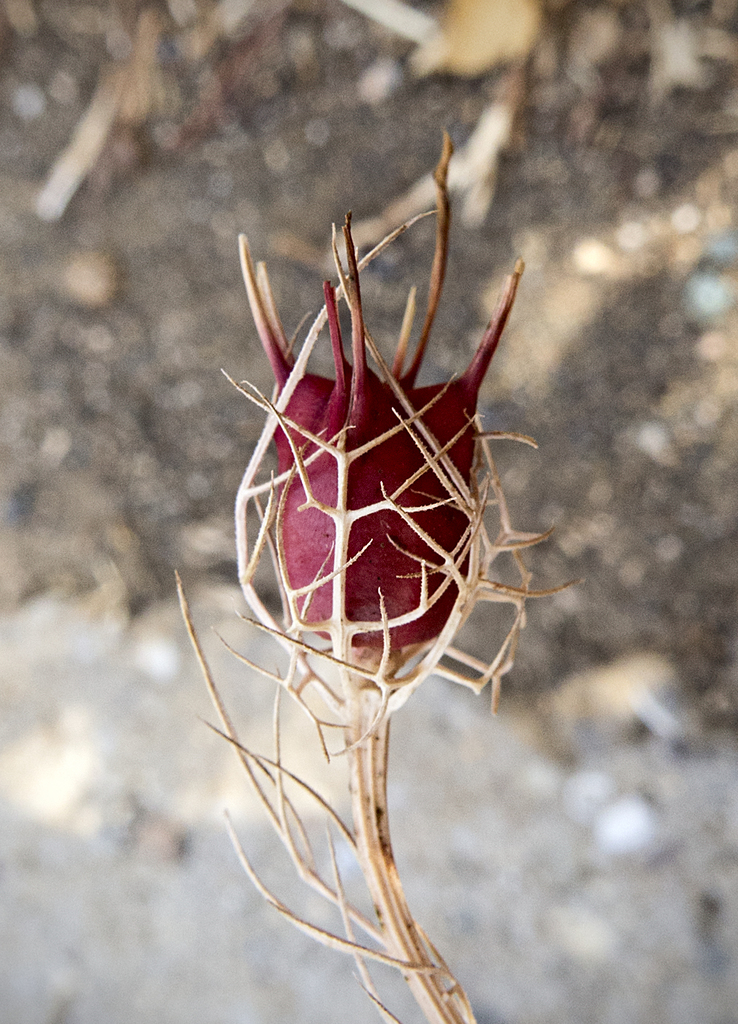
- Grandes capsules de graines décoratives et gonflées
- Hauteur
- 0,3 à 0,6m
- Envergure
- 0,15 à 0,3m
- Feuilles
- vert vif, décidue
- Fleurs
- bleu, blanc, rose, 3 à 5cm
- Fruits
- tan, brun, Fin de l'été
Problèmes à surveiller
- OïdiumCourant
- PuceronsCourant
- Limaces et escargotsPeu courant
- Pourriture des racinesPeu courant
- Mildiou poudreux — Une croissance fongique blanche sur les feuilles, souvent causée par une mauvaise circulation de l'air.
Par symptôme
Vérifie la santé de ta plante en photo
Pocket Botanist analyse une photo de ta plante et te dit ce qui ne va pas et quoi essayer en premier.
La cultiver
- Multiplication
- semis
- Quand planter
- printemps, automne
- Hivernage
- En tant qu'annuelle, elle mourra complètement après avoir produit des graines. Vous pouvez laisser les capsules de graines pour l'intérêt hivernal ou les retirer pour éviter un semis excessif.
- En pot
- Elle pousse bien en conteneur d'au moins 20 cm de profondeur, à condition que le sol soit bien drainé.
Semis direct
- Préparez un endroit ensoleillé avec un sol bien drainé.
- Éparpillez les graines finement à la surface.
- Recouvrez légèrement de terre car elles ont besoin de lumière pour germer.
- Gardez le sol humide jusqu'à l'apparition des semis.
Semez ces graines directement dans le jardin au début du printemps pour de meilleurs résultats, car elles n'aiment pas être transplantées.
Bonnes associations
- Bleuet — Ils partagent des exigences de croissance similaires et sont magnifiques ensemble dans une plantation de style prairie.
- Coquelicot de Californie — Les deux sont faciles à cultiver à partir de graines et offrent une longue saison de couleur.
Espèces similaires
- Nigella hispanica — Elle a des fleurs plus grandes et une habitude plus dressée.
Science
- Famille
- Ranunculaceae
- Genre
- Nigella
- Ordre
- Ranunculales
- Classe
- Magnoliopsida
- Région d'origine
- Europe du Sud et Afrique du Nord
- Préservation
- Cette plante n'est pas préoccupante en matière de conservation et est largement naturalisée.
Elle prospère dans les endroits ouverts et ensoleillés et les sols perturbés où elle peut facilement se ressemer.
- Intérêt pour la faune
- source de nectar
- Pollinisateurs
- abeilles, papillons
- Utilisations
- jardins de cottage, fleurs coupées, arrangements séchés, bordures pour pollinisateurs
Au fil des saisons
Repères écologiques
- Salinité
- 2/9
- Nutriments
- 5/9
- Lumière
- 8/9
- Réaction du sol
- 6/9
- Température
- 5/9
- Humidité
- 5/9
Taxonomie vérifiée avec le GBIF.
Ce qu'on demande souvent
- A-t-elle besoin de tuteurage ?
- Habituellement non, car elle reste relativement compacte.
- Puis-je la cultiver en pot ?
- Oui, elle pousse bien en conteneur s'il bénéficie d'un bon drainage.
D'où vient le nom
Le nom du genre Nigella vient du mot latin niger, signifiant noir, en référence à la couleur des graines. L'épithète spécifique damascena fait référence à Damas, en Syrie, où l'on pensait autrefois qu'elle était originaire.
Bon à savoir
- Les capsules de graines sont très décoratives et prisées dans les bouquets de fleurs séchées.
- C'est une plante annuelle qui se ressème facilement au jardin.
- Les fleurs sont entourées d'un involucre de bractées délicat.
- Elle appartient à la famille des Renonculacées, tout comme les boutons d'or.
Garde ta plante en pleine forme
Cette page est un guide général. Enregistre ta plante dans Pocket Botanist et tu reçois des rappels d'entretien adaptés à cette plante, ainsi qu'un historique d'entretien qui montre ce qui a marché.
Ce guide a été généré par IA et vérifié avec la taxonomie du GBIF. Il s'agit d'informations générales, et non de conseils horticoles ou vétérinaires. Découvre comment nous concevons ces guides.