 Pocket Botanist
Guide botanique
California poppy.
Eschscholzia californica
Prononciation esh-SKOL-zee-uh kal-i-FOR-ni-kuh
Aussi appelée California Poppy, California golden poppy, California goldenpoppy, California-poppy, Californian Poppy


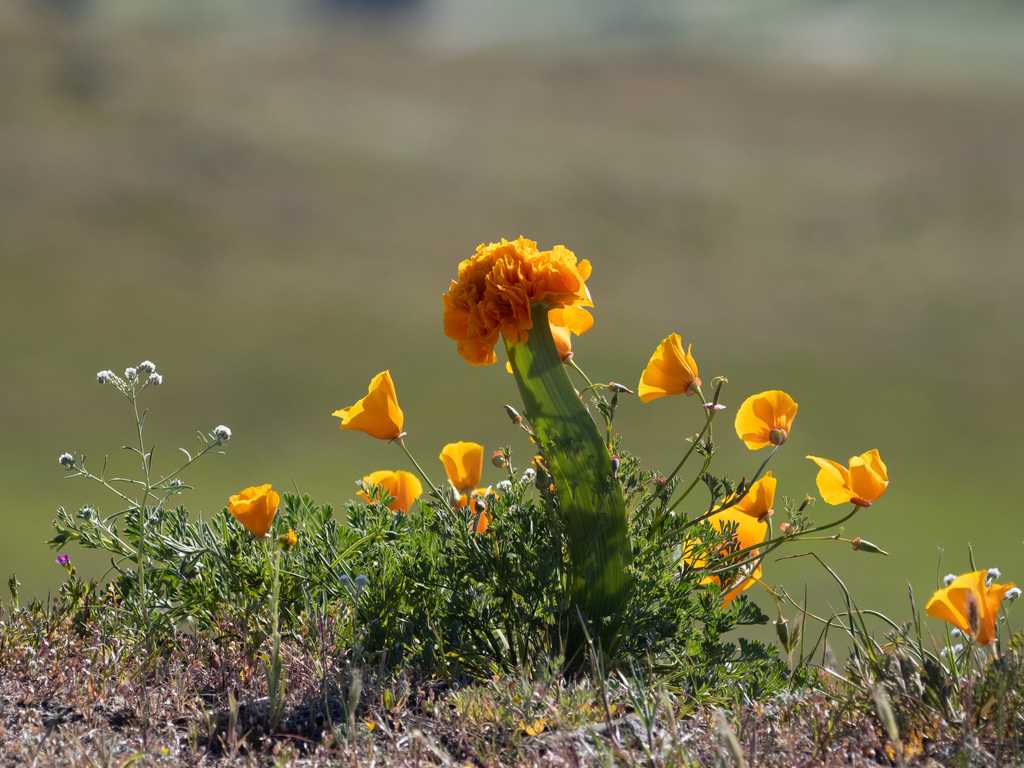
The California poppy is a cheerful, sun loving annual that brings bright color to any garden. It is native to the western United States and thrives in poor, sandy soils. You will love how easily it reseeds itself each year.

En un coup d'œil
- Niveau d'entretien
- Facile
- Type de plante
- Annual
- Lumière
- Full sun
- Lumière en intérieur
- Soleil direct
- Arrosage
- Tous les 7 à 14 jours
- Taille adulte
- 12 to 18 inches
- Croissance
- Rapide
- Rusticité
- USDA 6 à 10
- Floraison
- Late spring to early autumn
Entretien
Plant these in a spot with full sun and well draining soil. Watch for wilting during extreme heat, though they are quite drought tolerant once established. Avoid overwatering to prevent root rot.
- Arrosage
- Water sparingly once the plants are established, as they prefer drier conditions.
- Engrais
- These plants generally do not require fertilizer and often bloom better in poorer soils.
- Taille
- Deadhead spent flowers to encourage a longer blooming season.
- Rempotage
- As an annual, these are typically grown directly in the garden and do not require repotting.
- Sol
- Sandy or rocky, well draining
- pH du sol
- 6.0 to 7.5
- Température
- -10 à 35°C
- Humidité
- 20 à 50%
- Résistance à la sécheresse
- Élevée
- Durée de vie
- Short lived perennial, often grown as an annual.
- Parfum
- Léger
- Résistance aux chevreuils et lapins
- Élevée
Signes qu'il faut rempoter
- Roots growing out of the drainage holes.
- Stunted growth despite proper light and water.
Sécurité
- Humains
- The plant contains alkaloids that may cause mild stomach upset if ingested in large quantities.
- Enfants
- The seeds are small and could pose a choking hazard if handled by very young children.
- Allergènes de contact
- Some individuals may experience mild skin irritation from the sap.
- Allergènes aéroportés
- The pollen can trigger mild allergic reactions in sensitive individuals.
- Comestibilité
- While sometimes used in herbal preparations, ingestion is not recommended due to potential alkaloid content.
Comment l'identifier
- Finely divided blue green foliage
- Four silky, cup shaped petals
- Vibrant orange or yellow blooms
- Long, slender seed pods
- Hauteur
- 0,2 à 0,6m
- Envergure
- 0,2 à 0,4m
- Feuilles
- blue-green, gray-green, deciduous
- Fleurs
- yellow, orange, red, 5 à 8cm
- Fruits
- brown, Summer
Problèmes courants
- Powdery mildew — A white fungal growth on leaves often caused by poor air circulation or high humidity.
La cultiver
- Multiplication
- seed
- Quand planter
- spring, autumn
- Hivernage
- In mild climates, they may persist through winter. In colder areas, they die back, and you should rely on self sown seeds for spring growth.
- En pot
- They grow well in deep containers, but ensure the pot is at least 30 cm deep to accommodate the taproot.
Direct Sowing
- Clear the area of weeds.
- Scatter seeds directly onto the soil surface in autumn or early spring.
- Lightly rake the soil to cover seeds, as they need minimal depth to germinate.
Plant these in open, sunny areas with well draining soil to ensure they do not rot.
Bonnes associations
- Lupinus — They share similar water and soil requirements in meadow settings.
- Sisyrinchium bellum — These provide a lovely color contrast and thrive in the same sunny conditions.
Espèces similaires
- Argemone mexicana — It shares the poppy family but has prickly foliage and different flower structure.
Science
- Famille
- Papaveraceae
- Genre
- Eschscholzia
- Ordre
- Ranunculales
- Classe
- Magnoliopsida
- Région d'origine
- Western North America, specifically California and surrounding states.
- Préservation
- It is widely distributed and not of conservation concern, though it is the state flower of California.
They are pioneer species that quickly colonize disturbed soil after fires or clearing.
- Intérêt pour la faune
- nectar source, pollen source
- Pollinisateurs
- abeilles, papillons, coléoptères
- Utilisations
- ornamental, meadow planting, xeriscaping
Au fil des saisons
Repères écologiques
- Salinité
- 2/9
- Réaction du sol
- 6/9
- Lumière
- 8/9
- Température
- 6/9
- Humidité
- 2/9
- Nutriments
- 2/9
Taxonomie vérifiée avec le GBIF.
Ce qu'on demande souvent
- Do I need to deadhead them?
- Deadheading can encourage more blooms, but leaving them allows for self seeding.
- Can I grow them in pots?
- They prefer the ground due to their long taproot, but they can grow in deep containers.
D'où vient le nom
The genus honors Johann Friedrich von Eschscholtz, a Baltic German botanist, while the species name refers to its native California.
Bon à savoir
- California poppies are the official state flower of California.
- They are technically short lived perennials but are usually grown as annuals.
- The flowers close tightly when the sun goes down or the sky turns cloudy.
- They thrive in poor, sandy soil where other plants struggle.
Aussi dans
Ta plante a mauvaise mine ?
Cette page est un guide général. Pocket Botanist diagnostique les problèmes directement à partir d'une photo de ta plante, adapte l'arrosage à sa luminosité et te prévient quand il faut t'en occuper.
Ce guide a été généré par IA et vérifié avec la taxonomie du GBIF. Il s'agit d'informations générales, et non de conseils horticoles ou vétérinaires. Découvre comment nous concevons ces guides.